Planned U.S. Auto Factories Could Add One Million Vehicles by 2030
Global automakers are preparing to add enough U.S. factory capacity to build more than one million additional vehicles annually by 2030, according to an estimate from Sam Fiorani of AutoForecast Solutions. The expansion promises manufacturing jobs and more pickups, SUVs and hybrids for American buyers, but it is moving toward a market where overall sales are stagnant and new vehicles already cost about $50,000.

That is the central tension in the industry’s U.S. investment rush: Automakers see America as their strongest profit center, yet the same companies could collectively build more plants than the market can support efficiently. Roughly one-fifth of U.S. new-vehicle buyers now carry monthly payments above $1,000, while the average vehicle on American roads is about 13 years old. High transaction prices support attractive margins, but the aging fleet also shows how long many consumers are keeping their cars.
Large vehicles are pulling investment toward America
The attraction is not simply U.S. sales volume. Pickups, large SUVs and premium vehicles generally occupy the high-margin end of manufacturers’ portfolios, and American customers buy them in substantial numbers. That opportunity has become more important as automakers contend with weakening sales in China and sluggish conditions in Europe, Japan and the Middle East. Vehicle sales in China were down more than 20% through September.
Toyota is spending $3.6 billion on a factory intended to return production of the midsize Tacoma pickup to the United States. The company has pledged as much as $10 billion in U.S. investment. Honda is enlarging its Ohio presence, while Hyundai plans dozens of new or redesigned North American vehicles by the end of the decade, including an off-road model and its first midsize pickup.
Nissan is pursuing a similar product shift. It plans to revive the Xterra SUV, accelerate hybrid versions of major models including the Rogue, and increase its U.S. market share from below 6% to about 7%. Reaching that target would require more than 160,000 additional annual vehicle sales. Volkswagen, meanwhile, is studying U.S. truck production and has discussed a possible joint venture with Ford.
Audi’s planned first U.S. factory illustrates both the scale and the long lead time. The company announced an approximately $4 billion premium-SUV plant in Georgia with projected annual capacity of 200,000 vehicles and about 4,500 jobs. The announced schedule calls for site grading in 2027, construction beginning in 2028 and full production in 2031. Volkswagen’s supervisory board still must make the final investment decision.
Capacity is useful only when plants stay busy
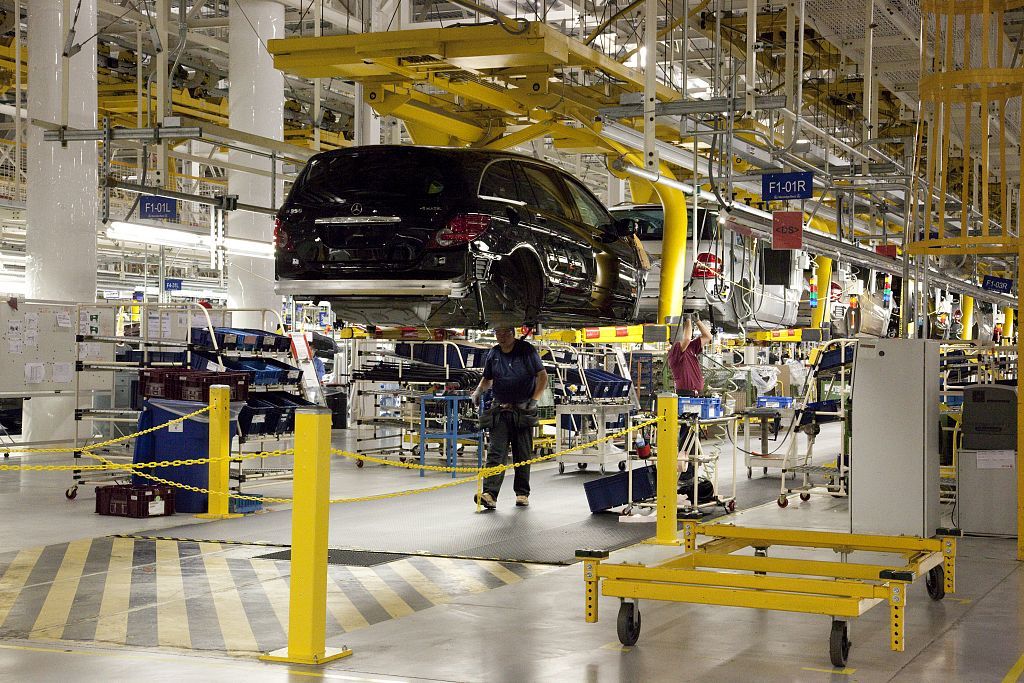
Factory capacity is not the same as production. The Federal Reserve defines capacity around the sustainable maximum output a plant can maintain under realistic schedules, normal downtime and adequate input availability. Its automobile and light-duty vehicle capacity-utilization series measures actual output against that available industrial base.
That distinction carries major financial and operational consequences. Assembly plants require large, largely fixed investments in buildings, tooling, automation, logistics and workforce training. If demand falls short, those costs are spread across fewer vehicles. A plant can remain technically capable of producing its rated volume while operating well below it, weakening the economic case behind the original investment.
Product mix adds another risk. Most announced programs are aimed at the same profitable portions of the U.S. market: pickups, SUVs, premium vehicles and hybrids. New local production may improve availability and give buyers more choices, but it also intensifies competition in segments long dominated by Detroit manufacturers. Fiorani described the U.S. market as attractive from the outside but difficult to penetrate, particularly in pickups.
General Motors finance chief Paul Jacobson has already warned about excess capacity and said GM must control costs rather than answer every competitor with another factory. Detroit’s manufacturers are instead preparing hybrid versions of popular vehicles, including three-row SUVs and the Chevrolet Equinox, while also developing lower-cost offerings and other revenue initiatives.
The investments therefore amount to a long-duration wager on continued American demand for expensive, high-margin vehicles. The jobs and added consumer choice arrive only if projects clear their approval and construction milestones; the operating payoff depends on keeping those plants sufficiently full after the production lines start moving.
| More aerospace and engineering stories, right in your MSN feed. Follow AMI on MSN |
By Thomas Caldwell — AMI’s senior editor for mechanical and mobility engineering, covering vehicle electronics, systems integration, electrification, chassis systems, propulsion, and safety policy.