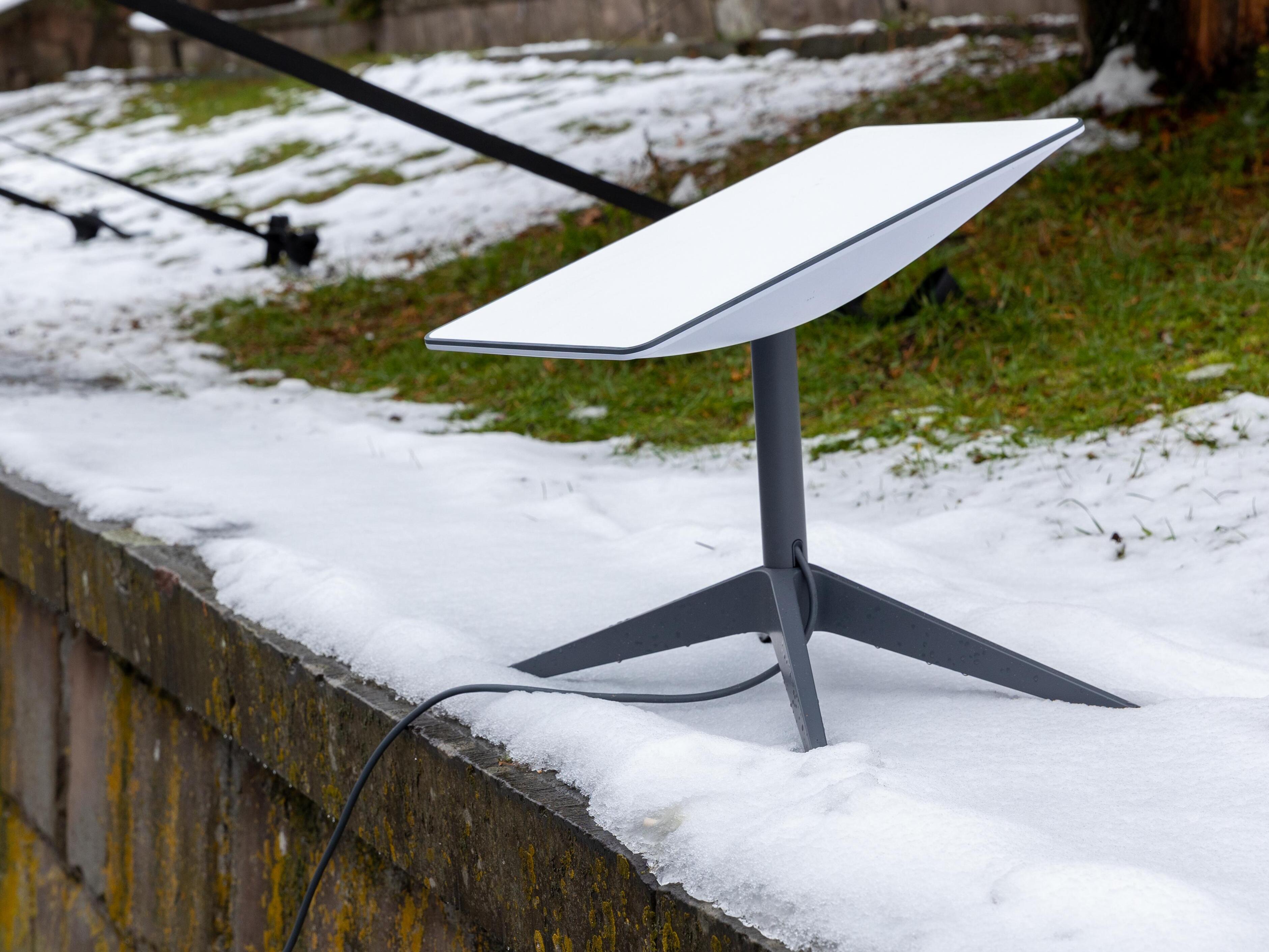
Starlink Kept Five Stranded Travelers Connected to Rescuers in Kazakhstan
Five people stranded by an SUV breakdown in eastern Kazakhstan used SpaceX’s Starlink to call for help and remain connected with emergency crews despite having no usable mobile service. The completed rescue shows the practical value of carrying a satellite link into remote territory: it preserved the communications path needed to report the emergency, establish the group’s location and coordinate their recovery.

The breakdown occurred about 15 kilometers from the village of Kystau Kurchum in East Kazakhstan’s Kurchum district. Local outlet YK.kz reported on October 22, 2026, that Kazakhstan’s Ministry of Emergency Situations responded and stayed in contact with the five people through Starlink. Kazakh broadcaster Channel 7 identified the group as hunters caught in a snow trap and reported that satellite communications helped rescuers pinpoint their location.
Severe weather increased the stakes. A storm warning was in effect, and officials had urged residents to avoid leaving populated areas unless necessary. The same weather reportedly stranded seven utility workers repairing power lines in the nearby Kuygan rural district.
The rescue itself still required capable ground transportation. Emergency crews traveled roughly 100 kilometers in a Trekol, a large vehicle equipped with low-pressure tires for moving through snow and marshland. They reached the group and escorted the disabled SUV back to Kystau Kurchum. None of the five people required medical treatment.
A connection, not a complete rescue system
Starlink’s contribution was narrow but critical: it bridged the gap between the stranded group and the organizations able to reach them. The satellites did not recover the SUV or overcome the snowbound terrain. They maintained the flow of essential information while the emergency service supplied the personnel, vehicle and local response structure.
That division of labor reflects how satellite communications are generally used in emergencies. The International Telecommunication Union notes that terrestrial and satellite networks both support emergency telecommunications. Satellite service becomes particularly valuable where ground networks are absent, damaged or overloaded, but it works within a broader system that still depends on responders and local coordination.
For a stranded traveler, the necessary data can be modest. A distress request, location information and continuing voice or message contact may matter more than high broadband speeds. In Kazakhstan, the useful outcome was not a demanding application such as video streaming. It was the ability to keep a reliable enough link open for rescuers to find five people beyond the mobile network’s reach.
A 2024 IEEE review of rapidly deployable satellite emergency communications found that satellite links are less dependent on local ground infrastructure, making them useful when cellular coverage is damaged, congested or unavailable. The researchers also concluded that satellites work best as part of mixed networks incorporating cellular, Wi-Fi and other terrestrial technologies rather than as a universal replacement.
There are practical limits. Portable satellite equipment needs electrical power, suitable hardware and sufficient visibility toward the sky. Setup complexity, obstructions, antenna placement, weather and network conditions can affect service. The available account does not identify the Starlink terminal used in Kazakhstan or document its power arrangement, so the rescue cannot establish that every satellite terminal will connect immediately under every remote-weather scenario.
The incident does demonstrate a completed mission outcome under real operating conditions. A conventional cellular network was unavailable, but the group already had access to a working satellite connection when the SUV failed. That preparation converted a communications dead zone into a reachable location for emergency crews.
After roughly 100 kilometers of difficult ground travel, the Trekol crew brought the disabled SUV and all five occupants back to Kystau Kurchum without anyone needing medical attention. In this case, Starlink’s most consequential capability was also its simplest: keeping an isolated group connected long enough for rescuers to arrive.
| More aerospace and engineering stories, right in your MSN feed. Follow AMI on MSN |
By David Whitaker — Associate editor for AMI’s aerospace and drone systems desk, translating flight systems, aircraft programs, spaceflight, and UAV developments into accessible technical stories.