Wallace Annenberg Wildlife Crossing Rises Over Highway to Reconnect Habitat
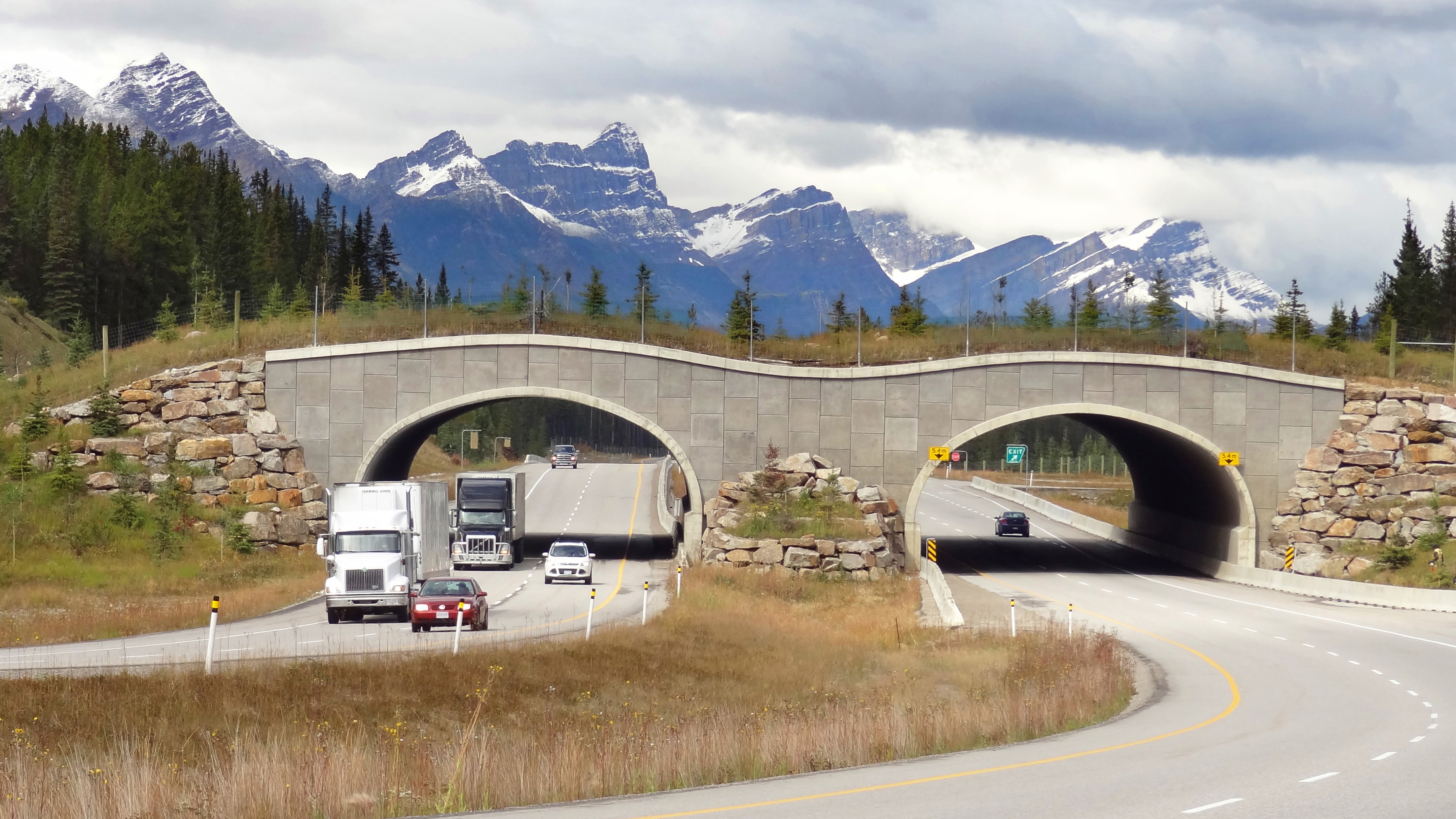
A bridge for animals is taking shape above U.S. Route 101 near Los Angeles. The Wallace Annenberg Wildlife Crossing represents the most visible form of a wider federal effort to reduce wildlife-vehicle collisions and reconnect habitats divided by roads. The Federal Highway Administration’s Wildlife Crossings Program provides grants for that dual purpose: protecting road users while restoring movement routes for terrestrial and aquatic species.

The public stake extends well beyond individual animals attempting to cross pavement. Congress found that more than 1 million wildlife-vehicle collisions occur annually on U.S. roads, producing tens of thousands of serious injuries, hundreds of deaths and more than $8 billion in costs. At the same time, a highway can separate feeding areas, breeding populations and seasonal migration routes that previously formed one connected landscape.
A crossing is a system, not just a bridge
The basic mechanism appears straightforward: carry animals over traffic or route them beneath it. The engineering challenge is persuading the intended species to use that path while keeping them away from the roadway. A structure in the wrong location, with unsuitable approaches or inadequate supporting measures, may record some animal use without restoring the movement that the highway displaced.
The Federal Highway Administration’s Wildlife Crossing Structure Handbook identifies two linked objectives: connecting habitats and wildlife populations, and reducing road mortality and collisions. Its design toolbox includes landscape bridges, wildlife overpasses, viaducts, large-mammal underpasses, modified culverts, canopy crossings and smaller tunnels for amphibians and reptiles.
Selection depends on the target species, terrain, water conditions, habitat quality and surrounding land use. A raised roadway can favor an underpass, while a road cut below the surrounding ground can make an overpass easier to integrate. Large mammals need different dimensions and approach conditions than small mammals, reptiles or animals that move through tree canopies.
Fencing is often a critical part of the system because it limits direct access to traffic and guides animals toward the designated opening. Escape gates or ramps may also be needed if an animal enters the fenced right of way. The crossing must connect suitable habitat on both sides; a costly structure leading into developed land or an ecological dead end cannot provide the same network function as one embedded in a protected corridor.
Use alone is an incomplete measure of success
A 2024 global assessment of 313 studies found animals moving through crossing structures in 98% of the evaluated data sets. But only 14% of the studies were designed to determine whether a crossing changed movement relative to conditions before construction, an unmitigated road or another meaningful benchmark. Movement improved in about 60% of the relevant data sets, while crossings prevented an expected decline in fewer than 40% of cases.
Those results support crossings as a useful mitigation tool, but they also expose a measurement problem. A camera image of an animal using an underpass confirms passage; it does not show whether the road still reduced total movement across the landscape. Monitoring only after construction can make an underperforming installation look successful because there is no baseline against which to judge it.
Fencing can further complicate evaluation. By funneling animals from a long section of road toward one monitored opening, it can increase recorded activity at the crossing even if total movement across the highway has fallen. Strong evaluation therefore needs comparable before-and-after data, appropriate control locations or tracking methods that measure movement across the wider corridor.
Public funding buys a long-term obligation
Crossings distribute benefits among several groups. Drivers and passengers may face fewer collision risks, transportation agencies may avoid recurring crash costs, and wildlife populations gain a route between habitat fragments. The costs, however, are concentrated in construction, land coordination, monitoring and maintenance. That makes placement and performance verification central questions of fairness in spending public transportation money.
The structures also have long service lives. The federal handbook describes wildlife crossings as permanent infrastructure expected to remain in place for roughly 70 to 80 years. During that period, nearby development, vegetation, climate and animal distributions can change. Agencies must therefore coordinate roadway design with long-term land management rather than treating the bridge or tunnel as a self-contained construction project.
The federal program is developing design standards, collision and carcass data methods, statewide transportation and wildlife plans, and guidance for deciding when mitigation is warranted. Those efforts can make projects more comparable, but the strongest test remains site-specific: whether a crossing reduces road exposure and preserves enough movement to sustain the populations it was built to serve. For the Wallace Annenberg crossing and projects that follow it, completion will be only the first milestone; measured movement across the divided landscape will determine whether the connection has truly been restored.
| More aerospace and engineering stories, right in your MSN feed. Follow AMI on MSN |
By Thomas Caldwell — AMI’s senior editor for mechanical and mobility engineering, covering vehicle electronics, systems integration, electrification, chassis systems, propulsion, and safety policy.