Russia Caps Fuel Purchases as National Guard Personnel Monitor Nizhny Novgorod Stations
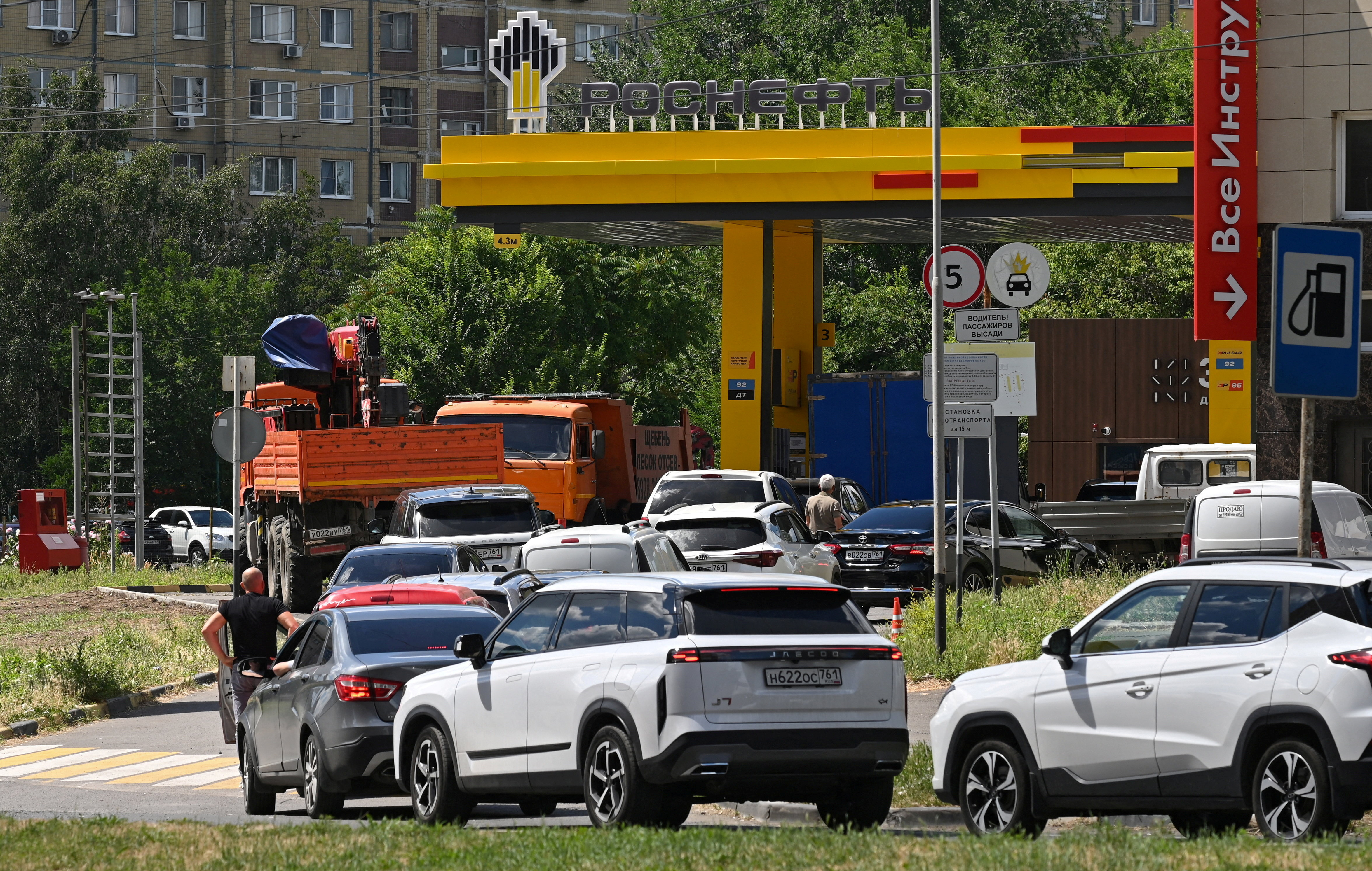
Russia is managing regional fuel shortages at the gas-pump level, limiting how much motorists can buy and, in some places, who can buy it. The most closely monitored restrictions are in the Nizhny Novgorod region, where gasoline purchases are capped at 40 liters per vehicle and Russian National Guard personnel, police and volunteers have been deployed to stations to oversee compliance and conditions.
The controls differ by region. Nizhny Novgorod has also banned sales into portable containers, while stations near its borders have restricted purchases by vehicles registered elsewhere in Russia. In the Trans-Baikal Territory, information attributed to the regional Ministry of Economic Development put limits at Rosneft stations at 30 liters per driver in cities and 50 liters per vehicle along highways. Karelia has announced limits on gasoline and diesel and prohibited filling portable containers.
The measures coincide with a renewed series of reported drone attacks on Russia’s refining industry. Reuters reported shortages or sales caps in at least half a dozen regions after strikes on at least eight major refineries over two weeks. Leningrad Region Governor Alexander Drozdenko confirmed a November 9 strike on the industrial zone in Kirishi, where a Surgutneftegaz refinery with estimated annual crude-processing capacity of approximately 20 million to 21 million metric tons is located.
Available information does not establish that the Kirishi strike directly caused the regional purchase limits. The restrictions are a confirmed distribution response to fuel-supply problems; the precise contribution of individual refinery incidents, transport constraints, inventories and regional demand has not been publicly separated.
Retail caps manage access, not production
A purchase cap does not create additional gasoline. Its immediate function is to slow inventory depletion at individual stations and reduce the advantage held by customers able to arrive early, buy large amounts or fill multiple containers. Container bans further limit stockpiling and resale outside the normal vehicle-fueling process.
These controls therefore indicate a constrained last-mile distribution network rather than providing a direct measurement of Russia’s total fuel production. A country can produce substantial volumes overall while particular regions encounter shortages because the required grade or type of fuel is not reaching local storage and stations quickly enough. Refinery output, available inventories, rail and road transport, terminal capacity and the geographic placement of demand all affect what ultimately reaches a pump.
The differences among regions reinforce that point. A 30-liter urban cap and a 50-liter highway cap in the Trans-Baikal Territory allocate fuel according to location and likely journey requirements. Nizhny Novgorod’s registration-based restrictions near regional borders address another distribution problem: demand moving across administrative boundaries. If motorists travel into a neighboring region to find fuel, they can transfer the shortage rather than resolve it.
Deploying National Guard and police personnel changes the measure from a station policy into an actively monitored allocation system. Enforcement can deter bulk purchasing and inconsistent application, but it also adds personnel and coordination demands to a commercial distribution network. Volunteers monitoring conditions can help authorities identify queues or depleted stations, although no consolidated data on station availability or enforcement duration has been provided.
Drone pressure reaches beyond damaged facilities
For unmanned systems, the broader consequence is the pressure created by repeated, geographically dispersed attacks against industrial infrastructure. Even without attributing a specific retail cap to a specific strike, repeated incidents can require authorities and operators to divide attention among facility protection, incident response, repairs and continuity of supply. The publicly reported scale at least eight major refineries over two weeks also demonstrates how relatively small unmanned aircraft can impose persistent readiness demands across a large industrial network.
That pressure should not be confused with a verified one for one loss of refining capacity. Reports of operational stoppages at facilities in the Nizhny Novgorod and Leningrad regions and a fire at a refinery in Ufa do not by themselves establish the duration of outages, the amount of finished fuel lost or the effect on each region’s stations. Those figures would be needed to connect industrial disruption quantitatively to retail availability.
Fuel rationing is a recognized form of demand restraint during supply disruptions. The International Energy Agency describes purchase rationing and driving restrictions as heavier demand-side measures, distinct from supply responses such as releasing emergency stocks or increasing production. Russia’s regional approach is narrower: it controls transactions at selected stations while authorities work within the existing supply network.
The next meaningful indicator will be whether the caps are lifted as deliveries normalize or spread to additional regions and fuel networks. For affected motorists now, the consequence is already concrete: less fuel per stop, no portable-container purchases in some areas and, near parts of Nizhny Novgorod’s borders, access determined by vehicle registration.
| More aerospace and engineering stories, right in your MSN feed. Follow AMI on MSN |
By Stephen Wallace — Editor for AMI’s aerospace integration and unmanned mobility coverage, focused on drone manufacturing, VTOL systems, autonomous networks, and air-ground mobility links.