Tesla Removes Cheaper Cybertruck, Leaving One $109,990 U.S. Version
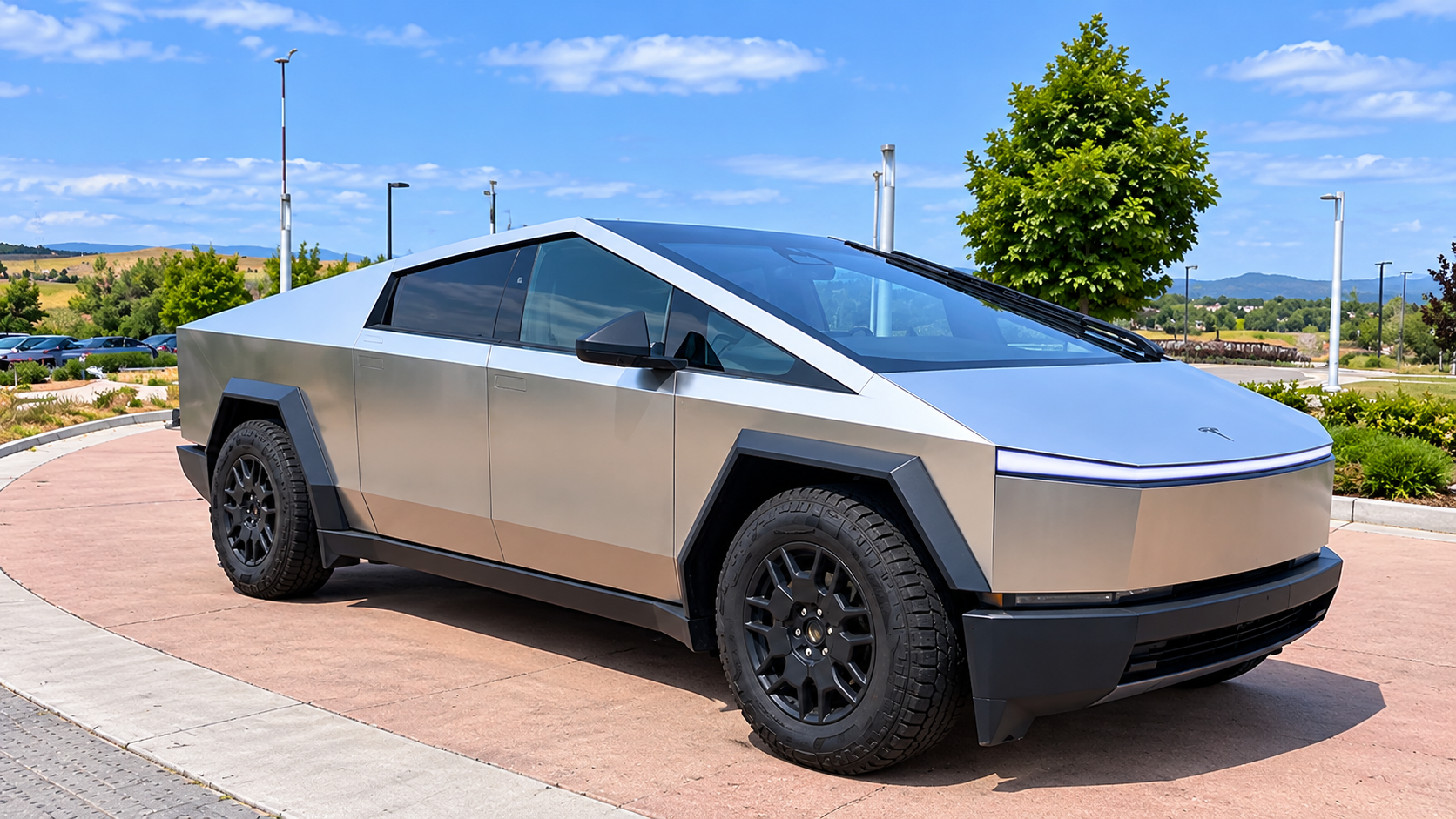
Tesla has reportedly removed the lower-priced Cybertruck Premium All-Wheel Drive from its U.S. ordering site, leaving prospective buyers with one configuration: the Cyberbeast at $109,990. The remaining truck also received a $7,500 price increase from the $102,490 listed earlier in November.

The immediate consequence is a sharp rise in the cost of entry. The least-expensive Cybertruck had most recently been listed at $82,490, so the minimum price for a new order has climbed by $27,500. It is an especially wide departure from the Cybertruck priced below $40,000 that Elon Musk originally promised.
Higher performance replaces broader choice
The Cyberbeast brings substantial capability for its six-figure price. Tesla states that the three-motor version can accelerate from zero to 60 mph in 2.6 seconds and tow as much as 11,000 pounds. Independent vehicle listings from Edmunds also identify 11,000 pounds as the Cybertruck lineup’s maximum towing capacity.
Those figures put sports-car acceleration and heavy towing in the same vehicle, but eliminating the less-expensive configuration changes the product balance. Buyers who do not need the quickest powertrain can no longer reduce the price by selecting a slower Cybertruck. Performance that was previously an upgrade has effectively become the cost of admission.
This is more than an ordinary trim adjustment because vehicle configurations divide a market by capability, range, equipment and price. A lower trim can attract customers who want a truck’s design or utility without paying for its maximum motor output. With only the Cyberbeast available, Tesla is concentrating the Cybertruck around its highest-performance specification while leaving no lower rung in the U.S. order structure.
Tesla has not provided a confirmed reason for removing the Premium All-Wheel Drive version. Production constraints, pricing strategy and other explanations remain possible, but the ordering change alone does not establish which factor drove the decision.
Sales provide important context
The narrower lineup arrives as the Cybertruck’s reported U.S. volume remains far below Tesla’s original annual production target of 250,000 vehicles. Cox Automotive estimates indicate that 11,586 Cybertrucks were sold in the United States during the first three quarters of 2026, a 28% decline from the corresponding period in 2025. A separate Car and Driver comparison of electric-pickup sales uses the same estimated 11,586-unit figure through the third quarter.
The weakness is not confined to one model. Reported Rivian R1T sales fell 21% in 2026, while Chevrolet Silverado EV sales dropped 43%. Ford also discontinued the battery-electric F-150 Lightning and shifted its attention toward smaller, less-expensive electric trucks. Those results do not define the entire electric-vehicle market, but they show the difficulty of generating large volumes in the full-size electric-pickup segment.
Cost is one part of that systems problem. Large pickups need substantial battery capacity to move a heavy vehicle while preserving useful range, acceleration and towing performance. Towing can also increase energy consumption considerably, making battery size, charging time, payload, range and price interdependent design constraints. The Cyberbeast’s acceleration demonstrates what a high-output electric drivetrain can deliver, while its new price illustrates the expense attached to packaging that performance in a large truck.
Musk reportedly said earlier in November that Cybertruck production would end in 2027. Until then, the U.S. ordering structure presents a stark final configuration: the truck introduced with a sub-$40,000 affordability promise is now available only as a $109,990 high-performance model.
| More aerospace and engineering stories, right in your MSN feed. Follow AMI on MSN |
By Thomas Caldwell — AMI’s senior editor for mechanical and mobility engineering, covering vehicle electronics, systems integration, electrification, chassis systems, propulsion, and safety policy.