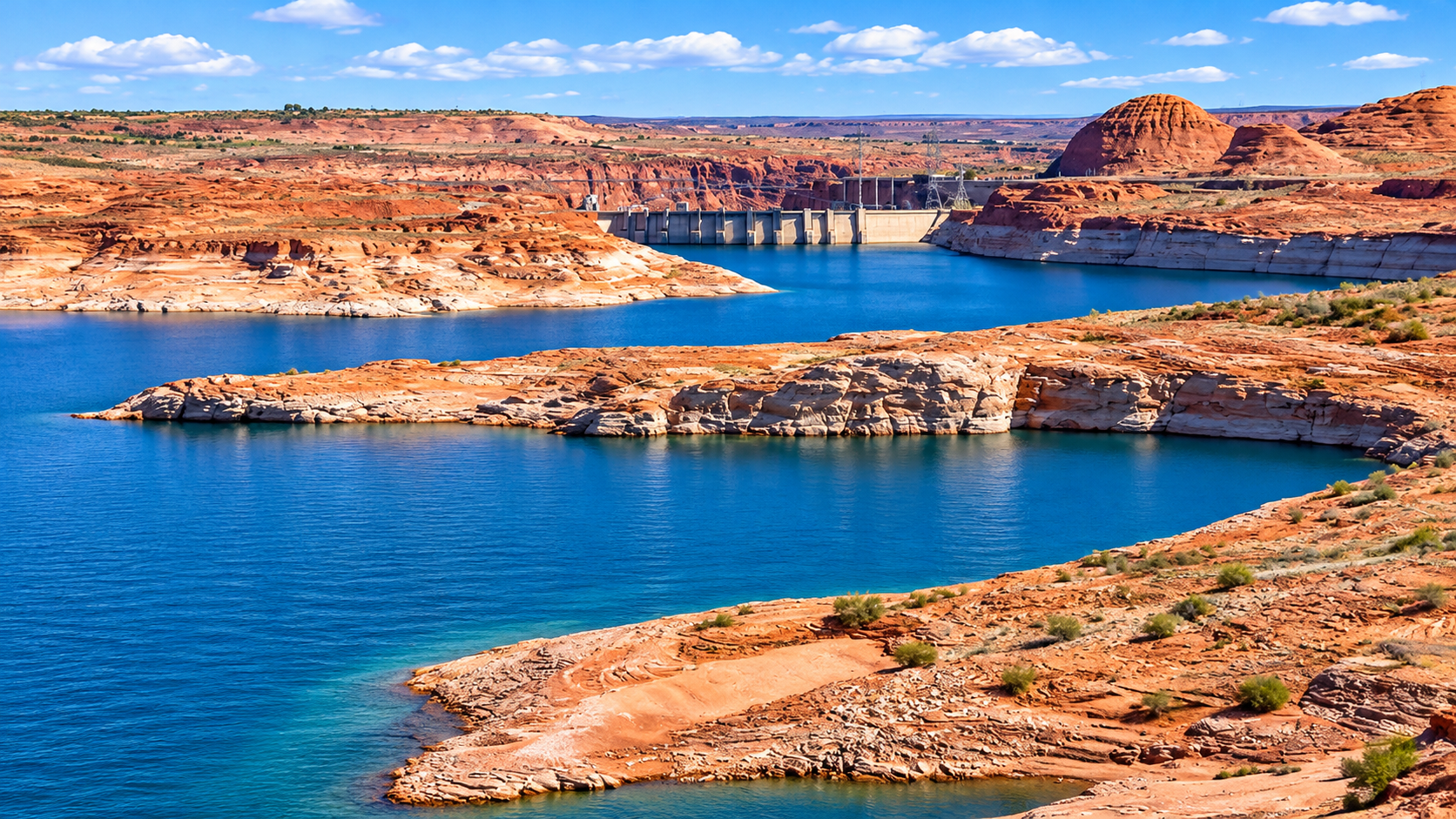
Lake Powell Forecast Above Critical Power Level After 11-Foot Rise
Lake Powell’s autumn rebound has now translated into a longer operating reprieve for Glen Canyon Dam. As of Nov. 18, the Bureau of Reclamation’s latest forecast showed the reservoir remaining above 3,500 feet for the following year, a level the agency identifies as critical for protecting hydropower generation and downstream releases. The updated outlook is stronger than the near-term picture available after the lake’s initial rain-driven rise, but it remains dependent on future snowmelt.

The forecast follows an unusual reversal that began after Lake Powell reached a reported record low on Sept. 15. Heavy rain across northern Arizona and southern Utah initially raised the reservoir nearly 11 feet, adding about 173 billion gallons and giving Glen Canyon Dam more room to continue generating electricity. Continued inflow later pushed the total autumn rise above 20 feet.
That is measurable operating relief, not a long-term recovery. Even after the initial 11-foot gain, Lake Powell remained 12 feet lower for 2026, and its average level for the year was the lowest on record. Officials and researchers also emphasize that the next major test will be spring runoff from mountain snow, which normally supplies much of the reservoir’s annual inflow.
Why a few feet matter to the powerplant
Glen Canyon Dam generates electricity by routing stored water through turbines. Higher reservoir elevation provides more hydraulic head the vertical pressure difference that drives water through the generating equipment and increases the distance from operating thresholds where generation and downstream releases become more difficult.
The dam’s minimum power pool is approximately 3,490 feet. Below that elevation, hydropower generation is expected to stop. Federal operating plans use 3,500 feet as a critical planning level and seek to maintain the reservoir above 3,510 feet under normal modeled operations, providing additional margin above the generating limit.
The distinction between minimum power pool and dead pool is important. Minimum power pool concerns the ability to run the turbines. Dead pool is lower and more severe: water can no longer flow through the dam. The rain increased the distance from both conditions, but the updated forecast addresses the near-term operating horizon rather than eliminating the underlying dead-pool risk.
The power consequence extends beyond the electricity produced at any single moment. The Bureau of Reclamation describes Glen Canyon Powerplant as an eight-generator facility with 1,320 megawatts of total capacity. Its electricity is distributed across Wyoming, Utah, Colorado, New Mexico, Arizona, Nevada and Nebraska. The plant can also adjust output rapidly to help balance the regional grid and retain reserve capacity for infrequent system emergencies.
A rare inflow, but still a weather-dependent margin
The initial October rise came from rainfall rather than releases from upstream reservoirs. Between Oct. 20 and Oct. 22, unregulated inflow into Lake Powell increased four and a half times and reached 65,000 cubic feet per second, described as the second-highest October daily inflow since 1963. October gains are unusual because Powell generally rises during spring and early summer runoff, then declines later in the year.
Lake Mead also rose after reaching a reported record low, but on a smaller scale: 11 inches, or roughly 19 billion gallons, bringing it to an elevation of 1,038 feet. Water retained in Powell does not immediately produce an equivalent gain at Mead because Glen Canyon Dam’s release schedule controls how much continues downstream.
Upstream operations remain part of the near-term protection strategy. Water has also been released from Flaming Gorge Reservoir to support Lake Powell, and officials have been considering whether the unexpectedly wet autumn justifies revisiting the amount still scheduled for release. That decision involves a systems tradeoff: water moved into Powell improves its operating margin but reduces storage elsewhere in the Upper Colorado River system until it can be recovered.
The latest forecast therefore changes the immediate risk assessment without resolving the reservoir’s structural exposure. Staying above 3,500 feet for the next year would protect a critical operating margin for power and downstream releases. Whether that margin grows or begins shrinking again will depend heavily on snow that has yet to accumulate and the runoff it produces next spring.
| More aerospace and engineering stories, right in your MSN feed. Follow AMI on MSN |
By Thomas Caldwell — AMI’s senior editor for mechanical and mobility engineering, covering vehicle electronics, systems integration, electrification, chassis systems, propulsion, and safety policy.