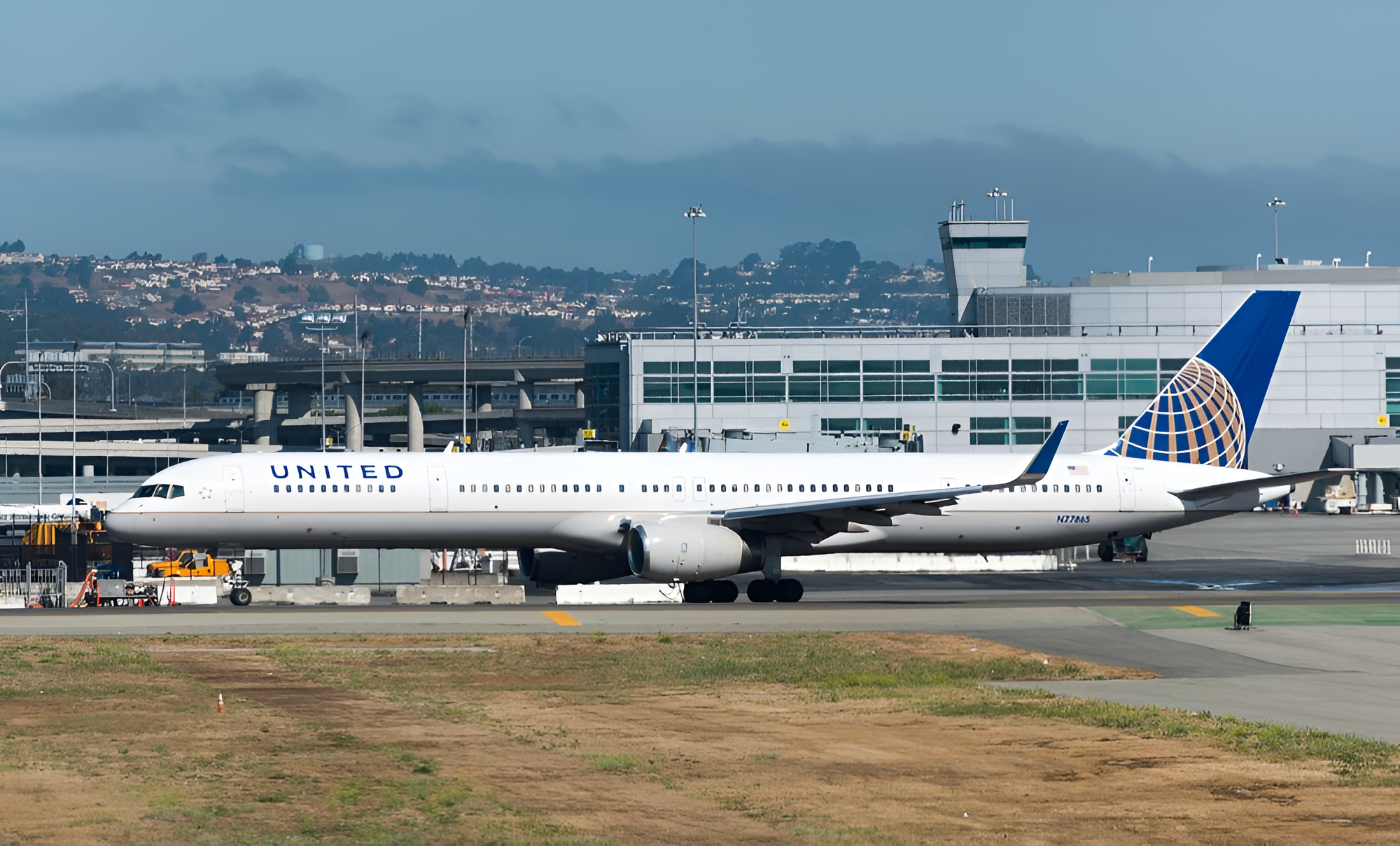
United Expands Free Starlink Internet to More Than Half of Flights
More than half of United Airlines’ daily flights now offer Starlink internet, moving the carrier’s installation program from a limited deployment toward a network-scale passenger service. United reported the milestone on November 12, and its Starlink tracker, updated November 18, lists systemwide flight availability at 52%.

The percentage describes flights operated with equipped aircraft, not the share of United’s fleet that has received the hardware. The tracker puts fleet completion at 47%, representing 707 installed aircraft: 352 regional jets, 348 mainline narrowbody aircraft and seven widebody aircraft. That distinction helps explain how flight coverage can exceed fleet completion. Aircraft utilization, route assignments and daily scheduling determine how many passenger departures each installation supports.
United is targeting Starlink availability on nearly 64% of flights by the end of 2026 and 87% by June 1, 2027. It plans to finish installations by the end of 2027, with work proceeding at about three aircraft per day. Los Angeles is intended to become the first United hub with Starlink on every flight during the first half of 2027. CEO Scott Kirby has also said every United flight at New York’s John F. Kennedy International Airport will offer the service when the airline resumes operations there.
Availability still varies sharply by flight and hub
Passengers cannot yet assume that any United booking includes Starlink. The airline allows travelers to check an aircraft’s connectivity status through its tracker up to three days before departure, but availability depends on the aircraft assigned to that flight.
As of November 18, the tracker showed Starlink on an estimated 68% of daily departures from Chicago, 62% from Denver, 54% from Los Angeles and 53% from Houston. Washington Dulles stood at 48%, Newark at 47% and San Francisco at 36%. Those differences make the remaining rollout visible to passengers: the experience is already common at some hubs but remains closer to a one-in-three proposition at San Francisco.
The equipment mix is similarly uneven. United lists all 100 of its CRJ-550 regional jets and all 252 Embraer E-175s as equipped. Its tracker shows installations on 64% of Boeing 737s, 22% of 737 MAX aircraft and 90% of Airbus A321s. Widebody deployment remains much earlier, at 5% of Boeing 777s and 2% of Boeing 787s. Airbus A319s and A320s, along with Boeing 757s and 767s, are listed as coming soon.
That distribution reflects an installation and certification program rather than a software feature that can be activated across the fleet at once. The Federal Aviation Administration certified United’s first Starlink-equipped mainline aircraft, a Boeing 737-800, in September 2025. The approval extended deployment beyond the regional aircraft on which United had introduced the service. Different aircraft families require approved installation configurations before the rollout can cover the entire fleet.
Free access creates a clear benefit, but not a measured market shift
Starlink access is free for MileagePlus members, and membership is also free. The connection supports multiple devices throughout a flight, including streaming on personal electronics. On compatible seatback systems, passengers can pair Spotify accounts and watch live football.
Kirby argues that this experience can persuade travelers to try United and that the airline’s broader service and technology can then retain them. At Yahoo Finance Invest on November 12, he called Starlink “the biggest near-term competitive advantage that we’ve ever had in United’s 100-year history.” He also acknowledged that competitors will eventually offer comparable products and criticized Delta’s decision to use Amazon Leo.
That competitive assessment has not yet been backed by independent measurements showing that Starlink has produced market-share gains or caused travelers to switch from Delta or another airline. Flight coverage, installation counts and passenger access are measurable deployment results; customer migration is a separate outcome requiring booking or market data.
For now, United’s most concrete advantage is scale in progress rather than universal availability. Its next test is whether it can raise flight coverage from 52% to nearly 64% in the remaining weeks of 2026 while continuing the aircraft-specific certification and installation work needed to reach every flight by the end of 2027.
| More aerospace and engineering stories, right in your MSN feed. Follow AMI on MSN |
By Thomas Caldwell — AMI’s senior editor for mechanical and mobility engineering, covering vehicle electronics, systems integration, electrification, chassis systems, propulsion, and safety policy.