NASCAR Driver Carson Hocevar Crushes Failed $800 Chevrolet as HOA Member Objects
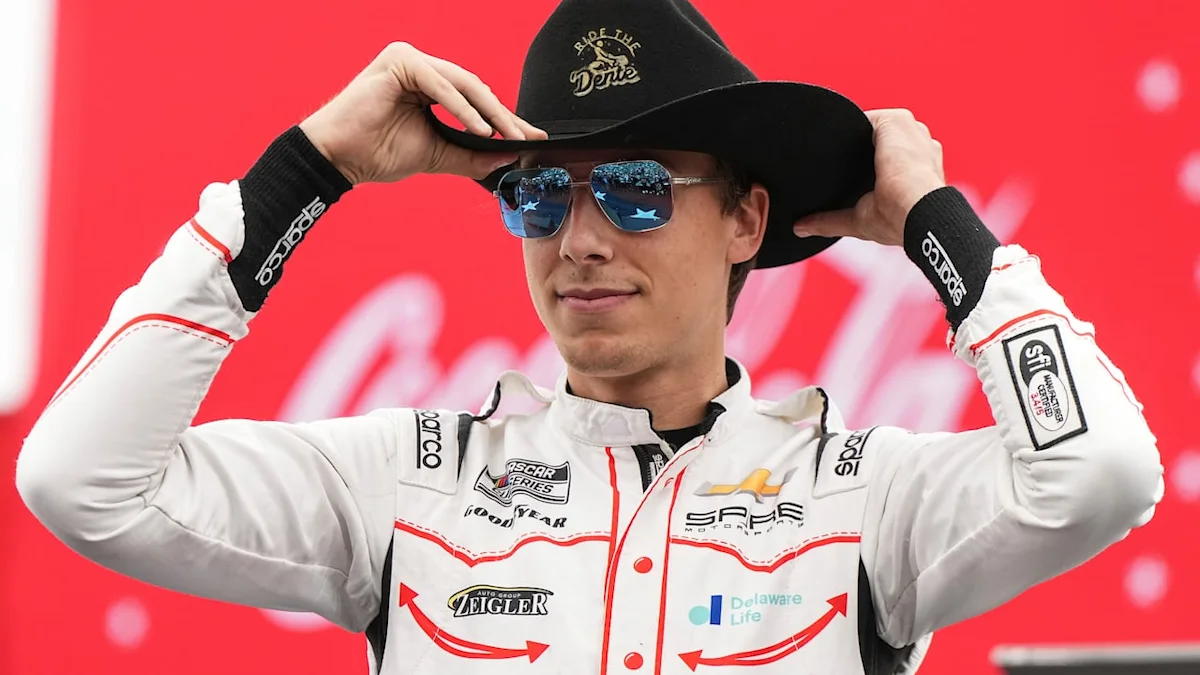
NASCAR Cup Series driver Carson Hocevar and his friend Vernon Hale each started with $800 and a loose plan: buy a cheap car and put the two purchases through an informal challenge. Instead, Hocevar’s Chevrolet Cobalt broke down before the contest began, a decommissioned surplus military tank arrived, and the disabled Chevrolet was flattened into scrap as a homeowners’ association member objected to the tank’s presence.
Hale appeared to have made the safer purchase. He selected an Oldsmobile Cutlass Supreme that he said needed no work. Hocevar bought the Cobalt and gave it a hand-applied finish using several cans of spray paint. Both men thought the result looked better suited to a demolition derby than a residential driveway, but the rough paint was cosmetic. The mechanical trouble ended the challenge.
After Hocevar filled the Cobalt with Unleaded 88, the car displayed a power-steering warning while leaving the station. The pair traced the loss of power-steering operation to a blown belt. The engine then began backfiring and eventually stopped running.
The fuel and failure occurred close together, but the available account does not identify the fuel as the cause of the breakdown. Unleaded 88 is commonly E15, a blend containing 15% ethanol, and fuel compatibility depends on vehicle model year and manufacturer guidance. Here, the confirmed mechanical finding was the failed belt associated with the power-steering problem; no supported diagnosis connects the fuel to the subsequent backfiring or shutdown.
With the Cobalt unable to move under its own power, Hale used the Cutlass to push it home while Hocevar steered. That improvised recovery also settled the planned contest before it could start: one $800 car remained operational, while the other returned as a disabled vehicle with a rattle-can paint job and a dead power-steering system caused by the blown belt.
The tank changed the problem from repair to disposal
A trailer delivered the decommissioned military tank later that same day. Rather than diagnose and repair the Cobalt, the hosts abandoned the cheap-car competition and used the tracked vehicle to destroy Hocevar’s purchase. The tank drove across the Chevrolet’s hood and roof, flattening the car in one pass. The wreck was later dragged away to clear the yard.
The crushing itself was mechanically straightforward: a passenger-car body is not designed to carry the concentrated loading imposed by a vehicle weighing several tons. The Cobalt’s thin exterior panels and roof structure collapsed as the tracks passed over them. What began as an $800-car comparison therefore ended without a conventional test, race or repair attempt. The Chevrolet simply became scrap.
Operating tracked armor around a residential property introduced a different set of constraints. The tank had metal road pads that could tear up pavement if the driver turned while on asphalt. Tracked vehicles steer by creating a speed difference between their left and right tracks; on a hard surface, that action can force the pads to scrape or pivot against the pavement rather than slide across loose ground.
The property’s newly installed septic system added another reason to control the route carefully. The hosts joked about the consequences of careless maneuvering, but the underlying concern was real. The Environmental Protection Agency advises homeowners not to drive or park over a septic drainfield. Heavy loading can compact soil or damage buried system components, reducing the field’s ability to treat and disperse wastewater.
The tank’s arrival also attracted attention beyond the yard. A neighbor recounted the interest generated by its transport rig on the road and at a weigh station. At the property, one homeowners’ association member objected to the tank being there. The documented response was that individual objection, not a formal action by the association.
By then, however, the Cobalt was no longer a running car or a candidate for the original challenge. One failed belt had helped stop the contest before it started; one pass from a surplus tank finished the Chevrolet completely. The remaining practical task was dragging its flattened shell out of the yard without damaging the pavement or the new septic system beneath it.
| More aerospace and engineering stories, right in your MSN feed. Follow AMI on MSN |
By Robert McKinney — Editor-in-Chief for AMI’s automotive and mobility coverage, with a mechanical engineering background and a decade reporting on powertrain systems, EV innovation, and global vehicle manufacturing.