Delta Installed 44 Recliners After Seat Approval Delay Parked New A321neos
Delta Air Lines had new Airbus A321neos ready, but not the premium seats central to their intended role. Several aircraft delivered during 2024 reportedly spent months in desert storage while approval of the planned Safran Vue lie-flat seat remained unresolved. Delta eventually put the jets to work with an interim cabin built around 44 domestic first-class recliners.
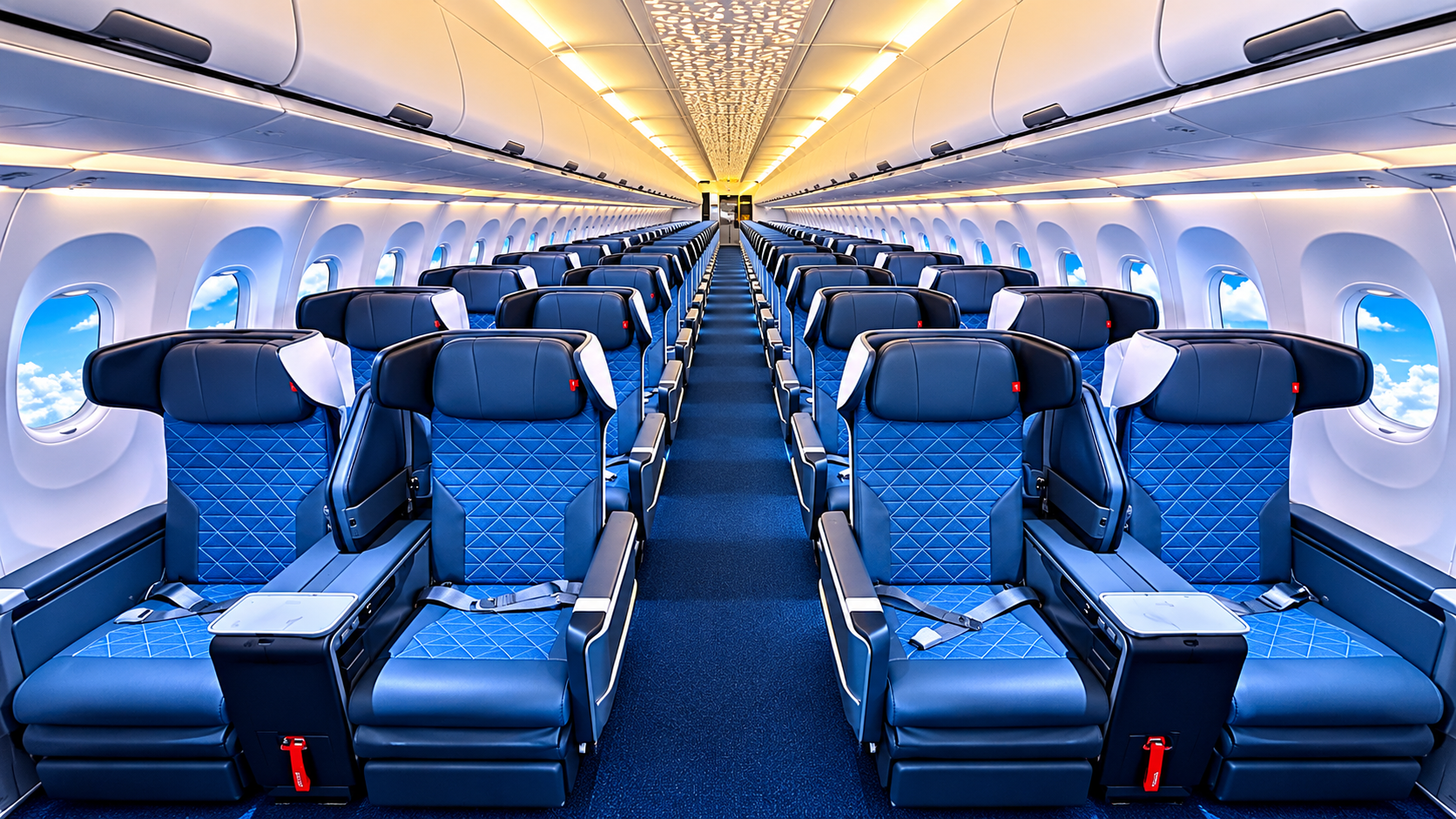
The workaround closed an aircraft-utilization gap, but it created a markedly different product for passengers. Delta’s original premium transcontinental layout called for 16 lie-flat business-class suites, 12 premium-economy seats, 54 Comfort+ seats and 66 economy seats. The temporary arrangement introduced in May instead has 44 recliners, 54 Comfort+ seats and 66 economy seats, eliminating both the lie-flat suites and the separate premium-economy section.
Why one seat could hold up an airliner
An airliner seat is part of the aircraft’s certified safety system, not interchangeable cabin furniture. Reports during 2025 and 2026 linked the Vue delay to Federal Aviation Administration requirements involving human factors and crashworthiness. The FAA’s guidance for dynamic seat certification by analysis describes how computer modeling can support compliance when it is validated by dynamic testing, with defined limits, validation processes and documentation requirements.
Premium seats can make that work more demanding because they combine complex geometry with multiple operating positions and surrounding cabin structures. In Delta’s planned installation, the Vue used a window-facing reverse-herringbone arrangement rather than the more conventional aisle-facing herringbone orientation. The available information identifies human-factors and crashworthiness requirements as certification issues, but does not specify which individual test or design detail remained unresolved.
The result illustrates a systems-integration constraint: delivery of the airframe does not by itself create a service-ready aircraft. The installed cabin must also match an approved configuration. If a defining component is unavailable or has not completed its approval process, the airline must wait, adopt another approved interior or develop an interim installation as Delta did here.
The workaround changed more than the seat count
Installing 44 first-class recliners allowed Delta to move the aircraft out of storage and into operational use without the intended Vue cabin. That restored productive capacity, but the jets could not initially deliver the lie-flat experience around which their premium transcontinental role had been planned, including markets such as New York to Los Angeles.
The unusually large recliner cabin also changes service and passenger-flow demands. All 44 first-class seats have access to one forward lavatory, creating the prospect of queues on longer flights and concentrating more cabin-service activity near the front of the aircraft. Those are practical human-factors consequences of using a high-capacity domestic premium layout as a substitute for a smaller suite cabin.
Behind the passenger-facing change is a broader planning problem. A stored aircraft affects utilization and expected revenue while complicating the coordination of fleet assignments, staffing, maintenance and network schedules. The interim cabin reduces that disruption, but it also requires Delta to operate and market a product that differs substantially from the one originally planned.
Seat certification has also become a wider industry constraint. Airbus and Boeing have flagged seat supply or approval challenges, while other airlines have encountered delays introducing new premium cabins. Increasingly elaborate suites can differentiate an airline, but their integration schedules must accommodate structural testing, occupant protection, documentation and approval not only industrial production.
Reports suggest Delta may be considering the established, aisle-facing Thompson Vantage Solo as an alternative to the Safran Vue. Delta has not announced or implemented such a switch, leaving the final premium configuration unresolved. For now, the clearest measure of the bottleneck is visible inside the aircraft: a planned 16-suite lie-flat cabin gave way to 44 recliners so factory-fresh jets could finally fly.
| More aerospace and engineering stories, right in your MSN feed. Follow AMI on MSN |
By Thomas Caldwell — AMI’s senior editor for mechanical and mobility engineering, covering vehicle electronics, systems integration, electrification, chassis systems, propulsion, and safety policy.