JetBlue and American Canceled Far More Flights Than Rivals After Nationwide Stop
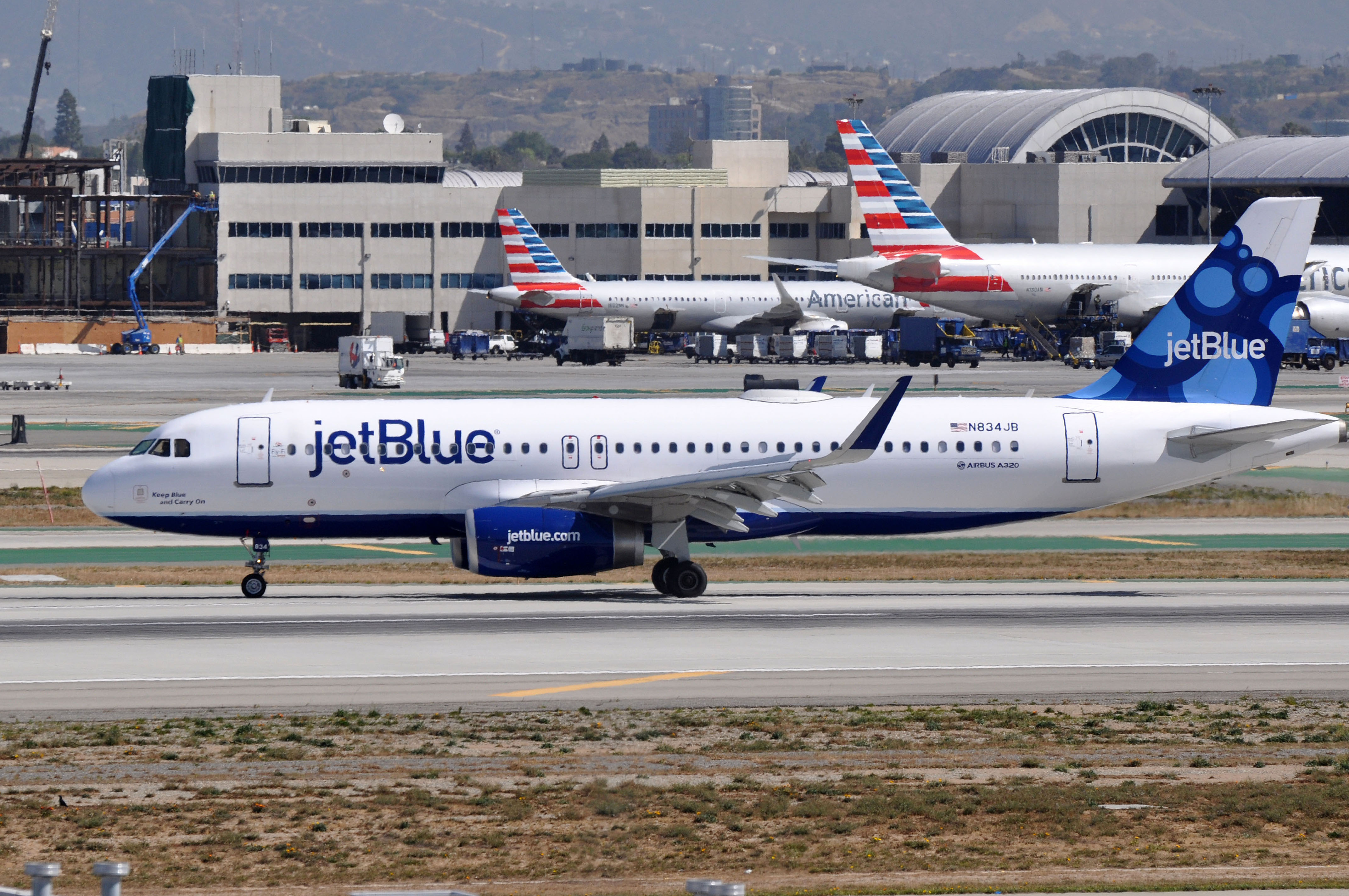
JetBlue and American Airlines left passengers substantially more exposed to cancellations than several major rivals during the four-day recovery from the Nov. 13 nationwide ground stop. Cirium data covering Nov. 13 through Nov. 16 showed JetBlue canceled 32.6% of its U.S. departures and American canceled 23.2%, compared with rates of 12.2% to 17.7% among the other four largest U.S. carriers.

The common disruption did not produce a common recovery. Delta canceled 17.7% of its departures, United 17%, Southwest 16.3% and Alaska 12.2%. More than 19,000 cancellations during the period were attributed primarily to the ground stop, demonstrating how a nationwide interruption can continue affecting passengers long after air traffic begins moving again.
The Federal Aviation Administration said a technical problem prompted it to stop departures at approximately 3:30 p.m. Eastern on Nov. 13. The agency stabilized the system and resumed air traffic at 8:15 p.m. It reported instability at 17 of 22 Air Route Traffic Control Centers but said remaining communications and radar capabilities allowed aircraft already airborne to land safely.
The comparison requires consistent boundaries
The four-day percentages are brand-level figures. They include flights sold under an airline’s name but operated by regional third parties, such as SkyWest. That makes them useful for measuring the disruption encountered by passengers across each carrier’s broader network, but they should not be treated as equivalent to mainline-only statistics.
A separate FlightAware snapshot from Nov. 15 showed an even wider operational gap. JetBlue canceled 29% of its schedule, while American canceled 24% of its mainline flights. None of the other six primary carriers canceled more than 5% of mainline flights that day. Regional flying remained more disrupted in some networks: Endeavor Air, Delta’s regional subsidiary, canceled 13% of its flights.
Those datasets use different operating boundaries, so their percentages cannot be directly substituted for one another. Together, however, they show the same broad result: American and JetBlue remained unusually cancellation-heavy after rivals had brought more of their schedules back into operation. Smaller carriers including Frontier, Allegiant, Sun Country and Breeze also performed better during the recovery period.
JetBlue points to geography and crew limits
JetBlue offered an operational explanation centered on the interaction between timing, network geography and regulated crew duty limits. Much of its flying is concentrated in busy East Coast airspace, and the afternoon ground stop occurred after many crews were already well into their duty days. Once those crews reached legal working limits, restoring the aircraft alone could not restore the schedule.
Airline networks are tightly coupled systems. Aircraft, pilots, flight attendants and airport resources all need to arrive at the correct location within a usable time window. A canceled late-afternoon flight can leave an aircraft and crew out of position for the next morning, while passengers displaced from one departure consume seats that would otherwise carry travelers booked on later flights.
JetBlue spokesman Derek Dombrowski said uncertainty about the duration of the stop and the pace at which East Coast air traffic capacity would return made recovery planning difficult. The airline also said it canceled conservatively and issued 92% of its cancellations at least four hours before departure. That approach can reduce last-minute uncertainty for travelers, but it can also lock in a higher published cancellation rate when operating conditions improve faster than expected.
American’s recovery remains unexplained
American declined to explain its performance for the comparison, leaving the specific reasons for its slower recovery unresolved. The result renewed criticism from the Allied Pilots Association, which had also raised concerns after American recovered more slowly from Winter Storm Fern the previous January.
We as a union, our pilots and work groups, we’ve just had enough. It’s continued underperformance, association spokesman Dennis Tajer said. The criticism identifies a labor-management dispute over operational performance, but it does not establish which systems or decisions produced American’s cancellation rate.
Crew communication, access to scheduling personnel, network structure and operational software can all influence how quickly an airline rebuilds a schedule. No available finding links a technology deficiency to the slower results at either American or JetBlue. An analyst’s observation that some competitors have invested more heavily in technology is not evidence that spending differences caused this four-day disparity.
The strongest conclusion is narrower and more useful: recovery capacity is an airline-level capability, even when the triggering event is national. After the same ground stop, JetBlue canceled nearly one-third of its U.S. departures and American nearly one-quarter, while Alaska held its rate to 12.2%. JetBlue has described the constraints behind its reset; American’s unusually high cancellation exposure still lacks a comparable operational explanation.
| More aerospace and engineering stories, right in your MSN feed. Follow AMI on MSN |
By Thomas Caldwell — AMI’s senior editor for mechanical and mobility engineering, covering vehicle electronics, systems integration, electrification, chassis systems, propulsion, and safety policy.