Air Niugini Boeing 767 Lands Safely After Reported Fire Closes Davao Airport
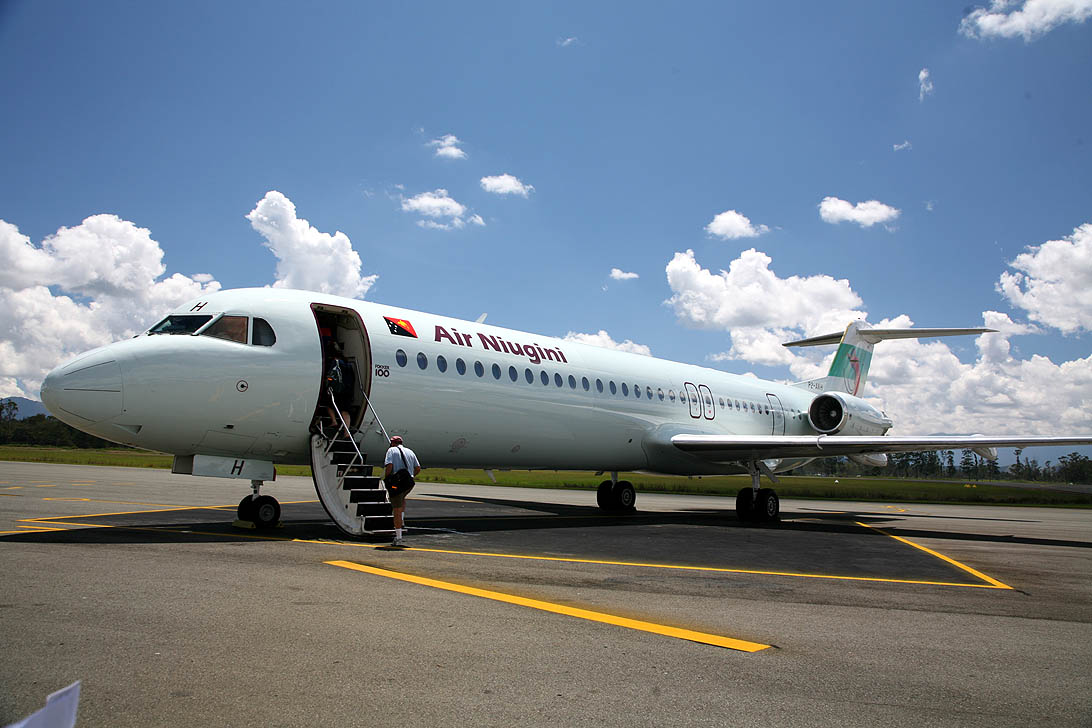
An Air Niugini Boeing 767 carrying 146 people landed safely at Davao International Airport after its pilots reported an indication of a possible engine fire. The emergency response temporarily closed the airport, canceled two inbound flights and prompted the Civil Aviation Authority of the Philippines to dispatch an aircraft accident investigator.

The Boeing 767-383ER was traveling from Hong Kong to Port Moresby, Papua New Guinea, when it diverted to the southern Philippines shortly after midnight on November 21, 2026. It landed at 12:05 a.m. All 137 passengers and nine crew members evacuated to the terminal, and no injuries or deaths were reported, according to an Associated Press account of the aviation authority’s statement.
The safe landing resolved the immediate risk to those aboard, but it did not resolve what happened in the aircraft’s engine system. Officials described the event as an indication of possible sparks or fire in the right engine. No investigative finding has identified the source of that indication, confirmed the extent of any fire or established a cause. The affected engine model also has not been identified.
Why the airport closed despite a safe landing
An emergency does not end when an aircraft reaches the runway. Passengers still have to leave the airplane, firefighters must assess any continuing fire hazard, and airport personnel must determine whether the movement area can safely return to service. In this case, passengers and crew evacuated while firefighters assessed the situation.
Airport rescue and firefighting services are specifically organized around rapid incident response, hazard control, evacuation and rescue. Their role is broader than extinguishing visible flames: responders must protect an evacuation route and manage the hazards associated with an aircraft that may have an active or recently reported fire. That operational requirement helps explain why Davao temporarily suspended other traffic while the aircraft and runway environment were checked.
The closure extended the consequences beyond Air Niugini’s passengers. Two inbound flights from Manila were canceled, showing how one aircraft emergency can temporarily remove airport capacity for other operators. Davao later reopened after safety checks were completed on the main runway. Air Niugini arranged hotel accommodations in Davao City for its affected passengers while they waited for their journey to resume.
What investigators must separate
The investigation begins with several confirmed points: the crew received or observed an indication associated with possible sparks or fire, requested an unscheduled landing, completed a safe diversion and evacuated everyone aboard. The pilots’ accounts will form part of the inquiry, but those accounts must be considered alongside what responders and investigators find on the aircraft.
A central issue is the relationship between the cockpit indication and the physical condition of the engine after landing. The available information includes no immediate report of aircraft damage, but it also contains no finding that explains the indication. The investigator therefore has to determine what condition produced the warning and whether the reported event requires maintenance, operational or other follow-up action.
That causal uncertainty limits broader conclusions. The occurrence cannot yet support claims about maintenance quality, crew performance, a particular engine design or a wider safety trend. It is currently an individual incident under official assessment, with a successful emergency outcome and a documented operational disruption.
The response nevertheless demonstrates how several layers of aviation safety work together. The flight crew diverted rather than continuing to Port Moresby, Davao made airport emergency resources available, passengers and crew evacuated without reported injury, and the runway was checked before operations resumed. Those actions contained the immediate consequences even though the initiating condition remains unresolved.
The next substantive milestone will be an official finding that connects or distinguishes the reported cockpit indication, the pilots’ observations and the aircraft’s physical condition. Until then, the firm result is narrower but consequential: all 146 people reached the ground safely, while Davao’s temporary closure and two canceled flights show the wider operational cost of protecting that outcome.
| More aerospace and engineering stories, right in your MSN feed. Follow AMI on MSN |
By Thomas Caldwell — AMI’s senior editor for mechanical and mobility engineering, covering vehicle electronics, systems integration, electrification, chassis systems, propulsion, and safety policy.