European Postwar Ukraine Force Drill Meets Suspected Russian Incursion in Poland
A European force preparing for a defensive mission in postwar Ukraine encountered the central problem built into that plan: even after a ceasefire, it would need the ability to protect itself. During a 2,800-person deployment exercise in Poland, two objects believed to be Russian missiles and a third described as a jet-powered drone entered Polish airspace and landed within tens of kilometers of the training ground.
Polish, British and French officials assessed the incursion as an intentional warning connected to the drill. Polish Defense Minister Władysław Kosiniak-Kamysz said it was “not an accidental event” and was “closely coordinated with our show of force.” Russian intent remains an attributed assessment, but the proximity of the objects gave the exercise a real-world force-protection dimension that planners could not ignore.
The two-week exercise began Nov. 9 and was still underway on Nov. 20. It marked the first test of whether Multinational Force-Ukraine could deploy into Ukraine after the war, coordinate units from several countries and sustain a mission intended to reinforce the country’s security. Any deployment would require a ceasefire and an invitation from Ukraine.
Eleven countries tested movement, aviation and command systems
The exercise followed 12 months of planning by Multinational Force-Ukraine, a France- and United Kingdom-led initiative operating outside NATO’s command structure. It sits within the 37-nation Coalition of the Willing.
Personnel came from Belgium, Estonia, France, Germany, Lithuania, the Netherlands, Spain, Sweden and the United Kingdom. France supplied 1,100 troops. Poland provided the logistical support needed to receive and move the force, while Turkey participated remotely from Istanbul, bringing the total number of participating countries to 11.
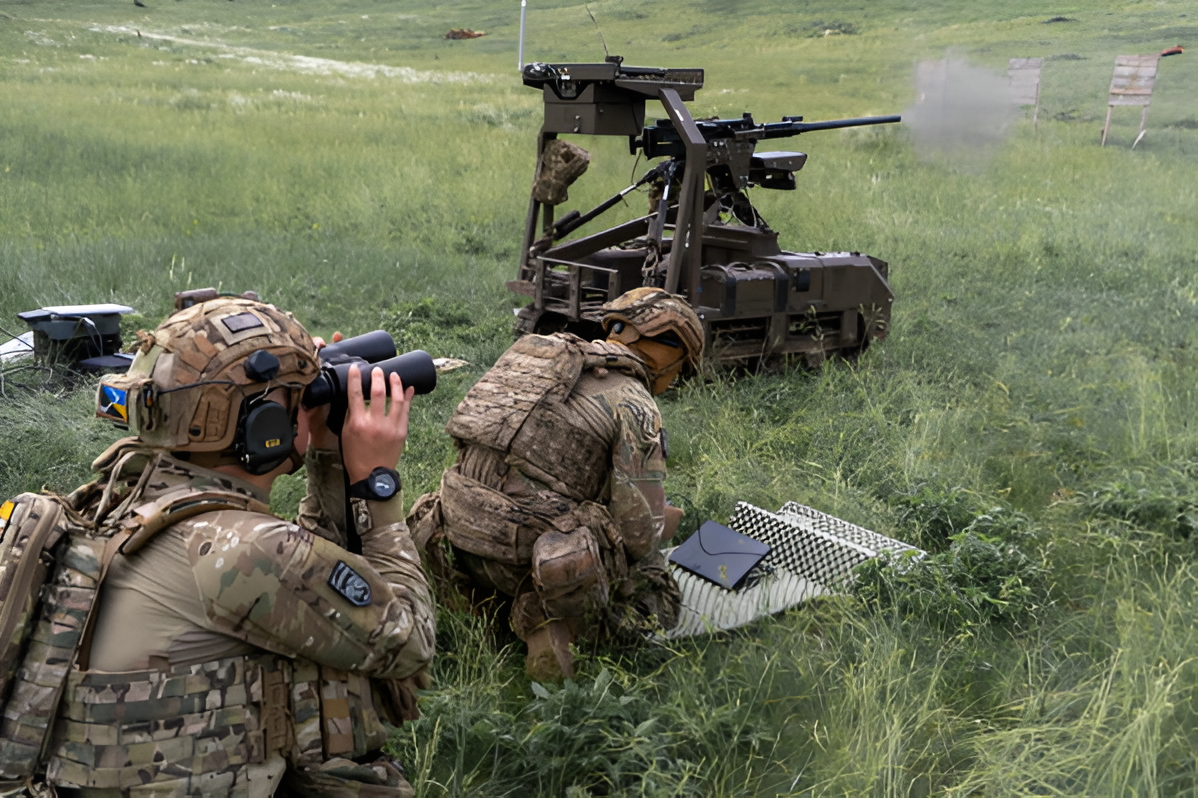
Forces arrived by land, sea and air and rehearsed moving personnel and equipment across those transport modes. They also conducted multinational command-and-control work, flew fighter aircraft and an aerial-refueling tanker, operated surveillance drones, practiced responses to drone attacks and trained in trench warfare.
Those activities test more than whether individual units can perform their assigned tasks. A multinational deployment depends on compatible communications, clear command authority, shared procedures and a supply system that can continue working after the initial movement is complete. NATO’s public guidance on multinational logistics identifies movement, supply, maintenance and interoperability as linked requirements for sustaining a force. Multinational Force-Ukraine is not a NATO mission, but it faces the same basic integration problem across national units and equipment.
A defensive mission still requires protection
British Brigadier Campbell Close, the force’s deputy commander for operations, described the event plainly: “This is a deployment exercise.” He also emphasized, “We are a defensive force.” Its proposed role would not include peacekeeping or monitoring a ceasefire.
Instead, the force would help regenerate Ukraine’s armed forces, provide reassurance intended to support the reopening of Ukrainian airspace and assist with clearing mines from the Black Sea. Each task carries a different technical and institutional burden. Rebuilding armed forces involves training and long-term support, while mine clearance can continue well after fighting stops and requires coordination among coastal states and maritime authorities.
Reopening the skies is especially dependent on confidence beyond the military chain of command. Ukraine can make its own sovereign airspace decision, but commercial operations would also require safety assessments and acceptance from aviation regulators, airlines and insurers. Previous examinations of Ukraine’s reopening plans have found that airport readiness, air defenses, emergency procedures and international confidence would all influence whether passenger service could return.
The Polish incursion illustrated why a ceasefire alone would not automatically satisfy those requirements. A force assigned to reassure aviation operators and support Ukrainian recovery would also need credible protection for its own personnel, aircraft, drones, command systems and logistics network.
Ed Arnold of the Royal United Services Institute described the requirement as a “combat force for their own force protection.” That does not change the proposed mission into an offensive deployment; it defines the capability needed to keep a defensive mission functioning in a contested environment. Russian President Vladimir Putin has previously said foreign troops inside Ukraine would be considered legitimate targets.
The exercise therefore tested only the first major threshold: whether 11 countries could assemble, move and coordinate a force after a year of planning. The suspected missiles and jet-powered drone exposed the next one whether that force could remain protected enough to carry out reconstruction, aviation-support and maritime-clearance duties after it arrived.
| More aerospace and engineering stories, right in your MSN feed. Follow AMI on MSN |
By David Whitaker — Associate editor for AMI’s aerospace and drone systems desk, translating flight systems, aircraft programs, spaceflight, and UAV developments into accessible technical stories.