


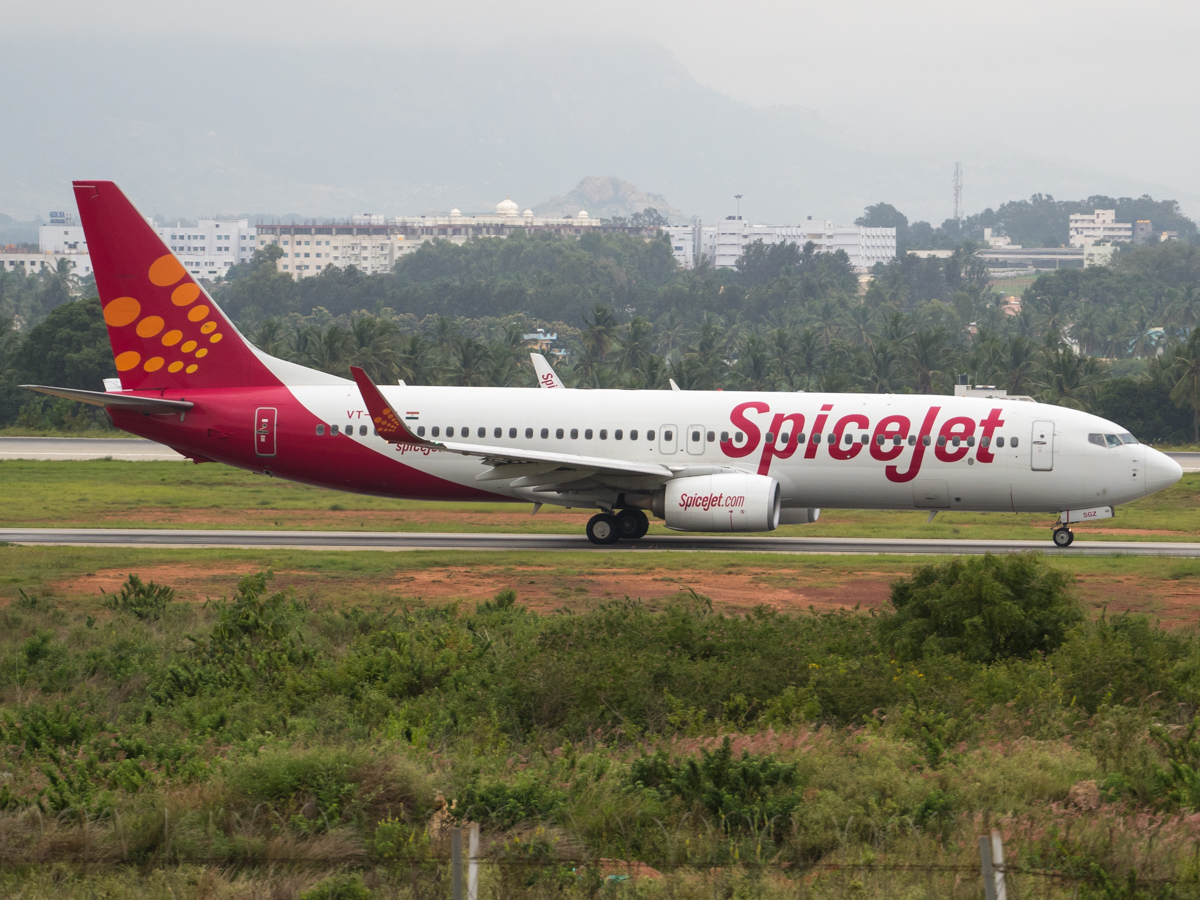
SpiceJet Gets Seven Days to Explain Cancellations as Most Jets Stay Grounded
SpiceJet has been given seven days to explain persistent cancellations, delays and alleged compliance failures while a majority of its aircraft reportedly remain grounded. India’s Directorate General of Civil Aviation issued the show-cause notice dated November 17, according to people cited in reporting on the action, and said the airline had not submitted a credible plan for returning those aircraft to service.

The immediate tension is between the flight schedule SpiceJet is authorized to operate and the aircraft it has available to deliver it. The regulator reportedly flagged failures to follow the approved schedule, declining on-time performance and inadequate assistance for passengers affected by disruptions. SpiceJet had not immediately commented, and the notice begins a regulatory process rather than establishing final findings.
Fleet availability sets the practical limit
An approved schedule is a commitment built around aircraft, crews, maintenance support, airport slots and contracted services. When most of a fleet is unavailable, the remaining aircraft must absorb more of the planned operation, leaving less flexibility when an aircraft needs maintenance or another disruption occurs. A schedule can remain valid on paper while becoming increasingly difficult to operate consistently.
That is why the absence of a regulator-accepted return-to-service plan is more consequential than a simple aircraft count. A credible restoration plan would need to show that grounded aircraft can clear the applicable maintenance, documentation, insurance and operational requirements before returning to passenger service. It would also need to connect those aircraft to a schedule the airline can realistically sustain.
The notice reportedly raises uncertainty over renewal of mandatory insurance coverage and cites disruptions associated with delayed payments to service providers. These are separate compliance and commercial issues, but both can restrict usable capacity. An aircraft is not operationally available merely because it is physically present: the airline also needs the required coverage and the supporting services necessary to dispatch and operate it.
SpiceJet’s domestic market share fell from 1.2% in August to 0.6% in September. Market share does not by itself establish the cause of the airline’s disruption, but the decline provides a measure of how limited its delivered capacity had become. The board’s November 18 approval of a proposal to raise up to ₹5,500 crore may support the airline’s financial position, although approval of fundraising is not the same as restoring aircraft or demonstrating schedule compliance.
Passengers are protected after a schedule breaks down
The DGCA’s concern extends beyond whether a flight operates. Its passenger-protection requirements place responsibilities on the operating airline when flights are cancelled or substantially delayed, subject to the circumstances and notice provided.
For qualifying cancellations, an airline must offer an alternate flight or refund acceptable to the passenger. Depending on when notice was provided and why the cancellation occurred, compensation may also apply. Passengers who have checked in can be entitled to meals and refreshments for specified delays, while sufficiently long delays can trigger accommodation requirements. For domestic delays exceeding six hours, the rules call for an alternate flight within six hours or a full refund. The airline also carries the burden of showing whether and when passengers were informed of a delay.
Those obligations explain why inadequate passenger facilitation appears alongside fleet availability in the notice. Operational disruption creates a second workload involving notifications, rebooking, refunds, airport assistance and grievance handling. If cancellations become persistent, the passenger-support system must handle repeated demand rather than an isolated irregular operation.
Route compliance adds a public-access consequence
The DGCA also alleged that SpiceJet failed to satisfy eligibility requirements for scheduled international operations and repeatedly violated India’s Route Dispersal Guidelines despite previous enforcement action and a penalty imposed in May. Details of that earlier penalty were not available, and the latest allegations remain part of the show-cause process.
Route Dispersal Guidelines are intended to prevent scheduled capacity from concentrating only on the most commercially attractive routes. Under the government’s published framework, airlines must deploy specified proportions of capacity on routes serving regions including the Northeast, Himalayan states and island territories. Fleet scarcity therefore creates a policy tradeoff: fewer available aircraft must cover both commercially important services and network obligations designed to preserve broader access.
The seven-day response must address more than a run of cancelled flights. SpiceJet must explain whether its available fleet can support its approved schedule, how disrupted passengers are being assisted, and how it will resolve the insurance, service-provider, penalty and route-compliance concerns identified by the regulator. Until a credible aircraft-restoration plan is accepted, the gap between published service and deliverable capacity remains the central operational constraint.
| More aerospace and engineering stories, right in your MSN feed. Follow AMI on MSN |
By Thomas Caldwell — AMI’s senior editor for mechanical and mobility engineering, covering vehicle electronics, systems integration, electrification, chassis systems, propulsion, and safety policy.




