Ford Makes Fathom’s Battery Bend to Absorb Side-Impact Forces
Ford does not intend to isolate the battery in its upcoming Fathom electric truck behind layers of added protective structure. Instead, the company designed the pack and its rectangular cells to deform during a side impact, turning the battery into part of the structure that manages crash energy.
Ford says the pack can carry up to 40% of the forces generated in a side impact while its lithium iron phosphate cells remain inert and avoid thermal runaway the self-heating process that can lead to fire. The design has undergone testing with production-specification packs, but the fire-safety result remains a company claim ahead of production-vehicle evaluation and independent testing. The Fathom has not yet been revealed and is expected to arrive in late 2027.
Why Ford wants the cells to bend
The usual engineering assumption is that an electric-vehicle battery is sensitive payload. Structural rails, crossmembers and pack enclosures are therefore designed to limit intrusion and keep crash loads away from the cells. Vladimir Bogachuk, Ford’s chief engineer for advanced vehicle structure architecture, described that conventional approach as treating the battery like “a fragile jewel you must protect.”
Ford is reversing part of that logic. The Fathom’s pack, developed for the company’s Universal EV platform, is intended to deform within defined limits and transmit loads through the vehicle. Its top cover forms the cabin floor, the seats bolt directly to it, and the bottom of the enclosure serves as the underbody. In effect, the pack replaces some of the structure that would otherwise surround it.
This integration follows a familiar lightweighting principle: one component performs several jobs. Removing redundant braces and floor structures can reduce mass and manufacturing complexity. Ford says the resulting vehicle can be lighter and more efficient, with improved driving dynamics. The company has also started shipping the first Fathom prototype cells from its Michigan battery plant to Louisville Assembly Plant.
The engineering challenge is controlling where and how the pack deforms. A battery cell cannot simply be treated like an ordinary crush member. Excessive deformation can damage the separator between the electrodes, create an internal short circuit and initiate thermal runaway. The acceptable deformation limit also varies with cell geometry, internal construction, loading speed and the shape of the object applying the load.
Research on prismatic lithium-ion cells supports the broader concept that deformation can be classified into safe, risk and failure regions rather than treated as an immediate binary failure. A 2024 impact study found that cell dimensions, separator thickness, separator fracture strain and impact speed all influence the deformation boundary. That makes Ford’s claim technically plausible in principle, but the result depends on the specific cell, pack and crash condition.
Pack design determines the fire outcome
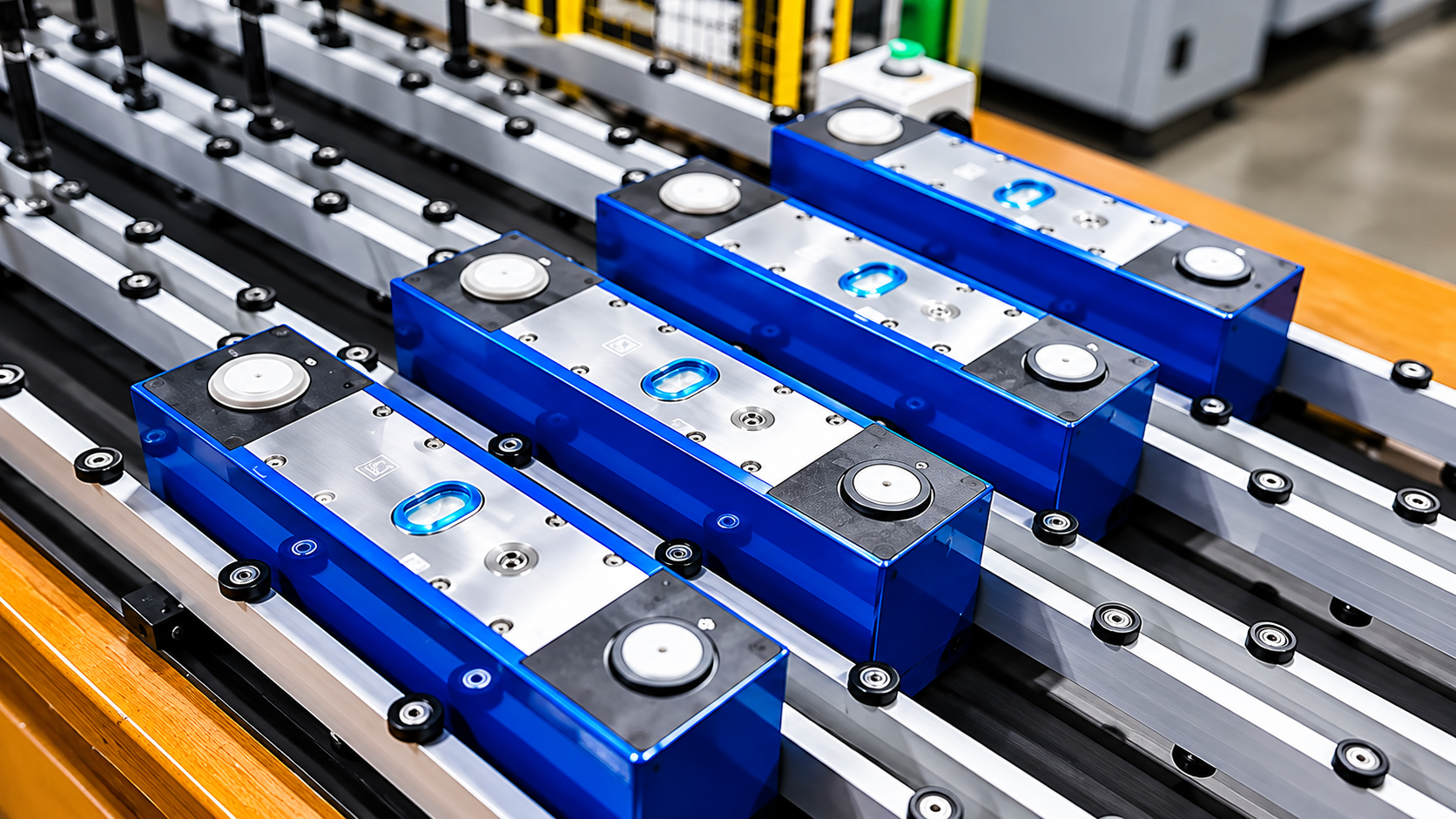
Ford selected prismatic lithium iron phosphate cells with a wound internal structure commonly called a jelly roll. The rectangular format allows the cells to fit closely within the chassis and participate in the structural load path. Ford also cites manufacturing cost, temperature resistance and suitability for bidirectional energy use among its reasons for choosing the design.
Cell chemistry alone does not settle pack-level fire safety. Heat transfer, electrical connections, spacing and containment determine whether a failure remains local or spreads to neighboring cells. Published multi-cell testing by Sandia National Laboratories has shown that propagation behavior can change substantially with battery configuration, even when the underlying cells are similar. A production pack must therefore be assessed as a complete mechanical, electrical and thermal system.
Ford says a dedicated abuse-testing team has subjected cells and production-specification packs to crash loads, vibration, humidity, water-resistance testing, high charge and discharge conditions, and temperatures from minus 40 to 60 degrees Celsius. Its validation program also includes more than 150,000 miles of simulated daily driving. Engineers use computed-tomography scans to inspect how the internal wound layers respond after testing.
Serviceability is another consequence of making the battery structural. Removing a pack that also carries seats, floor loads and crash forces can be more involved than servicing a separately mounted unit. Ford plans a door beneath the rear seats that will provide access to charging and power electronics without dropping the pack, reducing the number of repairs that require disturbing the main structure.
Important specifications remain undisclosed, including total energy capacity, individual cell capacity and final cell count. Ford plans to use operating data from the first Universal EV vehicles to refine later validation methods. Until production trucks reach independent crash and abuse testing, the central safety proposition remains Ford’s: a battery can bend, carry a substantial share of side-impact load and still stop mechanical damage from becoming a thermal event.
| More aerospace and engineering stories, right in your MSN feed. Follow AMI on MSN |
By Thomas Caldwell — AMI’s senior editor for mechanical and mobility engineering, covering vehicle electronics, systems integration, electrification, chassis systems, propulsion, and safety policy.