UK Maritime Agency Reports Two Tanker Strikes Near Hormuz, Ship Count Unclear
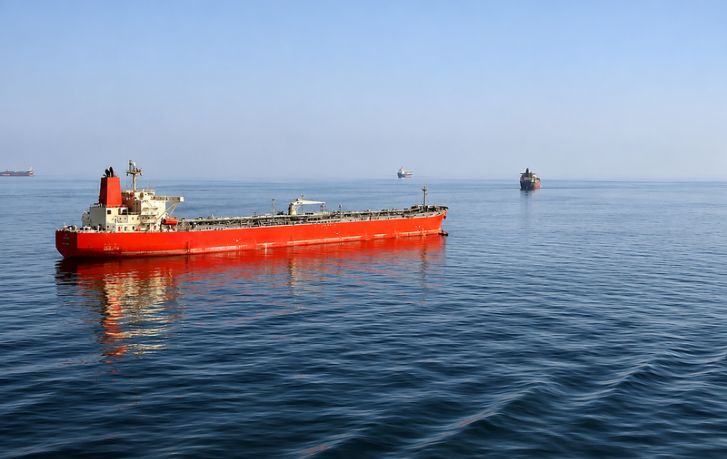
Britain’s maritime security agency reported tanker strikes at two locations near Oman’s Khasab, at the entrance to the Strait of Hormuz, but it remained unclear whether one ship or two had been hit. The United Kingdom Maritime Trade Operations agency said no casualties were reported, while the environmental consequences and cause remained unresolved.

In the first report, UKMTO said an outbound tanker was struck on the stern by an unidentified projectile about 11 nautical miles north of Khasab. The agency later reported that a tanker’s engine room had been hit by an unidentified projectile 17 nautical miles east of Khasab. Those descriptions establish two reported locations and two reported impact areas, but not the number of vessels involved.
Iran’s navy offered a separate account, saying an oil tanker caught fire after striking a naval mine in a restricted area east of the strait. Reuters could not independently verify that claim or determine whether it referred to either UKMTO incident. The available accounts therefore leave two basic questions open: whether one tanker generated multiple reports and whether the reported damage involved projectiles, a mine or unrelated events.
Why incident identity matters
Resolving the vessel count is more than an accounting exercise. Maritime incident reports can be issued as information develops, and separate location, timing and damage descriptions do not by themselves establish separate ships. Confirmation normally requires enough identifying and chronological information to connect or separate the reports without relying on assumptions.
The reported impact points also raise different inspection priorities without establishing a failure sequence. A stern report directs attention toward aft structures and equipment, while an engine-room report concerns a compartment containing machinery essential to propulsion and onboard services. UKMTO did not provide a damage assessment, the vessels’ operating condition or evidence connecting either reported impact to a particular weapon.
No casualties were reported in either UKMTO notice. The agency said the environmental impact was unknown, leaving unanswered whether cargo containment, fuel systems or other pollution barriers were affected. A previous attack on Friday caused a fire aboard a tanker near Khasab, according to the British agency, but that event does not resolve the identity or cause of the later reports.
A narrow passage with wider consequences
Khasab sits on Oman’s Musandam Peninsula at the entrance to the Strait of Hormuz. Before the Iran war began, the waterway carried nearly one-fifth of global crude oil supplies. That concentration means uncertainty can affect shipping decisions even before investigators establish precisely what happened to an individual vessel.
Tehran has restricted vessels seeking passage through the strait and has attacked ships it says violated those restrictions. Iran’s statement placed the alleged mine incident in a restricted area, but the account remains unverified and has not been connected to either projectile report. Treating the claims as a single confirmed sequence would erase the central uncertainty in the case.
The commercial effects of disruption are already measurable. An October UN Trade and Development assessment attributed sharply higher tanker transportation costs to reduced vessel availability, longer routes and time-consuming ship-to-ship transfers. Its cited Baltic Exchange indexes reached 371 for crude tankers and 280 for refined-product tankers by October 19, against a baseline of 100 on February 27. Those figures describe broader conflict-related disruption, not the effect of these particular incidents, but they show how risk and operating friction at Hormuz can propagate through energy logistics.
Recent flow data also show that traffic can recover while remaining sensitive to safety conditions. The U.S. Energy Information Administration reported that collective oil shipments through major Middle Eastern chokepoints rose 19% in the third quarter of 2026 from the second quarter. Operators used smaller ships and ship-to-ship transfers while producers increased use of infrastructure intended to bypass the highest-risk areas.
For now, UKMTO has documented two reported impact locations, no casualties and an unknown environmental outcome. Establishing whether the notices concern one tanker or two and whether Iran’s mine account is connected to either remains the next essential step for understanding the scale of the incident at one of the world’s most consequential oil passages.
| More aerospace and engineering stories, right in your MSN feed. Follow AMI on MSN |
By Thomas Caldwell — AMI’s senior editor for mechanical and mobility engineering, covering vehicle electronics, systems integration, electrification, chassis systems, propulsion, and safety policy.