


Senate Schedules Review of FAA Outage That Halted Departures Nationwide
A Senate aviation panel has scheduled a December 2 hearing to examine how a Federal Aviation Administration telecommunications disruption led to a nationwide halt on departures. The planned review will cover the November 13 ground stop, the FAA’s efforts to identify and isolate the disruption, its root-cause investigation and measures intended to prevent another shutdown.
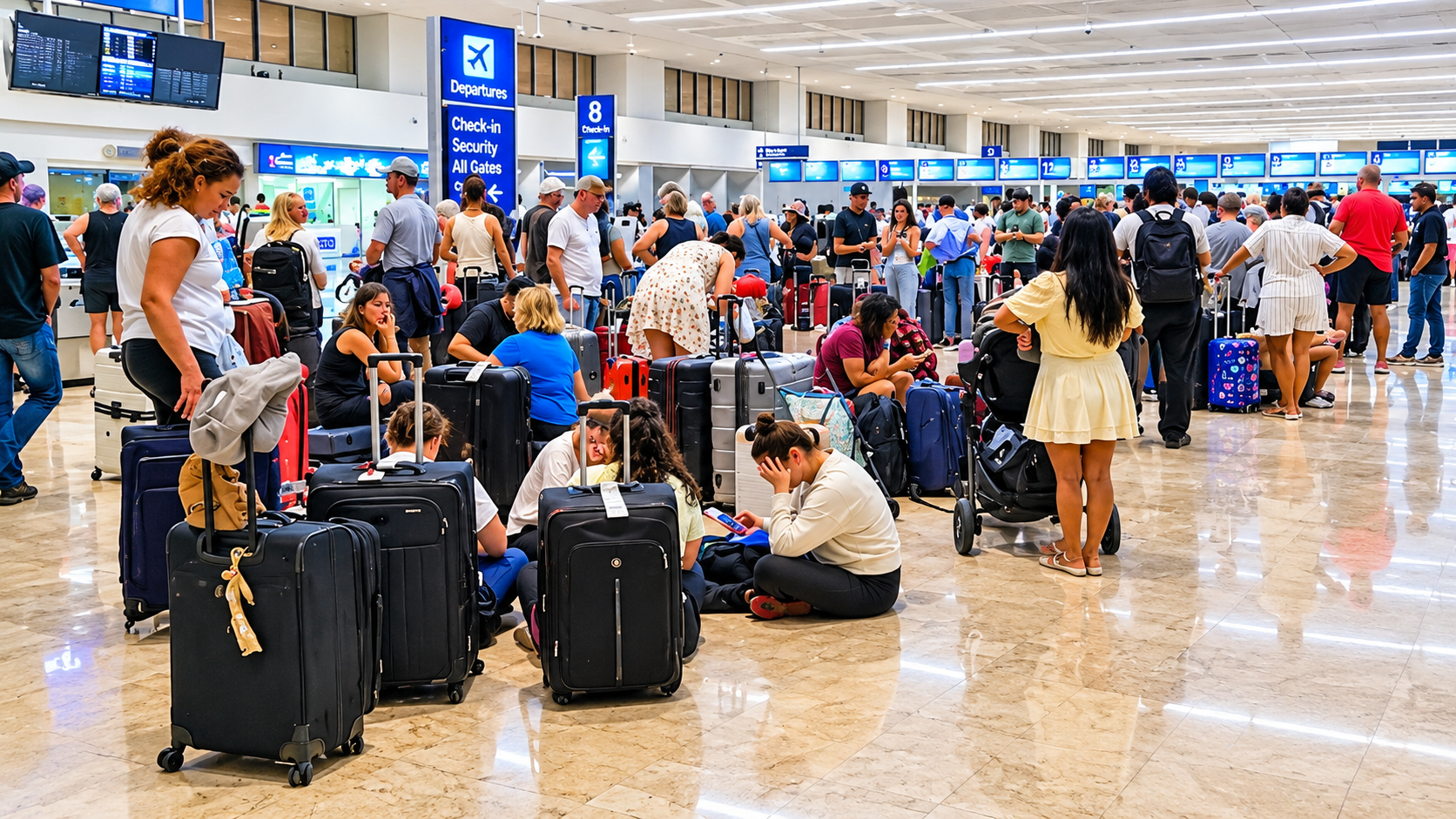
The ground stop lasted approximately four hours and 45 minutes. Operators canceled about 12,462 flights that day, including 9,082 cancellations by major airlines, although the FAA says not every cancellation was directly caused by the shutdown. About 3,500 aircraft already airborne continued to safe landings while departures were held. The agency reported that instability affected 17 of its 22 en route air traffic control centers and spread into several terminal approach-control facilities.
A preliminary fault scenario, not a completed finding
The FAA’s November 15 technical update provides a more specific but still preliminary account. According to the agency, legacy equipment became unstable as data flooded its telecommunications network at roughly 1,000 connection attempts every four to five seconds. The initial investigation identified a radar site in Amarillo, Texas, and a radio communications site in El Dorado, Arkansas, as two potential sources.
L3Harris, the network service provider, had been working at the El Dorado site, including deploying a new router. The FAA said the network stabilized after the two locations were blocked, and a broadcasting function was disabled on approximately 60 similar routers as a precaution. The FAA and L3Harris continue to investigate the root cause, including why the excessive traffic arose and how it propagated through the wider network.
Those unresolved steps are central to any assessment of redundancy. A backup frequency is only one part of a layered communications system. Resilience also depends on the network paths, routers, switches, power sources, configuration controls and monitoring systems that carry voice, radar and flight information among facilities. Alternate communications can remain available while a shared transport network becomes too unstable to support normal traffic levels confidently.
The FAA says this was not a complete loss of radio or radar service. Some frequencies and radar feeds remained reliable, allowing controllers to communicate with and track aircraft already in the air. Critical medical, law-enforcement and military flights also continued. The nationwide departure stop functioned as another safety layer: reducing demand and preventing additional aircraft from entering the system while controllers managed those already airborne.
Congress must examine how redundancy behaved
The engineering question is therefore more precise than whether a backup frequency failed. Investigators need to establish which primary and alternate paths were available, whether supposedly separate paths shared equipment or dependencies, how traffic moved after instability appeared and what operating thresholds prompted the national restriction. A system can retain partial communications capability yet lack enough predictable capacity and integrity for unrestricted departures.
Change management will also be part of the policy problem. The FAA says maintenance at major facilities is generally performed at night, while routine replacements at remote sites have long been conducted during daytime hours without comparable disruption. Following this event, the agency plans to reevaluate when that work is performed. Timing, pre-installation testing, rollback provisions and the ability to isolate abnormal network traffic all affect how much operational exposure accompanies an upgrade.
The public consequence extended beyond the hours of the ground stop. Airlines had to rebuild aircraft and crew schedules, contributing to thousands more cancellations over the following days. That recovery burden falls across passengers, crews, airports and carriers even when the initiating problem lies in shared federal infrastructure. It also shows why network resilience cannot be measured solely by whether aircraft already airborne landed safely; service restoration and the capacity to resume departures are part of system performance.
The hearing will also examine modernization spending and the Department of Transportation’s goal of replacing legacy systems by the end of 2028. Congress has already appropriated $12.5 billion for air traffic system modernization, including $4.75 billion for telecommunications infrastructure, and the department is seeking additional funding. The oversight challenge is to connect any new request to defined reliability improvements, coordinated schedules and measurable reductions in shared failure exposure rather than assuming newer equipment alone guarantees resilience.
Transportation Secretary Sean Duffy is listed as the witness for the December 2 hearing. The most consequential information will be a verified failure sequence showing what initiated the network flood, how instability reached 17 en route centers, how alternate capabilities performed and which corrective changes can prevent another local equipment event from producing a nationwide departure shutdown.
| More aerospace and engineering stories, right in your MSN feed. Follow AMI on MSN |
By Thomas Caldwell — AMI’s senior editor for mechanical and mobility engineering, covering vehicle electronics, systems integration, electrification, chassis systems, propulsion, and safety policy.



