


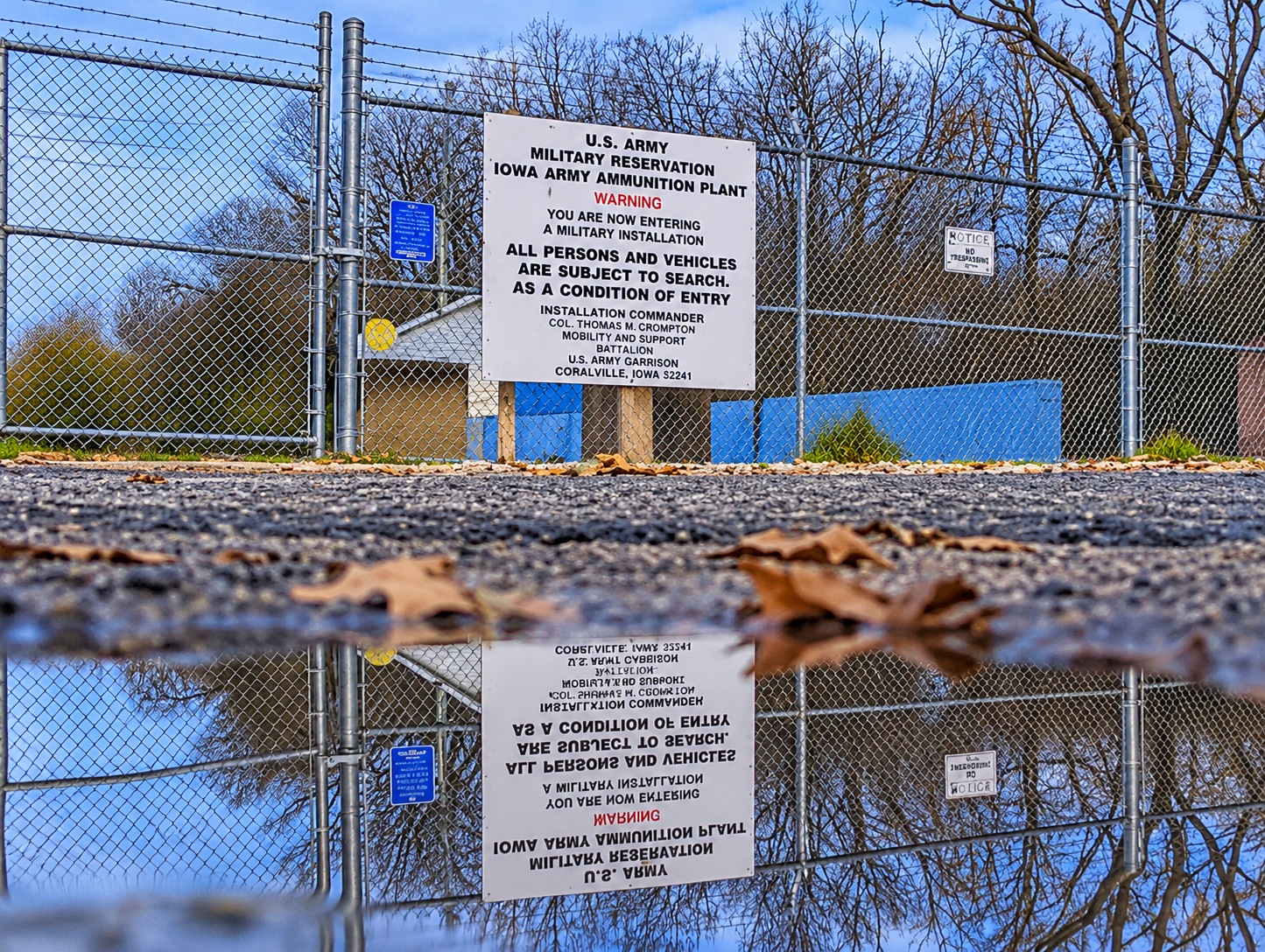
Army detonates nearly 5 tons of unstable explosive at Iowa plant
The U.S. Army has completed the controlled detonation of nearly 5 tons of degraded lead azide at the Iowa Army Ammunition Plant in Middletown. The operation destroyed 68 barrels of material that had crystallized in long-term storage, a condition officials warned created a risk of an uncontrolled explosion without warning.
The decision came down to two hazardous outcomes rather than a choice between detonation and leaving stable material in storage. Army officials and other federal agencies concluded that a planned, in-place blast was safer than allowing the lead azide to remain in a condition where heat, shock, friction or temperature changes could initiate it unpredictably.
The Environmental Protection Agency issued an emergency permit after determining that the degraded explosive presented an imminent and substantial threat to human health and the environment. According to the agency, recrystallization had made the material too dangerous to handle or move, ruling out treatment methods that would require transporting the barrels or significantly disturbing them.
Degradation turned storage into an immediate disposal problem
Lead azide is a highly volatile energetic material, but its physical condition was the central concern in Iowa. Recrystallization produced material described as extremely sensitive to friction and shock. Officials also warned that freezing temperatures could increase the instability; Middletown experienced freezing conditions on Wednesday.
That deterioration sharply constrained the available engineering choices. A hazardous material that cannot safely be moved cannot simply be transferred to another treatment facility. Opening containers, using heavy equipment nearby or otherwise disturbing the storage area could add mechanical inputs to material already judged unstable.
In-place detonation reduced the amount of direct human interaction with the 68 barrels and allowed the Army to select operating conditions and provide advance notification. It did not eliminate environmental concerns. Detonating lead-containing explosive material can release pollutants, and the available information does not include post-operation measurements of air emissions, soil or water contamination, property effects or cleanup requirements.
The EPA permit required public notification, sampling and monitoring before and after the operation, cleanup of contaminated areas and reporting to the agency. Those requirements establish what the Army must examine; they do not supply the results. Environmental performance can only be assessed once monitoring data and required reports are available.
Court action cleared the final procedural obstacle
The disposal followed multiple delays and litigation over the emergency permit. Environmental groups challenged whether the EPA had adequately considered alternative containment methods and the potential health and environmental effects. The U.S. Court of Appeals for the 8th Circuit later lifted its administrative stay, finding that the challengers were unlikely to prevail in their effort to block the permit.
The court found that the EPA had incorporated safeguards intended to limit lead-dust dispersal and exposure risks. It also accepted that the Army had evaluated alternatives before concluding that controlled, in-place destruction was the best available course. The underlying legal challenge may continue, but the groups involved said they would not pursue another stay of the detonation.
Closed disposal technologies do exist for some waste explosives. Contained-detonation chambers, for example, are designed to retain offgases, dust and fragments for treatment. Their use is limited by chamber capacity, permitted explosive weight, loading requirements and whether material can be prepared and transferred safely. General descriptions of those systems do not establish that one could accept nearly 5 tons of crystallized lead azide that officials said could not be moved.
The completed blast removes the immediate storage hazard identified by federal officials. The next consequential record will come from the permit’s required monitoring and cleanup process, which must show what the controlled operation left in the surrounding environment.
| More aerospace and engineering stories, right in your MSN feed. Follow AMI on MSN |
By David Whitaker — Associate editor for AMI’s aerospace and drone systems desk, translating flight systems, aircraft programs, spaceflight, and UAV developments into accessible technical stories.



