Ford Highlights Simpler EV Pickup Build and Early Chassis Testing
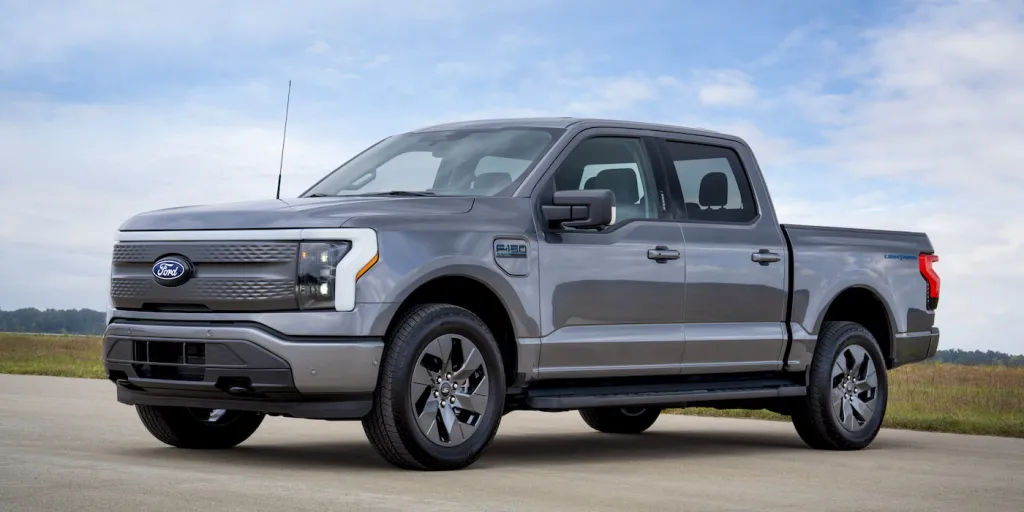
In addition to signaling that a road-testing phase is underway, Ford is using prototypes of its forthcoming affordable electric pickup as vehicles to highlight two critical priorities of development: simplifying the assembly process and thoroughly validating core chassis control systems.
The truck is being developed on Ford’s Universal EV Platform, with planned production date set for 2027. Alongside with the rollout of prototypes on the roads, Ford referred interested parties to a program page that includes team members responsible for advanced development, prototype build, and test engineering functions. The message could not have been clearer: the program is not only about creating the vehicle but reimagining its assembly processes as well.
And that makes a critical difference. Affordability in an electric program is never about batteries alone but a number of factors such as parts content, number of fastening steps, labor intensity of the assembly line, and plant-floor variation. Mark Gentry of Ford’s New Model Program Development Center emphasized this point by calling it an effort of “reimaging how we develop and build vehicles.” He did not mean making a nice presentation but developing the platform in the spirit of manufacturability.
One of his statements deserves particular attention he said, “I’ve been building Ford prototypes for 27 years, and nothing has gone together as easily as this.” That is a more useful piece of information than anything related to styling cues. Engineers and manufacturing specialists can judge a vehicle’s feasibility by the experience of assembling its prototype. Poor packaging, awkward fastening access points, unnecessary parts, and tolerance stacking problems tend to show themselves during a prototype build. Although a clean prototype build does not guarantee that there will be no issues during mass production, it certainly implies that the program aims at removing complexity from its architecture and not just hiding it in manufacturing.
Gentry’s words also resonate with what Ford has announced about its Universal EV Platform previously. According to the company, it aims to reduce parts and fastening points compared to a typical vehicle, minimize assembly steps, and cut down workstation count. On the other hand, a production process would be built upon the assembly of major subassemblies, which implies joining them later in the sequence rather than using a typical long-line one. This process optimization strategy targets three main manufacturing problems: cost reduction, minimization of quality variation, and reduced ergonomic burden on the shop floor.
However, it is easier said than done. Simplifying a vehicle on paper is one thing and doing it in the same way while maintaining durability, reparability, dimensional accuracy, and availability of parts is another one. Hence, Gentry’s comment should be viewed positively since it indicates that the manufacturer sees the promised manufacturability benefits in real hardware.
Another priority that the program focuses on is chassis system validation. According to Ford test engineer Chris Kirkland, we are running stability control and traction control and E-PAS steering system testing with the use of various courses, including handling courses, “to ensure vehicle stability”. While it sounds simple enough, it is also an important milestone.
An EV pickup requires precise chassis calibration to provide adequate performance. Traction control algorithms need to take into account the torque delivery characteristics of the engine. Stability control needs to manage the response of the vehicle depending on the current grip condition and the transfer of weight. Electric power-assisted steering (E-PAS) has to be smooth and intuitive, seamlessly integrated with other systems. Winter testing helps to identify flaws in intervention algorithms, because low friction conditions cause problems to appear instantly. Engineers can verify whether the reaction time, the amplitude of interventions, and their consistency are sufficient at the moment when the vehicle shifts to different grip states.
None of this provides insight into the capabilities of Ford’s EV truck in terms of parameters like acceleration and braking distance. However, it clearly demonstrates the importance of this program’s direction. Stability and predictability of the vehicle’s behavior require thorough calibration work, not PR language.
Finally, Ford has released additional photos of vehicle components via its media channels. It appears that the company wants to leverage this opportunity to convey the technical priorities of its program. The decision seems logical considering the premise behind it an “affordable” vehicle with a simple structure and efficient production system. Manufacturing and validation aspects are, indeed, the true story here.
The primary conclusion from all of that is that Ford is using the prototypes to make an unequivocal statement about its new EV platform: simplicity of assembly process and thorough validation of chassis control systems. These two things do not get as much attention as the looks of a new vehicle in the pickup market, yet it is exactly what makes the difference between the successful and unsuccessful programs of this type.
By Robert McKinney – Editor-in-Chief at AMI covering the automotive and mobility sector, with mechanical engineering education and more than ten years’ experience writing about powertrains, electric vehicles, and car production worldwide.