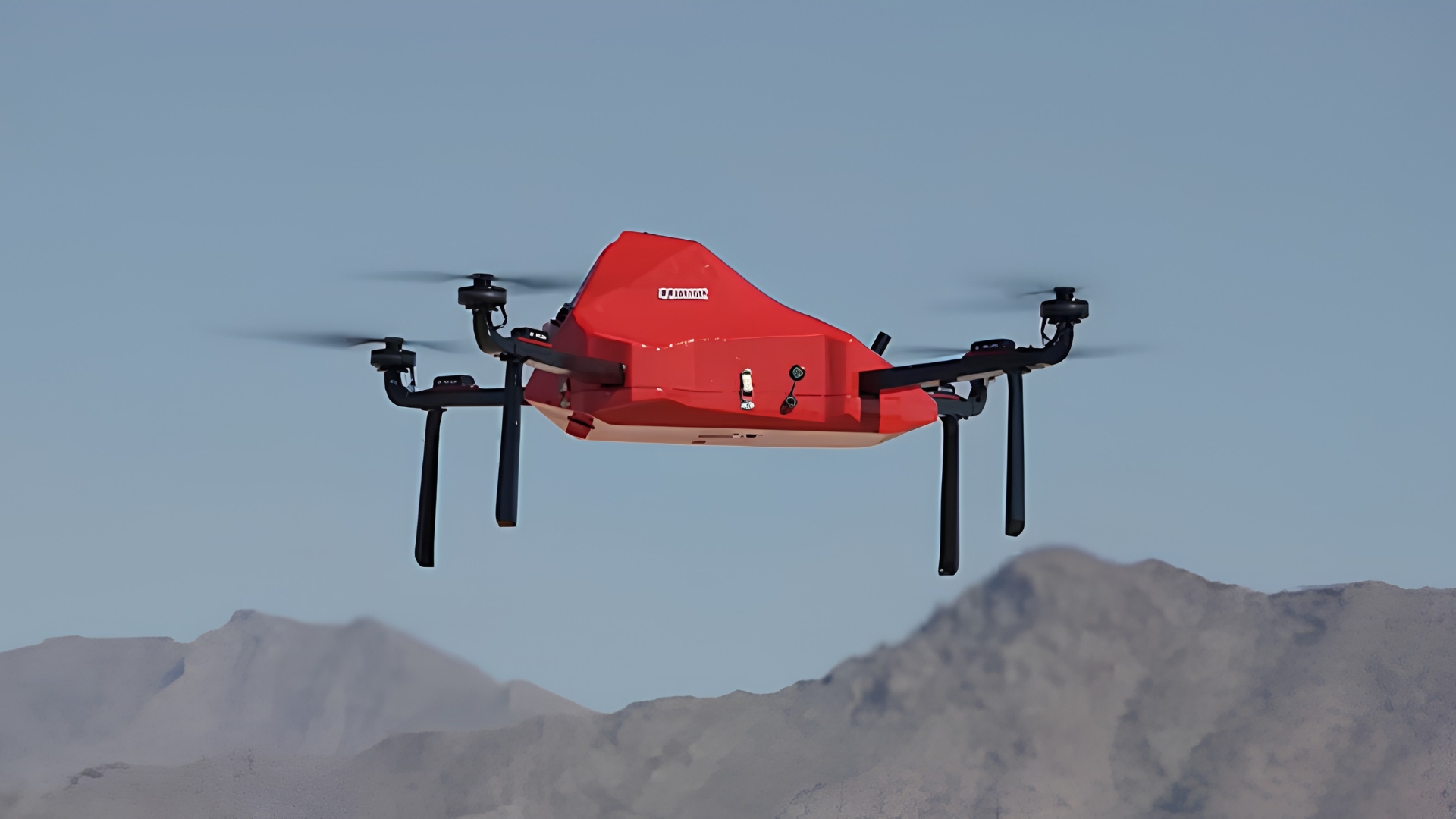
ZenaDrone Pushes IQ Quad Toward Blue UAS Readiness
The key point regarding the latest IQ Quad model of ZenaDrone is not necessarily that there will be yet another model added to the existing range of unmanned systems, but that the aircraft has been identified as meeting qualification standards for Blue UAS certification. The manufacturer reported that its US subsidiary was ready to begin the process of filing for the qualification and that flight performance testing, payload sensor testing, and bill-of-materials documentation are the current priorities for its engineers.
This is important, since the term Blue UAS is not merely a catchy name or brand identity anymore, but represents actual procurement eligibility and compliance with strict security requirements set out by various defense agencies of the United States. To put it differently, the qualification is essentially a technical gate that needs to be passed through to make a particular platform eligible for purchase. At the same time, it is clear that unmanned aircraft developers cannot simply focus on the platform and its performance in demos and tests anymore, since technical documentation may matter as much in such cases.
As mentioned above, IQ Quad model from ZenaDrone is being presented as an autonomous AI-powered drone created for land surveys. According to the manufacturer, IQ Quad is a multi-purpose, rapid-deployment vehicle for geospatial missions, including land surveying, infrastructure inspections, terrain modeling, and similar projects. The key aspects of the platform are modular payload, AI-assisted navigation and automation, high-resolution cameras, and encrypted communication.
As one might expect, these features match the expectations regarding the capabilities of such vehicles perfectly well. On the other hand, the concept of modularity introduces additional technical work to be performed by unmanned systems developers and designers, and ZenaDrone seems to acknowledge that fact very clearly, which is illustrated by their focus on payload testing and bill-of-material documentation.
ZenaDrone states that the certification procedure will be carried out through the so-called Green-to-Blue UAS route. It should be noted that currently there are three ZenaDrone models going through that multi-month evaluation conducted by AUVSI and DoD. The fact that Green-to-Blue is important in this case is quite obvious, since this route implies verification of technical compliance, supplier clearance, and documentation of various kinds related to cybersecurity measures.
This is especially important, since at the moment supply chain becomes crucial for drone development and certification. According to the statements of ZenaTech CEO Shaun Passley, Blue UAS qualification provides verification of advanced cybersecurity and supply chain documentation as well as ensures that the platform is NDAA compliant. This makes the approach used by the manufacturer quite clear and understandable for the industry: everything must meet procurement requirements, and not only be capable of doing a job in a demo flight.
The point is relevant to this case, since in the context of government use, a geospatial platform may be quite close to infrastructure management applications and installation projects. That is why, according to ZenaTech CEO, the Blue UAS certification can enable further procurement opportunities with various departments of DoD and other government organizations in the US. Specifically, he stated that engineering and land management types of application were expected in the future, although frontline operations are unlikely.
Manufacturing footprint is also important in the context of Blue UAS certification, although, of course, the two concepts should not be confused. Currently ZenaDrone produces several drones ZenaDrone 1000, IQ Nano, IQ Square, IQ Quad, and IQ Aqua. As the company states, it manufactures its platforms in Arizona, Dubai, and Taiwan. Nevertheless, for US-based procurement, the issue is not about the general manufacturing footprint, but about whether a particular platform qualifies for the process in question.
Finally, this case also illustrates an important lesson that applies to the whole sector of unmanned systems development and manufacture. Indeed, the fact that modern governmental organizations tend to procure only drones that have passed all necessary certification procedures changes the nature of unmanned aircraft engineering and design drastically. Today a developer cannot afford to consider a drone just a platform; instead, compliance should be designed right from scratch in many cases.
Passley stated that preparing the IQ Quad for Blue UAS qualification is an important step towards creating the company’s portfolio of NDAA-compliant platforms for US governmental clients. As we have already mentioned, the question is still open and it is too early to say what will happen in the end. Nevertheless, one may say that the process itself, with its emphasis on testing and documentation, is really the main development of interest. And that is something every unmanned systems developer should pay attention to. At the moment, access to governmental procurement opportunities is granted not because of a good presentation, but because of solid engineering work behind the scenes.
By Stephen Wallace – Editor for AMI’s aerospace integration and unmanned mobility coverage.