Hexcel Expands U.S. Composites Development With New NIAR Center
Hexcel broke ground on an applications center located within the National Institute for Aviation Research (NIAR) at Wichita State University. This new center marks an expansion of existing collaboration between the two organizations, which centers around one of aerospace and defense manufacturing’s biggest challenges: the ability to turn advanced materials ideas into manufacturing reality.
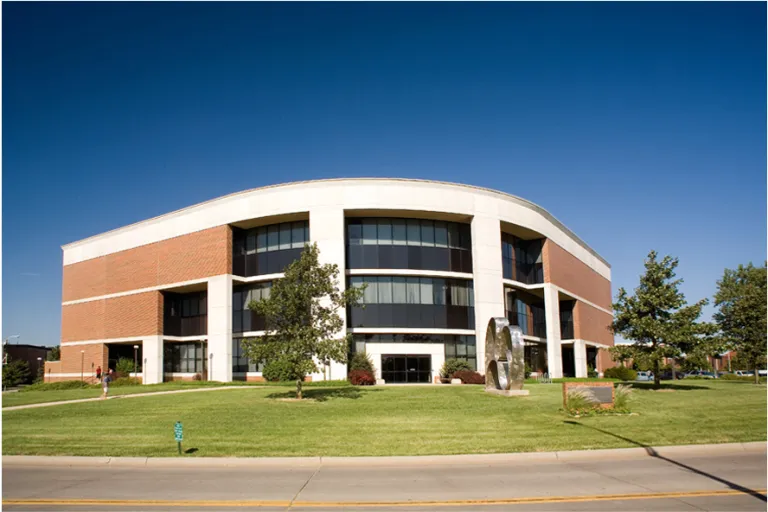
The Hexcel Applications Center will be located within NIAR’s Advanced Technologies Lab for Aerospace Systems, or ATLAS. What’s significant here is not just the expanded physical footprint. Rather, it is the increased proximity and coordination among Hexcel’s materials science work, automation technology, and the resulting implementation into aerospace and defense structures.
Why is this important? Advanced composites’ true engineering challenge is not simply developing a better material even in aerospace, where weight reduction can be an issue. The real test is making sure that fiber and resin characteristics, lay-up technique, manufacturing automation, manufacturing process control, the resulting geometry, testing and ultimately validation all line up. A facility dedicated to bridging this gap can speed up an otherwise long transition process from the materials lab to finished, certified structure.
Hexcel’s goal is to provide innovative aerospace and defense customers with the opportunity to develop advanced composite material innovations and technologies for the aerospace industry through material innovation, application development, advanced manufacturing and structural realization, said Hexcel in announcing the collaboration.
Hexcel emphasized that it was working to combine its materials science expertise and application development capabilities with NIAR’s advanced manufacturing, automated composite processing, and advanced material properties characterization capabilities.
Specifically, the new Hexcel Applications Center will enable aerospace and defense customers to develop, scale and validate their advanced composite solutions using next generation manufacturing technology, according to John Tomblin, Executive Director of NIAR. In this context, it is clear why the center represents such an important resource to U.S. aerospace: not the creation of new composite options but the successful scale-up and validation of promising new materials into manufacturing-ready products.
Hexcel itself explained its new facility within the framework of a product development pathway. Initial material and application development work takes place within the company’s applications lab in Utah. The new Wichita-based site aims to facilitate the transfer of upstream results to the automated composite manufacturing process knowledge that exists within the NIAR ecosystem. The final stage of structural build and validation activities is supported by Hexcel’s Washington facility.
From a manufacturing perspective, this is a relatively well-structured approach compared to the approach taken by many aerospace suppliers. Material formulation, process automation development and structural validation activities may take place separately, requiring lengthy loops to make sure everything lines up. The new Hexcel center does not solve this problem. But the linked network can help close the gap between the behavior of new materials, how they are to be processed and what kinds of structural results can be achieved.
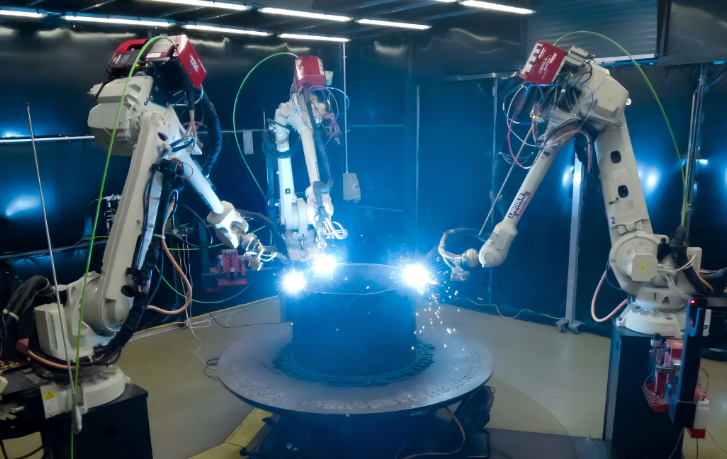
That makes ATLAS a natural choice as a location. The lab has been designed for advanced composite manufacturing processes, including automation systems and other technologies related to aerospace production challenges. As an existing focus area, ATLAS’ emphasis on automation also aligns with the industry trend toward higher rates of composite manufacturing where throughput, repeatability and lower operator variation are becoming key elements.
This is, in a sense, the background to the announcement. Aerospace composites offer well-known weight reduction benefits, but the ability to produce a consistent supply is critical to their business success. Process automation, materials selection and materials characterization are critical components for taking a composite concept and turning it into a manufacturable product.
This is, in essence, why the Hexcel Application Center will represent a step forward for composite adoption within aerospace. From a manufacturing perspective, a new facility with an integrated focus on material characteristics, automation process development and structural validation is important precisely because it bridges these elements.
From a program management perspective, it also offers an ongoing collaborative space for customers working on process development. Program teams can rapidly iterate across material choices, manufacturing techniques and validation plans, rather than relying on lengthy transfers between separate organizations. For the U.S. aerospace industry, that represents an industrial and engineering step that can increase composite adoption.
By Edward Collins — Senior editor for AMI’s performance systems and mechanical design coverage, focused on powertrains, drivetrain systems, manufacturing precision, materials, and high-performance engineering.