NASA Recasts Artemis Around Lunar Surface Operations and Orion Fixes
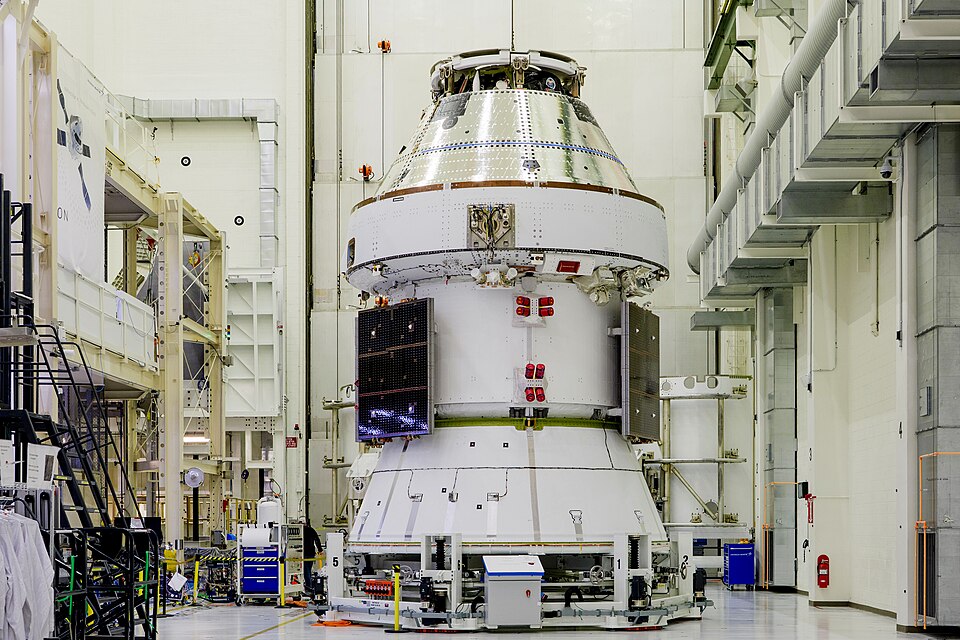
Following the successful 10-day mission of the Artemis II, the most important question remains how NASA is going to proceed with their hardware and mission schedule. The Artemis programme now aims to create a sustainable lunar presence based on a surface-first architecture while also receiving valuable engineering lessons from the Orion capsule, including propulsion-system helium management and continued heat-shield evaluation.

This is crucial as NASA’s mission is no longer a collection of symbolic return trips to deep space. Instead, NASA has outlined a plan based on building a sustained presence on the surface of the moon that will serve as a proving ground for technology and operational practices necessary to make human flights to Mars possible in the long term. Practically speaking, this means shifting focus away from the moon-orbiting Gateway outpost idea and towards more challenging problem of landing, operating and doing scientific work at the southern pole of the moon.
This is reflected in the Artemis mission schedule adjustment. Instead of venturing deep into space, Artemis III will stay in the near-Earth orbit and test docking procedure between Orion and lunar landers created by Blue Origin and SpaceX. Artemis IV will send the Orion into the lunar orbit, where a lander will take two astronauts to the moon’s south pole and perform one week of science work. The goal of Artemis V and other upcoming missions is to raise the cadence of landings to twice per year in order to test technologies that will make access to the moon easier and cheaper.
From the perspective of aerospace systems engineering, this is an important reframing. While the success of NASA now does not depend only on choosing a good destination architecture, it rather depends on ability of the agency to coordinate work between different components such as Orion, Space Launch System, commercial landers, docking operations and surface infrastructure. The increase of the cadence of landings may sound straightforward in the context of the program, but it puts increased pressure on qualification, shipping, refurbishment and testing process at the same time.
NASA has received some good data on one of the aspects from Artemis II mission. The heat shield of the Orion capsule has been carefully monitored after the 2022 Artemis I mission during which more than 100 chips have been detected. NASA used this opportunity to evaluate the system under new re-entry trajectory and so far no unexpected conditions have been found. This does not solve the previous problem but provides a clean technical baseline for the program as the next spacecraft is prepared. In addition, a new version of the heat shield of Orion has already been built for the Artemis III mission.
However, the propulsion situation looks less clear. Even before the flight, NASA has identified issues of helium leakage in Orion’s propulsion system but concluded that this will not significantly affect Artemis II because of the relatively simple nature of the mission’s trajectory compared to future ones. During the flight, the situation with helium valve got worse. The final assessment of the NASA is direct: the design of the system needs to be adjusted for future missions.
This is not a small issue. Helium is used in spacecraft propulsion systems as a pressurant so when NASA says that the design needs to be adjusted, it means that additional work will be required, potentially leading to problems with testing, certification and schedule margin. Logistically speaking, NASA has not yet decided whether the affected propulsion hardware of the Orion can be fixed in Florida or whether it needs to be shipped to Europe. The propulsion system in question has been built in Germany through European Space Agency.
At the same time, the whole stack for the Artemis III is already being built. NASA has already started assembling the next high-power rocket for the mission and is planning to ship the orange core stage from New Orleans to Florida this month. The two major parts of Orion for the mission are already in Kennedy Space Center. However, these signs of readiness do not negate the risks created by the unresolved issue with Orion’s propulsion system as well as the fact that lunar landers that will play a crucial role in next stages have never flown in space before.
This is perhaps the clearest pressure point of the current architecture. NASA selected Blue Origin and SpaceX to build the lunar landers but Artemis III will require docking tests with those vehicles as a crucial step. However, according to a recent NASA audit, both of these companies experienced schedule delays and have technical and integration challenges that can affect costs and delivery schedules of the landers even more. For the mission that is based on surface operations, those vehicles become pacing items.
Same can be said about the idea of south pole exploration itself. The surface-first approach may look like a technically efficient option, but it requires NASA to commit to one of the most challenging environments in the entire program. South pole has rough terrain, complex lighting, deep shadows, dust and extreme thermal conditions. Exploring the south pole is not a transportation task, but power, mobility, communication, thermal control and logistics task.
That is why Artemis II can be seen not as an endpoint but as a systems test in flight. The mission has shown that Orion is capable of taking the crew around the moon and bringing them home, provided NASA with useful information on the heat shield and has revealed propulsion redesign problems that NASA cannot ignore if it wants a tighter launch cadence. Unflown landers and surface-first orientation make Artemis program enter the next stage with a clearer destination, but with a narrower technical margin. In space exploration, this is when execution becomes more important than vision.
David Whitaker is an associate editor for AMI’s aerospace and drone systems desk, translating flight systems, aircraft programs, spaceflight and UAV developments into accessible technical stories.