Horizon Taps BETA Flight Controls for Cavorite X7 Certification
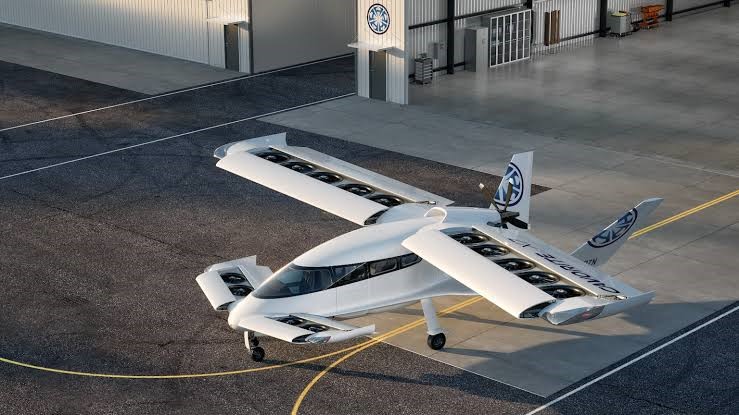
The fact that Horizon has chosen flight control computers from BETA Technologies for their Cavorite X7 is more relevant in terms of certification than as a message regarding the supplier. As it regards powered-lift aircraft, flight-control computer stack cannot be considered an optional avionics component. Instead, it becomes critical when it comes to handling characteristics, transition algorithms, redundancy management, environmental qualification and, finally, certification.
As was reported by Horizon in a press release, flight control hardware and customized software from BETA will be integrated into the company’s hybrid-electric VTOL aircraft in the process of development and testing and certification. This move is consistent with one of the main principles which are known to be used in the development of advanced air mobility the way towards certified flight sometimes depends not only on the airframe but also on the maturity of flight control computer.
And this is especially true as it regards FAA’s framework for powered-lift aircraft. In FAA’s terms, the powered-lift aircraft can be defined as a special category of aircraft, regulated not only by certain criteria established by existing regulations but also by additional criteria which are necessary to ensure the equivalent level of safety. As a consequence, it becomes highly important that the aircraft should have controllable characteristics, robustness against failures, software discipline and capability to prove the safety of operations in vertical, low-speed and wingborne flight.
It seems that BETA has understood this very well. In its presentation, the company positions its fly-by-wire system as the product which was built specially for modern VTOL aircraft and has safety-critical software, system redundancy and flexibility to provide reliable operations. Moreover, the flight control computer has been designed to support the certification for applications from FAA’s Part 21.17(b) powered-lift as well as for Part 23 and Part 25 applications, with future alignment considered for transport frameworks of Transport Canada and EASA.
From the perspective of American audience who are interested in how these aircraft are going to enter service, it becomes especially relevant as it regards the cross-framework orientation of the solution. The development of advanced air mobility projects requires not only prototypes capable to fly but also the control system which could be properly documented, tested and replicated for the purposes of type certification, production certification and further airworthiness. In such a case, it becomes clear that FAA’s requirements for powered-lift aircraft make it obvious that advanced air mobility projects will require function-and-reliability tests. The suppliers who will be able to help with proving the compliance and proper configuration management will be able to affect both the schedule and manufacturing.
According to Tom Brassington, the chief technology officer of Horizon, flight controls are at the heart of our aircraft and he explains that selection was a methodical approach, as the company has been searching for VTOL-specific flight control platform and its capability to satisfy the long-term requirements of certification.
Another important feature of this choice is the use of common hardware. Horizon says that it will use the same hardware for the flight control computer which is used in BETA’s own aircraft. In aerospace manufacturing industry, it is important not only for the procurement of equipment but also for improvement of parts commonality, lowering of the costs through the economies of scale and easier supply chain planning. As an emerging aircraft developer, the use of control computer which has been already integrated in other active aircraft is beneficial to reduce the efforts required for setting up separate safety-critical electronics manufacturing facility.
It should be also noted that BETA states that the platform has been developed in-house and the company has the capability to develop hardware and software to Development Assurance Level A which is the most rigorous development level. This doesn’t mean that it is already certified for Cavorite X7, but the fact that it is mentioned in this context shows the process discipline which is being emphasized in the development of the most safety-critical computing functions of the aircraft.
The environmental considerations are also important in this case. Flight control computer has been designed for satisfaction of environmental and lightning protection requirements for the operations of eVTOL in FAA and international airspace. For powered-lift aircraft which will likely operate in variable weather conditions and in crowded environment, this is the way to bridge the gap between the development and certification.
But there is also the issue of future systems architecture. According to BETA, the system architecture is designed to allow customers to integrate the mission controls to provide autonomous aircraft operation in the future. It doesn’t mean that it is the statement regarding the concept of operation of Cavorite X7, but it shows how the suppliers are trying to avoid dead-end avionics solutions. The flight-control computer which allows to provide future automation capabilities without replacement of the whole safety-critical stack is desired trait of any project that needs design flexibility.
Thus, it can be said that this selection reflects the most rapidly developing sector of advanced air mobility market not the aircraft designs themselves but the industrialization of certifiable subsystems. The manufacturers of reliable, redundant and environmentally qualified flight-control computers, motors, batteries and software processes determine which aircraft will move from demonstration to certified production.
And for Horizon, the choice of the VTOL-specific flight control computer with explicit certification objectives can become even more significant than the selection itself. In the aviation of powered-lift, flight control computer is the place where the airframe ambition meets the regulatory realities and, as the rule, the credibility starts here.
By Stephen Wallace – Editor for AMI’s aerospace integration and unmanned mobility coverage, focused on drone manufacturing, VTOL systems, autonomous networks, and air-ground mobility links.