Walden Robotics Pushes Learning Robots Into Live Factory Work
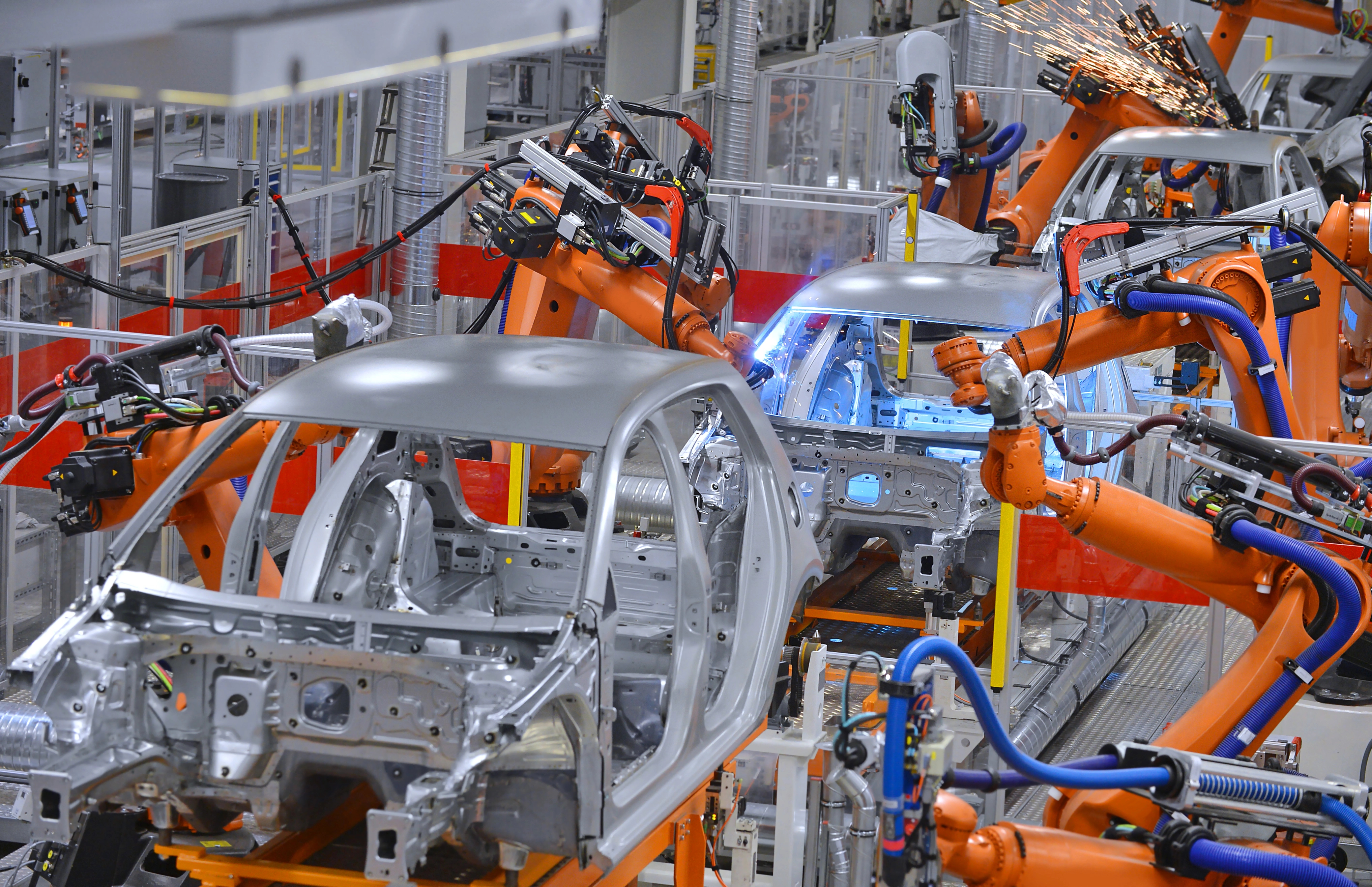
Walden Robotics has emerged with a familiar promise in industrial automation: make robots useful beyond tightly scripted, fenced-off tasks. The more important claim for U.S. manufacturing readers is not the size of its funding round, but that the company says its general-purpose robots are already doing production work at a Toyota plant in North America after moving from first pilot to live work in under two months.

That is the engineering hook. Many robotics programs can demonstrate manipulation in controlled settings. Far fewer claim a short path from pilot to production while operating alongside people from day one. Walden says its systems are designed for manufacturing and logistics environments, where the hard problem is not just motion, but repeatable deployment inside real workflows with existing cycle times, operator practices, and plant constraints.
The company launched out of Toyota Research Institute in January 2026 and says it began working with customers across multiple industries immediately. It is targeting automotive, aerospace, semiconductors, electronics, logistics, and life sciences, positioning its robots as a response to labor shortages, demographic shifts, competitive pressure, and rising demand.
Walden’s technical framing centers on Large Behavior Models, which it describes as the model class powering its robots, along with research foundations that include Diffusion Policy. In plain terms, the company is arguing that robot control is shifting from narrowly programmed task logic toward learned behavior that can adapt faster to new jobs. That matters on factory floors because the expensive part of automation is often not the robot arm or mobile base itself, but the engineering time required to teach, integrate, validate, and maintain each new task.
If Walden’s deployment claims hold up at scale, the practical advantage is straightforward: less time spent rebuilding automation around every task variation. That is especially relevant for the difficult-to-automate work Walden says it is targeting, where part presentation, object variation, workspace clutter, or process changes can make conventional fixed automation uneconomic.
Chief executive Dr. Russ Tedrake has been explicit that recent progress in Physical AI is only part of the story. He argues that delivering value still requires a deep understanding and respect for how manufacturing is done today and close work with factory experts. That is a useful corrective to some of the broader rhetoric around general-purpose robotics. In industrial settings, deployment succeeds or fails on system integration details: sensing reliability, motion consistency, recovery behavior, safety architecture, uptime, and how quickly a cell can be retasked without disrupting production.
Toyota is more than a financial backer here. The automaker says it is building a deep strategic partnership with Walden and describes the company’s differentiator as the ability to provide value from day one in real work environments while continuously improving through learning. For robotics engineers, that combination is the real test case. A continuously learning system sounds powerful, but in production it must coexist with manufacturing’s demand for predictable outputs, stable process control, and safe human-machine interaction.
That tension is where the next phase of industrial robotics is likely to be decided. Learning-based systems may reduce setup time and broaden the range of tasks a robot can handle, but factories will still judge them by old-fashioned metrics: throughput, scrap avoidance, maintainability, and how much supervision they require. Side-by-side operation with people also raises the bar for perception, motion planning, and fail-safe behavior, even when no specific safety architecture has been disclosed.
Walden says its robots continuously learn and improve while performing real work, and that skilled team members can delegate difficult-to-automate tasks so they can focus on higher-value problem-solving and craft work. That is a sensible deployment narrative for North American plants facing labor constraints without wanting to redesign entire lines around fully autonomous operation. It suggests augmentation first, not lights-out manufacturing.
The broader industry context supports that emphasis. General-purpose robotics has attracted intense interest because modern AI methods appear to offer a path beyond single-task automation. But the gap between a capable demo and a production-ready machine remains large. Real factories demand robustness across shifts, operators, layouts, and part variation. They also demand serviceability, because every hour of downtime turns an AI milestone into an operations problem.
Walden’s early Toyota deployment does not by itself prove that learning robots have solved those issues across industry. But it does signal where the field is moving: away from robotics as a long integration project and toward robotics as a deployable production tool that can be taught faster and improved in use. For manufacturers, that is the threshold that matters. The next robotics winners will not be defined by the boldest autonomy claims, but by whether they can turn adaptive control into repeatable factory uptime.
By Jonathan Barrett – Editor for AMI’s future mobility and autonomous systems section, with two decades covering robotics, e-mobility, drone-vehicle convergence, and transport mechanical systems.