ForeFlight Emergency Glide Mode Reframes Engine-Out Decisions in the Cockpit
Uncommanded loss of engine power in general aviation is normally seen as an airmanship issue: keep best glide speed, refer to the checklist, troubleshoot, communicate, make your mind where to land. At the same time, engineering aspect of this problem is also tough: how much of this limited timeframe could be simplified, streamlined and displayed in such a way that would not overload the pilot but let them fly the plane? That is the space where Jeppesen ForeFlight’s Emergency Glide Mode was introduced last April. Designed specifically for this tough and hard-to-execute task of providing the pilot with the answer to “where do I go?” question in case of engine failure, when altitude goes down and attention must be split among several tasks at once.

The clock starts ticking immediately once you lose an engine and it doesn’t stop, Katelyn Matteson, Jeppesen ForeFlight’s vice president of sales, explained the issue in pure human factors terms. And depending on how quickly a pilot can process information while continuing to fly the plane and completing the checklist and communication with the air traffic control, the result may vary. In this understanding, Emergency Glide Mode is not supposed to remove pilot’s judgment but to avoid decision paralysis in midst of task saturation.
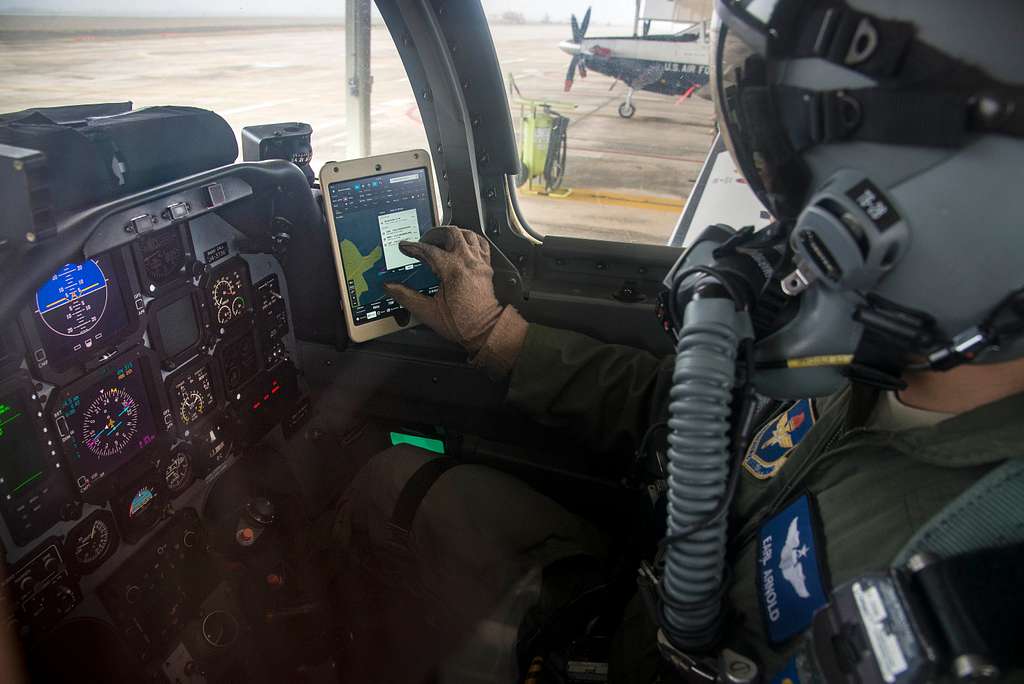
Workflow of this feature reflects this idea: it finds available airports in the range of the glide radius and narrows down the number of the viable alternatives. In the case of Jeppesen ForeFlight’s implementation of Emergency Glide Mode, available airports are ranked and the context-based information is provided to let the pilot make the quick and clear decision. If the pilot choses the right airport, the application will draw the straight line course and provide additional relevant information like estimated flight time, suggested runway, frequencies, wind and expected altitude above ground on arrival. This functionality is extremely important as it turns the map into the decision support interface instead of simple information display.
Even more amazing systems-level engineering solution appears when there is no available airport to glide to. In this case, Emergency Glide Mode utilizes U.S. Geological Survey terrain data to identify the appropriate landing areas including flat surfaces, fields and roads. In the terminology of the application, those areas are called as possible landing areas or “best bet” sites and currently it is only available in the contiguous United States. The application highlights the obstacles like roads and power lines that may serve as the guide during the pilot’s visual inspection.
From the engineering policy and innovation ethics point of view, it is quite interesting. The software is automating one of the aspects of the judgment process that was based on pilot’s experience, local knowledge and visual assessment made very quickly. It does not take the pilot out of the loop, but modifies it: it reduces the number of the available options and provides the list of alternatives faster. To say it shortly, the application becomes more like an avionics system helping the pilot to reduce their workload rather than regular electronic flight bag function.
Such difference is crucial because emergency assistance applications are evaluated not only for their computational capability, but for the capability to present the right information in the right time. In case of engine failure, the pilot must manage aircraft energy, follow the checklist discipline and communicate. The application that could save some time on choosing the landing options could increase the cognitive capacity of the pilot, but only if the interface would stay simple enough to be used in the stress environment. Matteson’s description of the feature highlights this point explicitly: Emergency Glide Mode simplifies the most cognitively demanding piece of that puzzle ‘where do I go?’ so pilots can direct their focus where it matters most: flying the airplane and making the call.
Development process of this product is quite interesting in itself as it shows how such cockpit assistance system is usually built via integration of several systems. According to Cole Crawford, Jeppesen ForeFlight’s director of product for general aviation, the company was discussing this idea for years and underwent many internal iterations. The process has been accelerated when a hackathon produced two complementary elements: a convincing demo from the company’s chief product officer and the landing area geometry work done by map and spatial engineer. Then, those elements were integrated into the final product.
This case is quite useful as it illustrates a usual trend in aviation software. The most useful safety-oriented applications are rarely developed as a completely new aircraft system but as an integration of map layers, aircraft performance, terrain data and interface design which could improve the decision making in the right moment. Emergency Glide Mode is presented as an addition to ForeFlight’s earlier Glide Advisor feature, which the company says is being used in real emergencies along with other tools.
Of course, there is a negative side of this feature too. A highlighted field or road is not the guarantee of its appropriateness, and the software will not relieve the pilot from their responsibility to aviate first and evaluate the situation visually. However, this disadvantage must not distract from the engineering approach implemented in the application. In the safety-critical environment, automation is rarely the ultimate goal. Better prioritization under the pressure is.
This is the actual value of this feature for the U.S. general aviation. Emergency Glide Mode evaluates engine failure as a problem of systems and human factors and uses glide calculations and national terrain data to decrease the decision load of the pilot exactly when time, attention and altitude are running short. This is quite useful evolution of the flight deck support: not replacement of the pilot skills but their preservation in the moments of maximum workload.
By Thomas Caldwell — AMI’s senior editor for mechanical and mobility engineering, covering vehicle electronics, systems integration, electrification, chassis systems, propulsion, and safety policy.