Reflect Orbital FCC Approval Exposes Gaps in Space-Light Oversight
Reflect Orbital has been granted FCC permission to launch and operate Eärendil-1, a single experimental satellite which will shine Earth with the sun’s reflection after dark. That is the core information. But the larger story about aerospace is what has been allowed and what has not been done by FCC in relation to this project, so what are the implications for the innovative orbital system that stands uncomfortably between satellite communication regulation, environmental impacts, and optical protection.
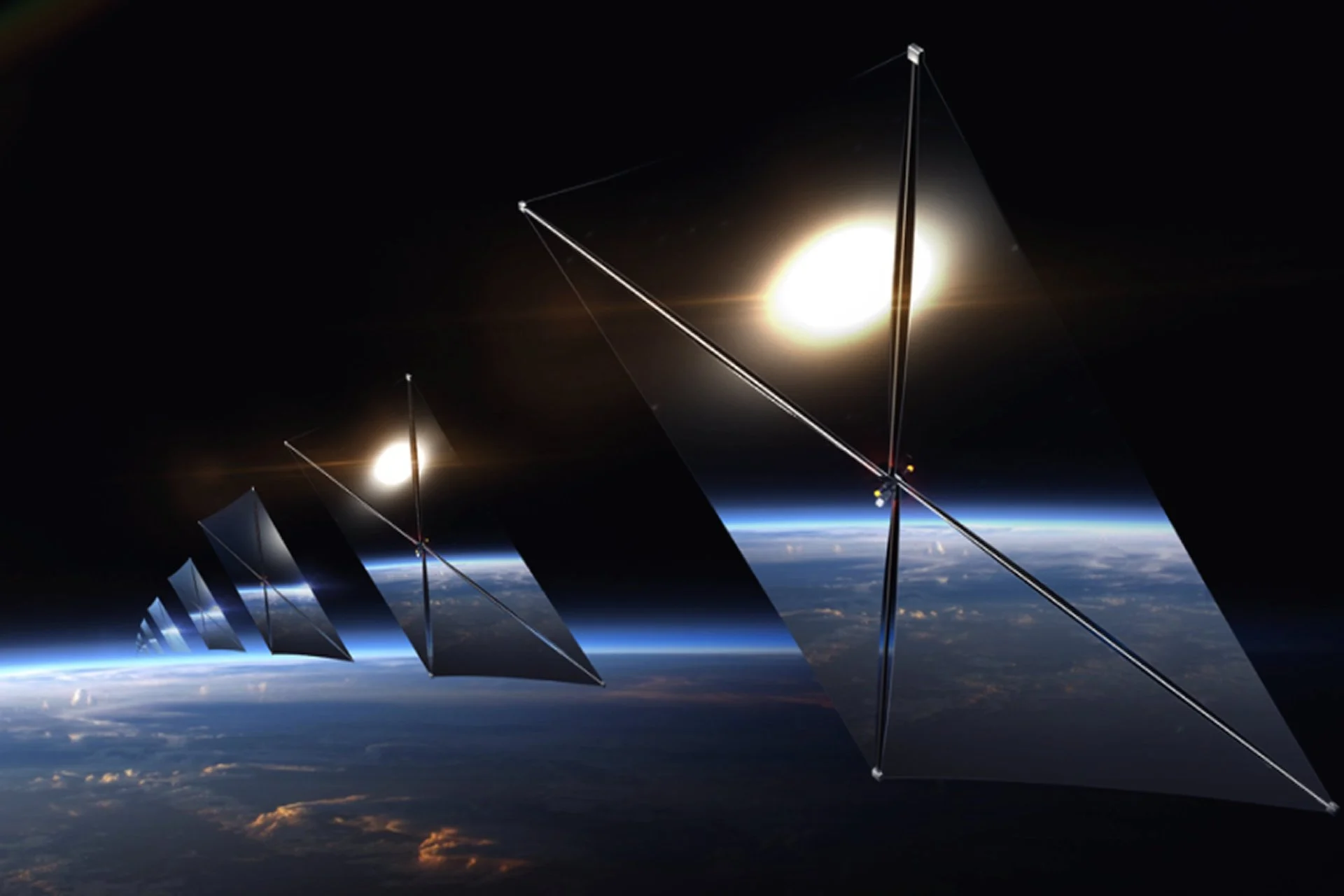
It has been allowed to launch a spacecraft and not an entire constellation of spacecraft. The satellite will orbit 625 kilometers above the surface and carry a motorized reflector with a diameter of 59 feet (18 meters). As per Reflect Orbital, it will be capable of illuminating an area with at least five kilometers in radius. But just like any other low-Earth orbit spacecraft, a single satellite will provide limited coverage, and there will have to be many satellites providing continuous coverage for any operational services.
What is the significance of this point? In fact, this is the distinction between one-off demonstration and scalability in the future. It will allow to verify the possibility of deployment, orientation, and control of the spacecraft and to test whether the light delivery to a particular spot is feasible. But it cannot test the operational abilities of the system as described in the company’s roadmap, which plans to put into orbit two satellites in 2026, more than 5,000 by 2030, and more than 50,000 by 2035, with potentially even the capacity to shine moon-like light to day-time brightness. None of this architecture has been approved.
And it has been done by the FCC. The commission has authorized a single experimental satellite and decided not to analyze any hypothetical fleet. It has also pointed out that the concerns about optical astronomy fall outside of its scope as it is focused on satellite communications and radio frequencies. Over 1,800 comments have been submitted, including objections from astronomy organizations, but the FCC decided not to request further environmental review, since the claims about one satellite have not provided enough specific information.
From the systems engineering perspective, it leaves the question open. The light reflecting equipment in orbit is not just another radio payload. Its main function is to deliver the visible light, and the potential side-effects of the system are brightness, atmospheric scattering, streaks, and potentially harmful effects on wildlife, human sleeping, and aviation. And if the main regulator in the issue of the launch and operation of the equipment declares that these effects are beyond its jurisdiction, it means that the technology evolves faster than the regulatory regime created around it.
That is the key point of the distinction between the prototype test and system scaling. A single mirror satellite is only capable of delivering a brief period of lighting during its passing through the orbit. The system becomes a completely different engineering and regulatory challenge. The constellation-based service requires repeated operations, more satellites positioned in sunlit configuration, more lightings, and, accordingly, more complex scheduling, safety measures, and coordination with observatories and sensitive locations.
This problem was analyzed by astronomers. As per the study conducted by the European Southern Observatory, a 50,000-satellite fleet of Reflect Orbital would make every exposure taken from a wide-field camera, such as the one installed in the Vera C. Rubin Observatory, useless each time the mirrors remain sunlit. The same study indicates that the full constellation would make the entire night sky three to four times brighter. It is a projection regarding the planned constellation, and not the actual effect caused by Eärendil-1, but it shows that the license for the prototype does not give any answers to the much harder question of the sustainability of the technology when it is scaled to the service network.
And there is a practical lesson to learn from the history. Reflecting the sunlight from the orbit is not a new idea. Way back in 1993, Russia launched the Znamya 2 experiment, which involved the deployment of a 20-meter reflector on the Progress spacecraft, which would shine the area of five kilometers in radius over Europe during several minutes. The next launch in 1999 failed because the mirror got tangled while deploying. The lesson is clear the deployment of the reflective structure into orbit is one thing, the reliable control and use of it as the tool is quite another.
Therefore, Eärendil-1 can be analyzed as an equipment demonstration but it does not solve the regulatory problems in any way. Reflect Orbital said that their satellites will stay off until authorized to do so, will avoid observatories and sensitive habitats, and will work locally. It is an important operational claim. But the procedural safeguards are quite different thing from the comprehensive framework of the optical brightness analysis, atmospheric effects, operational limits, cumulative effects, and how it will be managed if there will be thousands of spacecraft involved.
For US readers, the real meaning of the FCC decision is not in the fact that it has now become possible to provide night-to-day lighting from the orbit. It is the fact that it has now become possible to start the tests of the platform category based on the ability to control the visible light in the space while leaving the majority of the questions regarding optical safety, environmental impacts, and scalability for later. In aerospace, this is often the place where the hardest part begins not at the moment of the first authorization but when the prototype brings the regulator and the operator to understand the acceptable performance of the interesting spacecraft transformed into the orbital infrastructure.
David Whitaker – Associate editor for AMI’s aerospace and drone systems desk. Translating flight systems, aircraft programs, spaceflight, and UAV developments into accessible technical stories.