FAA Restores Boeing 737 and 787 Delivery Certification Authority
The FAA will restore Boeing’s authority to issue airworthiness certificates for all newly produced 737 and 787 airplanes effective July 20, returning a key end-of-line certification function to the company’s Organization Designation Authorization unit. For readers tracking U.S. aircraft manufacturing, the bigger significance is not simply who signs the final paperwork. It is how the regulator says oversight is shifting: away from direct issuance of every delivery certificate and toward deeper surveillance of production quality earlier in the build process.

An airworthiness certificate is the release point for an individual aircraft to enter service. In this case, the FAA said Boeing’s delegated unit will again handle that task for new 737 and 787 aircraft. The agency had previously removed Boeing’s authority to issue those certificates for the 737 Max after the two fatal crashes and for the 787 in 2022 in response to program quality issues. From that point, FAA personnel performed the final airworthiness checks for newly produced aircraft in those families.
The restoration did not happen all at once. The FAA said it partially returned that authority in September 2025, with Boeing and the agency alternating weeks of certificate issuance for some 737 Max and 787 aircraft. Over the past eight months, the FAA said it observed comparable production quality findings whether Boeing issued the certificates or the FAA did. On that basis, the agency concluded it could safely return the responsibility fully effective July 20.
That detail matters because it frames the decision as a production-system judgment, not a symbolic easing of scrutiny. In delegated certification, the core question is whether the manufacturer’s internal controls, documentation discipline, conformity checks, and quality evidence are producing results consistent with direct regulator involvement. The FAA’s stated rationale points to equivalence in findings, which is the kind of process-based benchmark that matters in a mature production environment.
It also highlights what delegated authority is, and is not. Boeing’s broader ODA structure allows certain certification functions to be performed in-house under FAA delegation, including some engineering and design approvals and conformity inspections. But delegated authority does not mean absence of federal oversight. It means specific tasks can be carried out by authorized personnel within the company while the FAA retains supervisory authority over the system, the procedures, and the outcomes. It remains unclear whether Boeing has recovered all aspects of its broader ODA authority, so this decision should be understood as a defined restoration tied to airworthiness certificates for newly produced 737 and 787 airplanes.
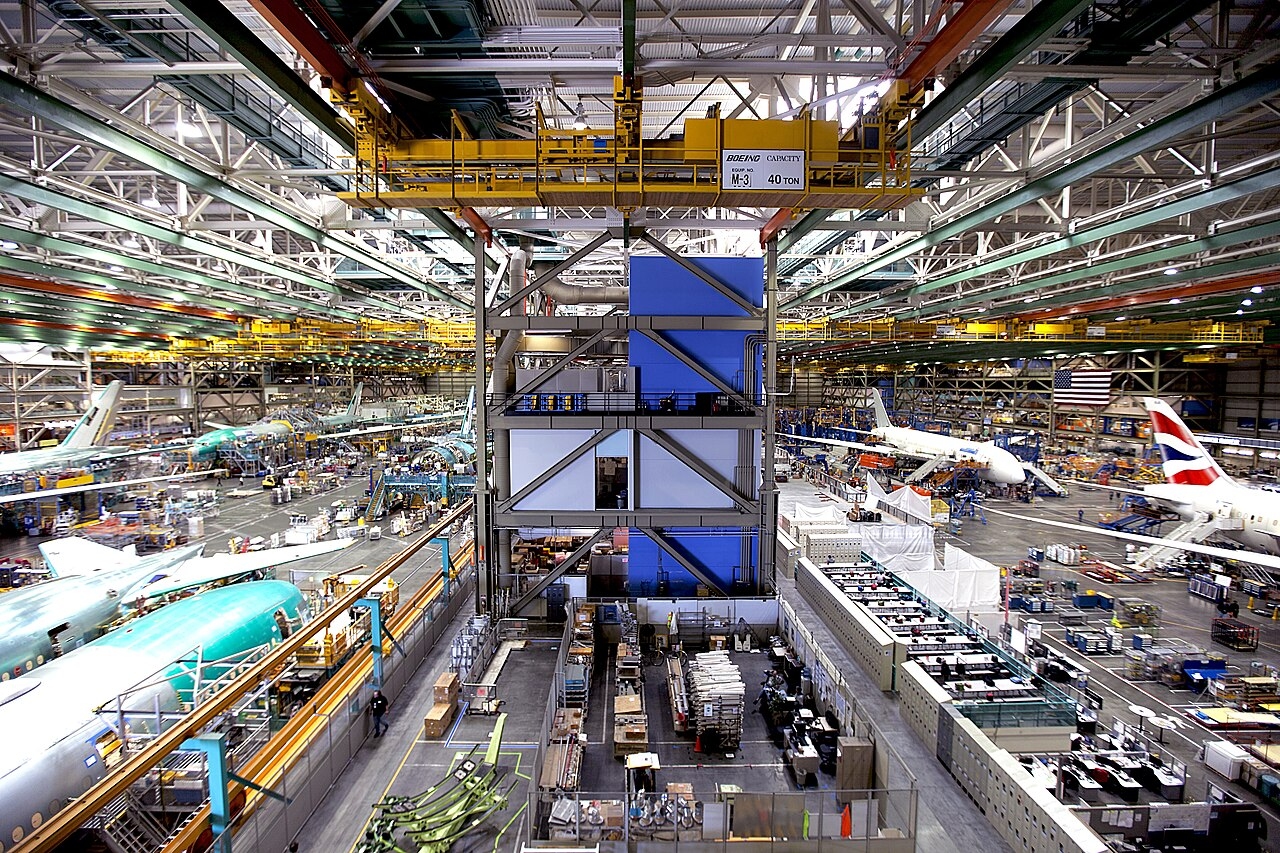
The FAA has also made clear that factory oversight is continuing. Administrator Bryan Bedford said inspectors will focus more on identifying and addressing potential risks earlier in the manufacturing process. That is a notable systems shift. End-of-line certification is important, but many production escapes, documentation mismatches, and process-control issues are more effectively managed upstream, where assembly practices, engineering requirements, and quality trends can be observed before an aircraft reaches delivery status.
In practical terms, that means the regulator is placing more value on audits, inspections, and surveillance inside the factory than on personally issuing every final certificate. The logic is straightforward: if FAA inspectors are freed from a repetitive signoff role, they can spend more time examining critical assembly stages, production trends, and whether work is being performed to approved type design and engineering requirements. That approach is more aligned with modern quality assurance, where prevention and early detection generally provide more safety value than catching discrepancies only at the handoff point.
There is also a production-readiness dimension. Boeing recently received FAA approval to increase 737 Max production to 47 aircraft per month, began early production of 737 Max 10s on a new Everett line, and appears to be nearing type certification for the 737 Max 7. Those developments make stable certification workflows more important because delivery throughput depends not only on assembly capacity, but also on the ability to demonstrate conformity and airworthiness consistently across each aircraft leaving the line.
Boeing said it will continue working under FAA oversight to build safe, high-quality commercial airplanes that comply with airworthiness certification requirements. That is the right framing. The real test is not whether one authority block has been restored, but whether the production system can keep generating repeatable evidence that each aircraft conforms to approved requirements while the FAA concentrates on earlier risk detection.
For U.S. commercial aerospace, this is a meaningful regulatory recalibration. The FAA is not stepping away from Boeing’s factories; it is repositioning its effort toward process assurance and manufacturing-risk surveillance. If that balance holds, delegated certification can function as intended: not as reduced oversight, but as a more targeted oversight model built around production quality, traceability, and earlier intervention where safety margins are actually created.
By Thomas Caldwell — AMI’s senior editor for mechanical and mobility engineering, covering vehicle electronics, systems integration, electrification, chassis systems, propulsion, and safety policy.