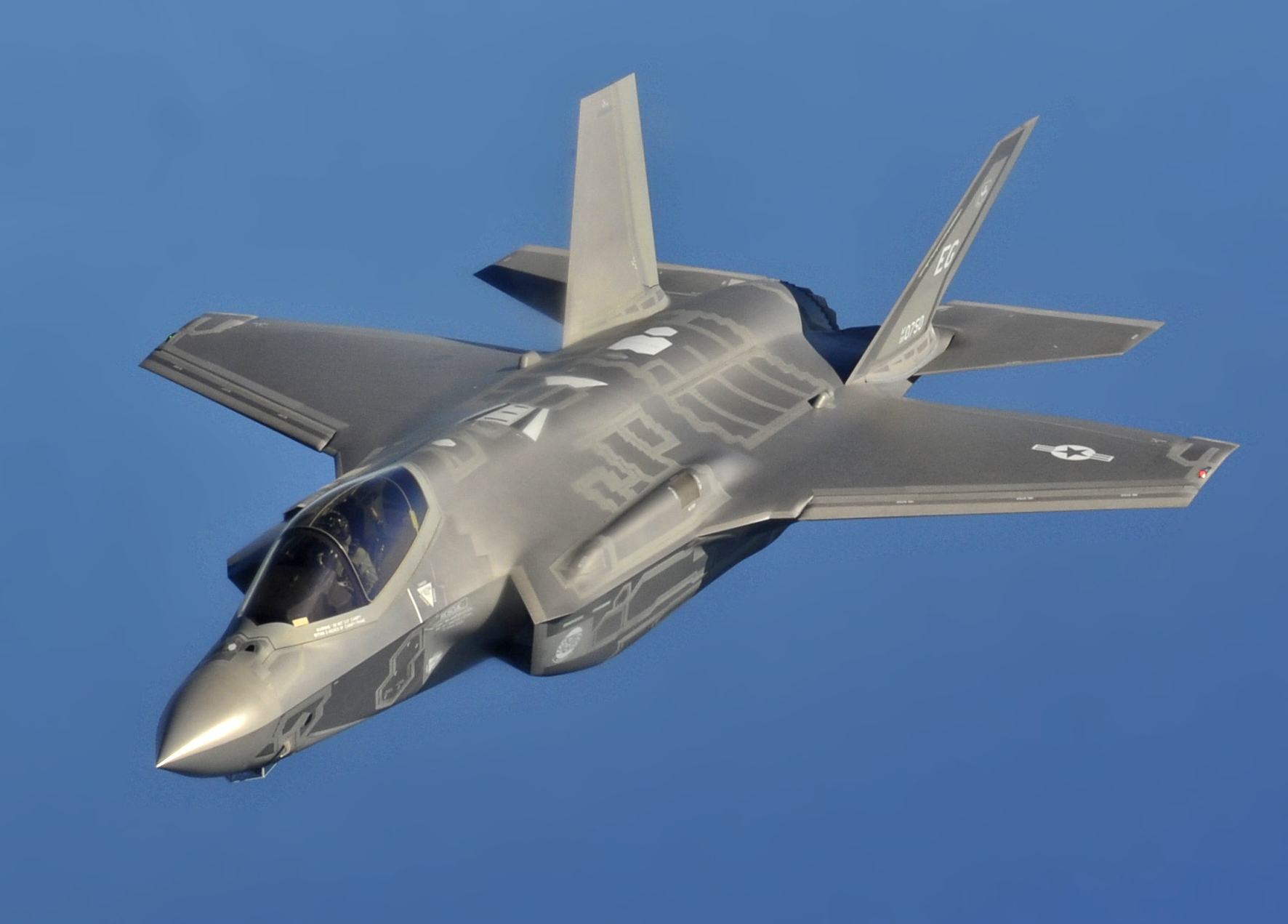
UK’s Next 27 F-35 Jets Won’t Arrive Until Early 2030s
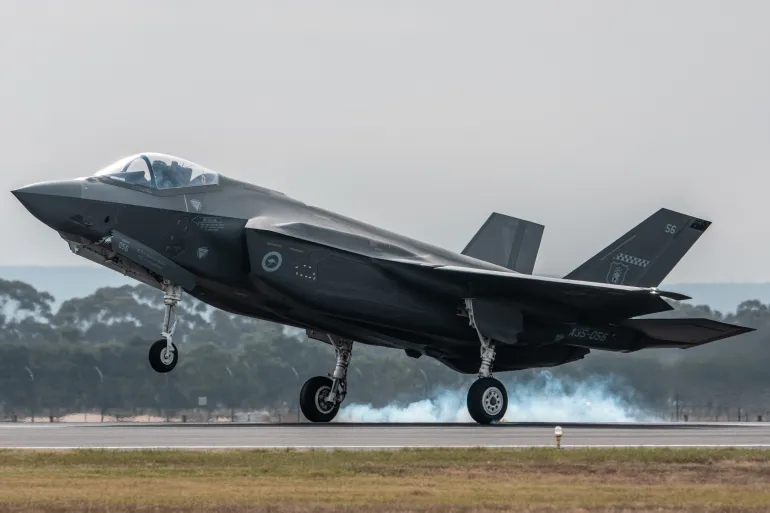
The UK’s planned next batch of 27 Lockheed Martin F-35s 12 F-35As and 15 F-35Bs is now expected to start arriving only in the early 2030s, according to a 9 July written parliamentary answer from defence minister Luke Pollard. That means Britain’s enlarged F-35 fleet grows on paper now, but adds no new aircraft for years even after the government set out the follow-on buy in its 2026 Defence Investment Plan and earlier announced the F-35A portion at the 2025 NATO summit. The parliamentary answer said the delivery profile remains subject to negotiation with the multinational Joint Program Office and that the UK “hopes” to begin taking deliveries from the early 2030s.

The immediate consequence is straightforward: the Royal Air Force and Royal Navy must carry the rest of this decade with essentially the fleet they already have. The UK has completed deliveries from its initial 48-aircraft F-35B order, but the active fleet is described as 47 jets after one 2021 loss. If the next tranche does not begin arriving until around 2030, carrier operations, pilot generation, and any future expansion of deployable force remain constrained by today’s inventory rather than tomorrow’s announced purchase.
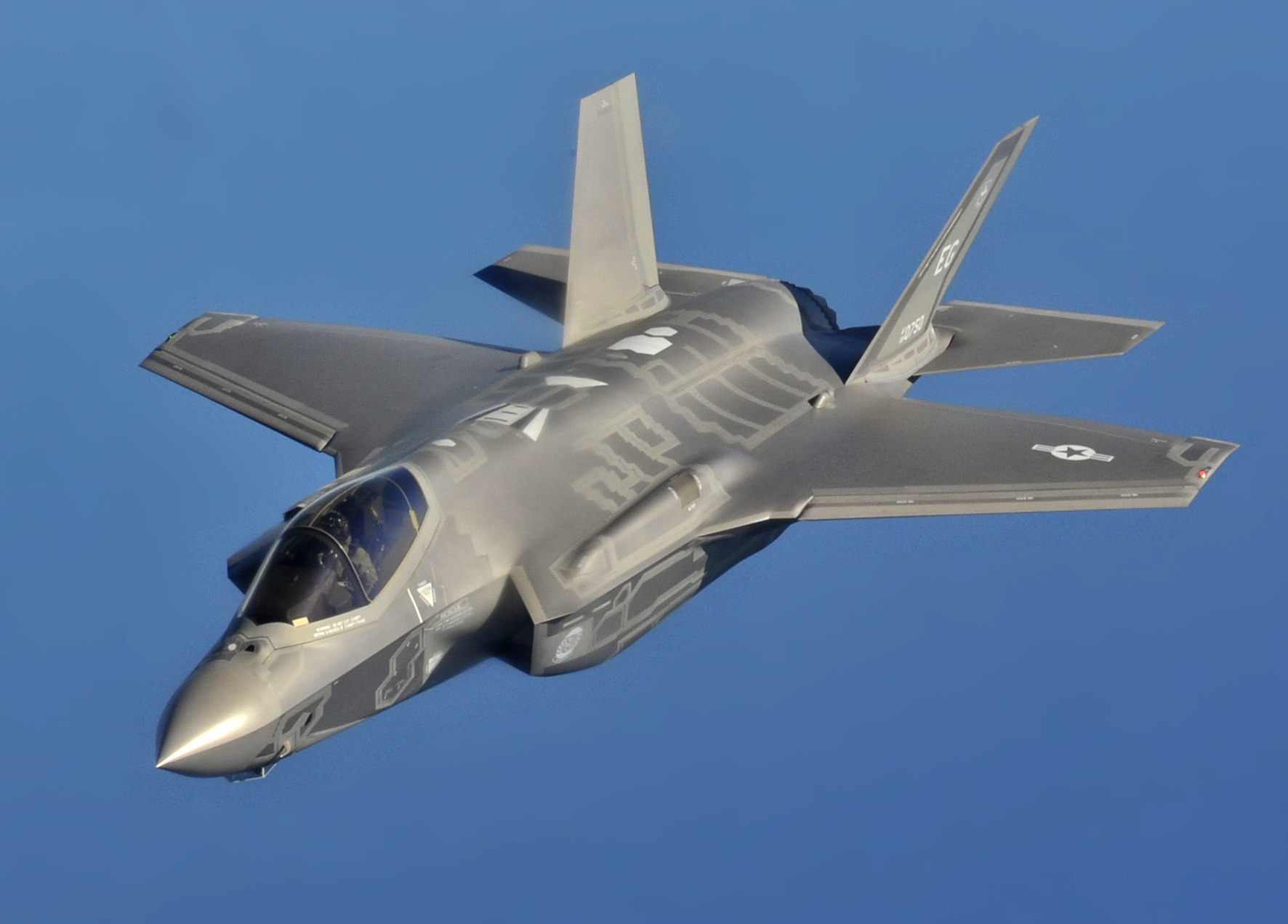
That delay is not just a production bottleneck story. It also reflects a procurement choice that makes technical sense if London wants to avoid buying aircraft too early and then paying again to bring them up to a more useful standard. The F-35’s Technology Refresh 3 hardware and Block 4 software path has been one of the program’s most persistent schedule problems. Technology Refresh 3 is the computing gateway required for Block 4, and the broader Block 4 combat capability is not expected to reach full operational maturity until at least 2027, with fuller rollout slipping into 2031-2032. The reported UK logic is that waiting for later production lots reduces retrofit risk and avoids spending money upgrading earlier aircraft that arrive before the software baseline is stable.
That matters directly for British weapons integration. Meteor and SPEAR-3 are central to the UK-specific value proposition of the F-35, but their integration depends on later software versions that are not expected to be operationally mature until closer to 2027 or later. In plain terms, receiving more airframes earlier would not automatically mean receiving the full combat utility the UK actually wants from them. For a buyer already facing a fleet lifetime cost above £71 billion, avoiding a cycle of early delivery followed by expensive catch-up modification is a rational, if frustrating, way to buy capability.
There is a second tradeoff here that is easier for the public to see: readiness versus fleet size. The UK’s Lightning force has been described by National Audit Office reporting as often running below 60% availability because of shortages in engineers, instructors, and spare parts. The same reporting chain cited in the coverage says only about 21 of the planned 63 F-35Bs would be front-line deployable at any given time. That is the real pressure point. A slow delivery schedule is painful, but poor availability is what turns a numerically respectable fleet into a thin operational force.
That weakness lands hardest on carrier aviation. HMS Queen Elizabeth and HMS Prince of Wales are designed to carry up to 36 F-35Bs on strike deployments, but ship capacity and aircraft availability are not the same thing. The carriers were built around the short-takeoff, vertical-landing F-35B because that avoided the cost and risk of catapults and arresting gear, but it also means the carrier air wing depends on a comparatively small national pool of one specific variant. If the fleet is capped in practice at 75 aircraft, with 63 of them F-35Bs, and only a fraction are deployable at any one time, then the carriers’ theoretical surge capacity remains exactly that: theoretical.
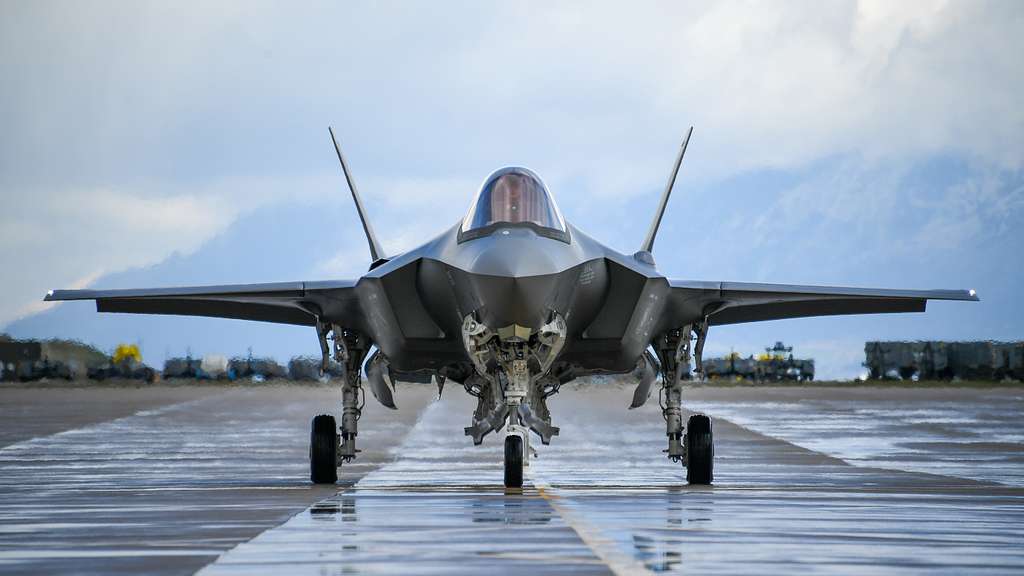
The new F-35A buy adds another layer. The 12 conventional-takeoff jets would introduce that variant into UK service for the first time, but they do not solve near-term carrier capacity because the F-35A is not the carrier model. They also are not being framed initially as operational nuclear aircraft. Air Vice-Marshal Jim Beck has said the first 12 F-35As are being bought for conversion units, with analysis still underway on the eventual force needed for NATO’s dual-capable aircraft mission. That is an important distinction. The F-35A can carry the B61-12 bomb and the F-35B cannot, so the variant choice aligns with the UK’s decision to rejoin NATO’s airborne nuclear-sharing mission. But the first practical use of those aircraft is pilot conversion training, not an instant new mission set.
That training role still has value. Introducing a conventional-takeoff F-35 variant can ease some pressure on the overall enterprise by separating conversion activity from the STOVL force that feeds carrier operations. But again, it does not produce extra jets in the near term, and it does not fix availability. It is a force-structure adjustment tied to a future mission, not a short-term expansion of combat mass.
The broader fairness question for the public is whether an expensive fighter program should be judged by aircraft ordered or aircraft usable. On that measure, the reported delivery pause is a reminder that procurement announcements and military capacity are not interchangeable. Britain remains the only tier-one partner in the Joint Strike Fighter program, but partnership status does not exempt it from the same backlog, software maturity, sustainment, and staffing realities affecting the wider fleet. The issue is less whether the UK is buying enough F-35s on paper than whether it can field enough mature, supportable aircraft to meet carrier demands and stand up the F-35A mission without hollowing out the rest of the force.
The technical takeaway is blunt: delaying deliveries can be the sensible choice when software, weapons integration, and retrofit costs are still moving, but it also leaves readiness exposed if the current fleet is already struggling for availability. For the UK, this is not really a story about 27 future fighters. It is a story about how much usable combat air power the existing fleet can actually generate before those future jets show up.
By David Whitaker — Associate editor for AMI’s aerospace and drone systems desk, translating flight systems, aircraft programs, spaceflight, and UAV developments into accessible technical stories.