Pentagon Turns to Ukrainian Drone Software as U.S. Output Lags
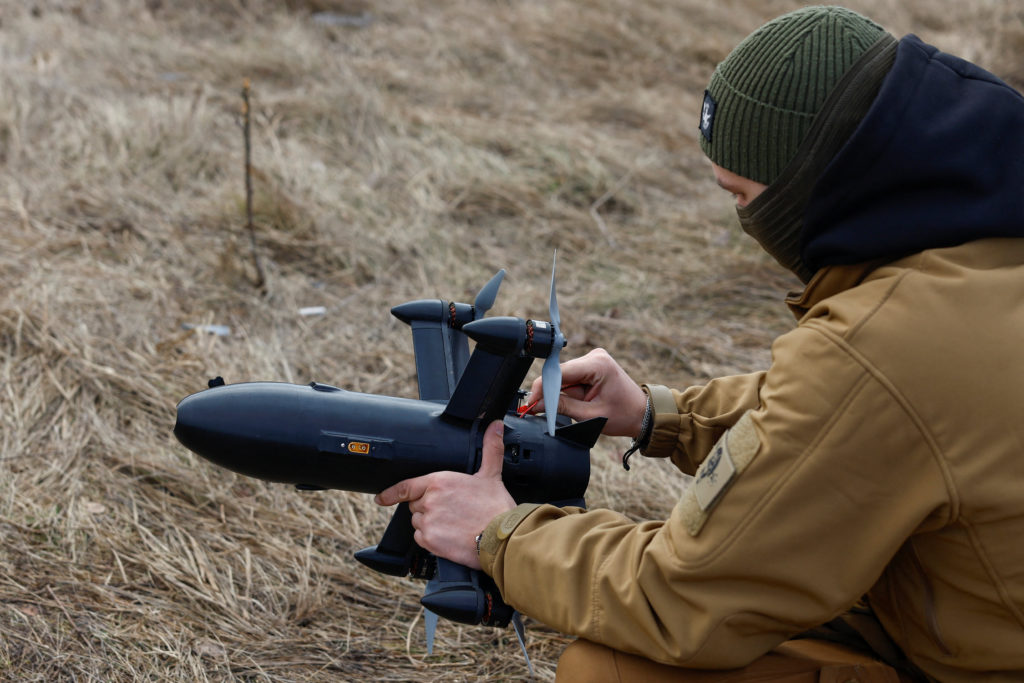
The Pentagon has now openly tied its small-drone catch-up effort to Ukrainian battlefield experience, acknowledging that U.S. output is still only a fraction of Ukraine’s pace while a new software partnership and planned U.S. manufacturing joint ventures try to speed the response. Defense Innovation Unit officials said Ukraine could produce up to seven million small drones this year, while under the Pentagon’s $1.1 billion drone program just under 200,000 units will have been ordered by February 2026. The department has also said it wants to expand low-cost drone production in the United States and prioritize American-made drones and parts, as outlined in a Defense Department update on the domestic production push.

A central new step is a memorandum of understanding between Ukrainian software company Swarmer and U.S.-based Brightline Interactive. Under that agreement, Swarmer will integrate its swarm-coordination technology with Brightline’s SpatialCore platform. The stated goal is not simply to fly more drones, but to merge data from different drone types for training and to improve real-time operational awareness.
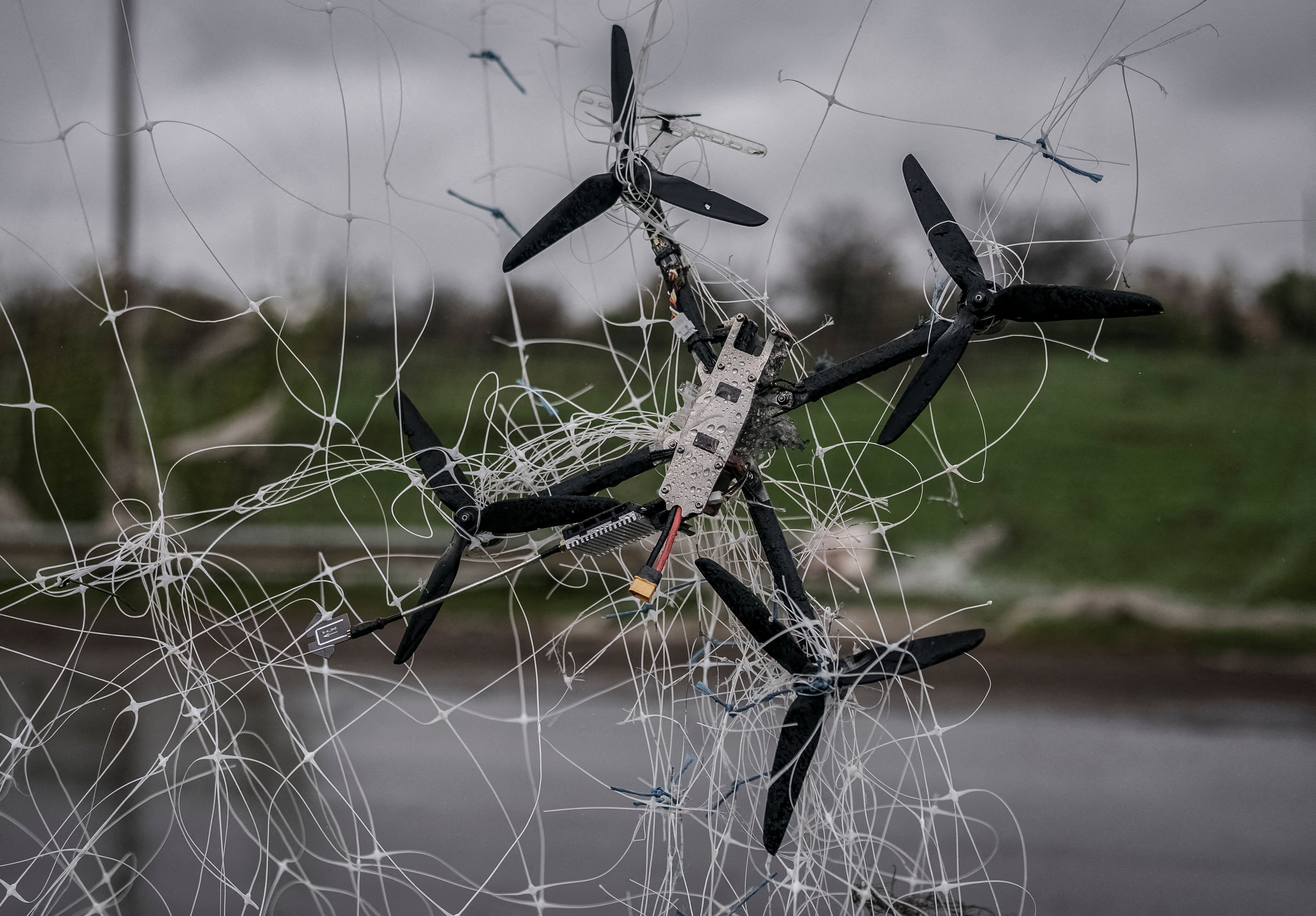
That distinction matters. The Pentagon’s shortfall is not only about airframes coming off an assembly line. It is also about the software layer needed to coordinate large numbers of inexpensive systems, fuse sensor feeds, and turn mission data into faster operator training and better command awareness. In practical terms, Ukrainian companies are bringing two things the U.S. still lacks at scale: hard-earned operating data and rapid iteration under real combat pressure.
Swarmer says its software has been tested under combat conditions since 2024 and has supported more than 100,000 real combat missions since April 2024 without interruption. Company executives say combining its algorithms with SpatialCore could open access to records from millions of past missions for faster artificial-intelligence training. Brightline says the result should be a clearer real-time picture across a wider mix of platforms. Those are company statements, but they help explain why the Pentagon is looking beyond domestic incumbents for software maturity even while insisting on a U.S.-centered supply chain.
The manufacturing side is more complicated. Pentagon officials say new rules requiring American-made drone components have slowed the recent production ramp. Semiconductors remain a particular bottleneck. That is a familiar systems-integration problem: domestic sourcing can improve resilience and reduce strategic dependence, but it also narrows the supplier base during the exact period when the department is trying to scale quickly.
Recent supply-chain tightening shows how serious that tradeoff has become. The drone program’s framework now evaluates final assembly and active components such as semiconductor-related microelectronics more closely, with noncompliant vendors at risk of disqualification. From an industrial-base perspective, that is a classic speed-versus-sovereignty decision. The Pentagon is trying to avoid solving one vulnerability by creating another, even if that means a slower near-term ramp.
The next major test point is Gauntlet II at Fort Carson, Colorado, scheduled for August 2026. Nineteen companies are expected to participate, and six Ukrainian companies will need to establish joint ventures with American manufacturers to take part. That structure is important because it shows the Pentagon is not just buying foreign know-how off the shelf. It is trying to convert Ukrainian design experience and software into production pathways that fit U.S. contracting and domestic-content rules.
That approach could help in at least three ways. First, it gives U.S. programs access to software and operating concepts that have already been stressed in real conditions. Second, it creates a route for American manufacturers to absorb manufacturing practices and product iteration lessons without depending entirely on imported finished systems. Third, it gives the Pentagon a trial framework to compare foreign-derived know-how against U.S. production requirements under controlled conditions.
Still, the numbers show why this remains a gap story, not a solved story. If Ukraine can produce up to seven million small drones in a year and the Pentagon program reaches just under 200,000 ordered by early 2026, the challenge is not marginal. It is structural. U.S. defense procurement is trying to scale a category that rewards low unit cost, short design cycles, replaceability, and continual software updates, while also imposing domestic sourcing and compliance demands that traditional aerospace programs handle more easily than fast-moving small-drone lines.
That is why this Pentagon shift matters beyond one partnership. It amounts to an admission that catching up will require more than money. The U.S. needs domestic manufacturing volume, secure components, software interoperability, training data, and acquisition rules that can keep pace with a product class measured in months rather than decades. Ukrainian firms can help with some of those inputs, but the supply-chain rules show Washington is still trying to reconcile urgency with industrial self-reliance.
The clearest takeaway is that the Pentagon is no longer treating cheap small drones as a side market or a niche capability. It is treating them as a production, software, and supply-chain problem all at once and the fact that it is turning to Ukrainian experience while still struggling with American-only component rules shows just how hard that transition will be.
By Stephen Wallace — Editor for AMI’s aerospace integration and unmanned mobility coverage, focused on drone manufacturing, VTOL systems, autonomous networks, and air-ground mobility links.