Allen Control, X-Bow Join Texas Race for $3.1 Billion Drone Defense
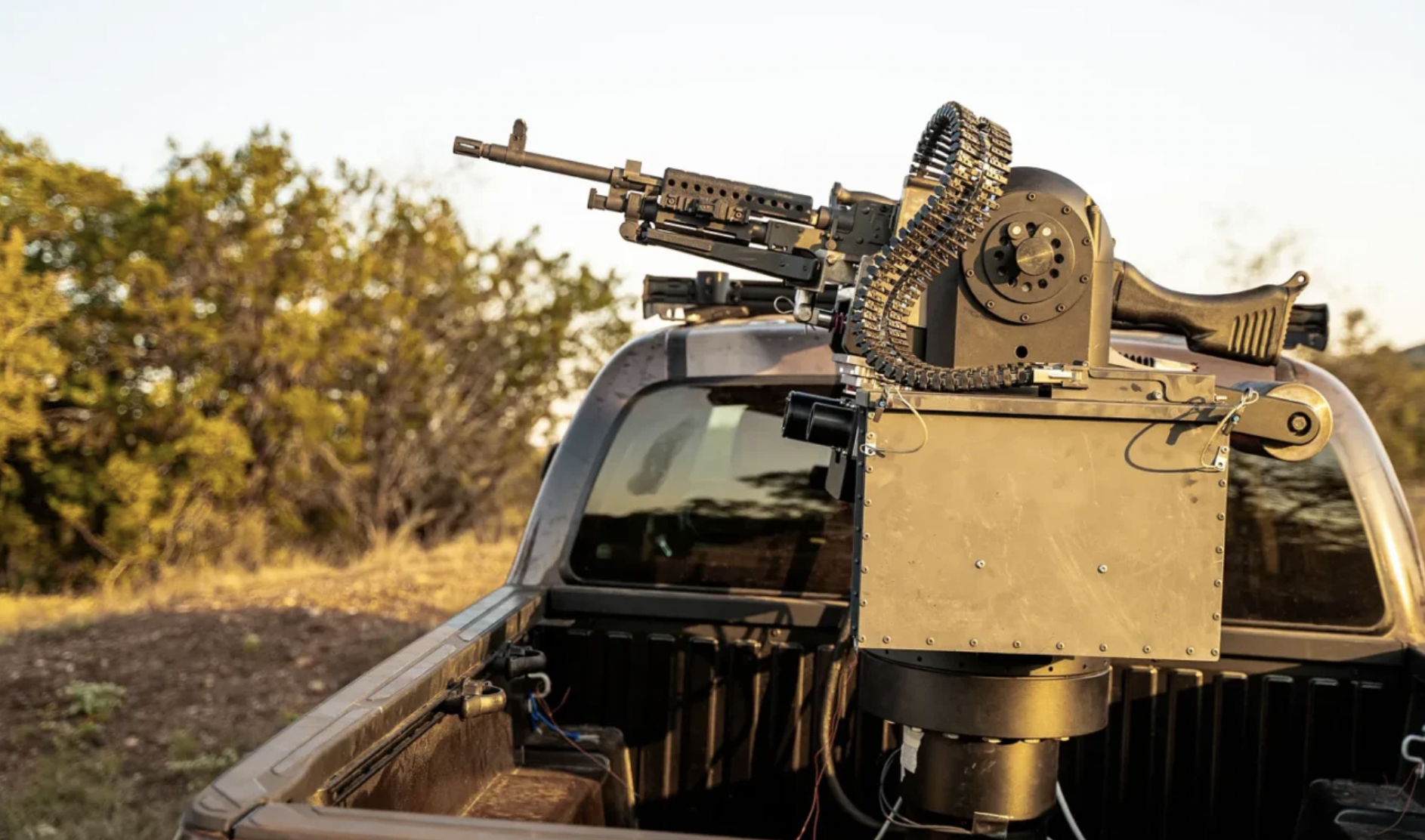
Texas-linked defense companies are pushing deeper into the Pentagon’s fast-growing market for systems that detect and stop hostile drones as the military expects to spend $3.1 billion this year on those tools. The clearest recent award is Austin-based Allen Control Systems’ roughly $6.2 million U.S. Marine Corps deal to add its Bullfrog autonomous weapon station to the service’s Light Marine Air Defense Integrated System, a move the company announced in a public release.
That spending outlook matters because the Pentagon is no longer looking only for the most capable interceptor. It is looking for defenses it can afford to field in quantity against much cheaper drones. That is the central industrial and engineering tension running through the Texas activity: inexpensive unmanned threats can force the use of far more expensive defensive missiles, so suppliers are now competing on cost-per-kill, production scale, sensor quality, and how easily their systems fit onto existing vehicles and weapons.
Allen Control Systems is the most concrete Texas example because it has an identified service customer and a named integration path. Its Bullfrog M240 autonomous gun system weighs about 300 pounds and fires 850 rounds per minute, according to the reported specifications. The Marine Corps plans to integrate it onto L-MADIS, an expeditionary counter-drone platform built around all-terrain vehicles. That matters beyond one contract award: a system mounted onto an existing mobile air-defense vehicle is a faster route to fielding than waiting for an entirely new platform, and it directly addresses the military’s push for lower-cost drone defeat options.
Allen is not alone. X-Bow Systems, which has a rocket-motor factory in Luling, recently unveiled its Buckler anti-drone missile and said it costs less than $100,000. That price point is the most direct answer in this group to the Pentagon’s cost problem. Reported conventional air-defense interceptors can range from about $400,000 to more than $4 million each, which makes a sub-$100,000 interceptor notable even before larger production questions are answered. X-Bow also said Buckler has flown and that it manufactures the airframe and propulsion in-house, an industrial-base point that matters because vertically controlled production can reduce dependency on stressed outside suppliers.
BAE Systems represents a different Texas role: not a startup chasing an initial foothold, but an established manufacturer already producing lower-cost guidance hardware in Austin. Its Advanced Precision Kill Weapon System laser guidance kits, built at that site, are reported to cost about $20,000 each and have already been used against drones in the Middle East and Ukraine. Earlier this year, BAE said it had delivered 100,000 of the kits, and in its 2026 half-year results the company said it was investing another $135 million in Austin, Texas, and Hudson, New Hampshire, to expand precision-guided munitions capacity. In practical terms, that suggests counter-drone demand is now influencing factory expansion, not just prototype development.
The software side of the market is just as important, because low-cost interceptors are only useful if the system can correctly identify what should be engaged. Austin firms Vigil Autonomy and Lantern UAS are both developing artificial-intelligence-based detection and tracking tools. Vigil says its software helps counter-drone weapons recognize targets while distinguishing them from birds, clutter, or friendly aircraft. Lantern received a Pentagon small business innovation contract worth about $150,000 last year for AI aimed at situational awareness and decision support during drone threats, though no follow-on award is identified here. That distinction matters: sensor fusion and classification software are becoming core parts of counter-drone architecture, but many young firms still face the harder step from pilot contract to repeat procurement.
Another Texas-linked entrant, 9 Mothers, shows how quickly the market is widening into unconventional effectors. The company says it has sold $1.6 million of its autonomous shotgun systems to the Pentagon. Some deals involving Allen and 9 Mothers are reportedly not publicly listed because the government can use Other Transaction Authority agreements outside traditional procurement channels. That can speed prototyping and fielding, but it also makes it harder to judge how broadly a system has actually been adopted.
What ties these companies together is not one shared design. It is a shared procurement logic. Guns, guidance kits, software, and lower-cost missiles all attack the same Pentagon problem from different points in the kill chain: find the drone, classify it correctly, assign the right response, and do it without burning through high-end interceptors meant for more demanding targets. The Army’s recent work on standardized counter-drone test and evaluation is relevant here because it points to a maturing market where vendors will increasingly need comparable data, not just promising demos, to win sustained business.
Texas is emerging as one visible node in that broader shift because it already combines software talent, weapons integration work, and munitions manufacturing. The bigger takeaway is not that one company has solved drone defense. It is that the Pentagon’s $3.1 billion spending push is rewarding systems that can be produced at scale and used economically, and that is likely to shape which counter-drone products move from headline-grabbing prototypes into durable military programs.
By Stephen Wallace — Editor for AMI’s aerospace integration and unmanned mobility coverage, focused on drone manufacturing, VTOL systems, autonomous networks, and air-ground mobility links.