Tempest Gets £4.6 Billion Deal, but Hardest Risks Still Lie Ahead
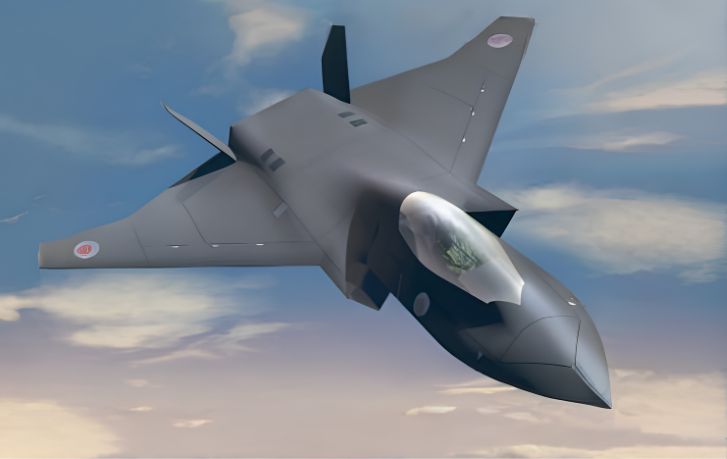
Britain, Italy and Japan signed a £4.6 billion agreement on July 3 to push their next-generation fighter program, known in Britain as Tempest, into its next design phase, with the work awarded to Edgewing, the joint venture formed by BAE Systems, Leonardo and the Japan Aircraft Industrial Enhancement Company. Japan’s defense ministry said in an official announcement of the contract signing that the deal runs through the end of 2027, a concrete step for a program intended to enter service by 2035 but still carrying major technical, cost and training uncertainty.

That matters because Tempest is not being sold as just another fast jet. The program is being built around a far broader job: replacing older combat-air fleets in the UK and Italy, helping Japan cover a large maritime air-defense requirement, and doing it with a platform expected to work as a “system of systems.” In practical terms, that means one aircraft has to do more than fly and fire. It must combine onboard sensing with data from satellites, ships and ground stations in real time, while also directing uncrewed aircraft often described as loyal wingmen.
The new contract gives the program real momentum, especially after a nine-month delay tied to UK defense spending plans. It also lands after the collapse of the rival FCAS effort involving France, Germany and Spain, which gives GCAP more strategic weight as Europe’s remaining active sixth-generation fighter track. But momentum is not the same thing as proof. The core challenge is still integration.
Each partner brings pieces of the technical base. Japan flew the X-2 stealth demonstrator in 2016, showing domestic work on stealth shaping, radar-absorbent materials and thrust vectoring. The UK flew the Taranis stealth demonstrator in 2013. Italy and Japan also host F-35 final assembly lines, the only such facilities outside the United States, giving both countries experience with stealth-aircraft manufacturing and wing production. Those are serious foundations, and they explain why the three governments believe this collaboration is plausible rather than aspirational.
Still, none of those accomplishments by themselves answers the hardest program question: can the partners merge stealth, sensor fusion and artificial intelligence into one operational aircraft without letting cost, schedule or complexity overwhelm the design? That is the line between a promising concept and a fleet airplane. Low observability affects shaping, materials, maintainability and thermal management. Sensor fusion adds heavy demands on computing, software assurance and data handling. Adding AI-driven functions and control of uncrewed teammates raises the burden again, because the crew interface and mission systems have to stay usable under pressure rather than simply impressive in a lab.
This is where the public-cost issue becomes sharper than the headline contract number. The £4.6 billion now committed advances design work, but the total program cost remains unquantified. Neither the aircraft’s eventual unit price nor the size of the UK order has been fixed. Multinational fighter programs have a long history of underestimating final cost because the biggest bills tend to appear when early design ambitions collide with production reality, certification-like safety demands, software maturity and long-term support planning. In that sense, the current deal buys progress, not certainty.
The industrial structure is one reason GCAP still looks more disciplined than many past collaborations. Edgewing’s three partners each hold an equal 33.3% stake, and no single nation is designated as lead. That is not a guarantee of success, but it does reduce one of the classic failure points in multinational aerospace programs: unresolved arguments over design leadership, workshare and intellectual property. The rival FCAS effort ran into exactly those kinds of disputes. GCAP appears to have settled that governance problem earlier, before full-scale hardware work locked the partners into costlier fights.
Even so, governance is only one layer of delivery risk. Another is production scale. The program has not yet shown it can sustain a line for national fleets, which is a different problem from building demonstrators or proving subsystem technology. Fleet production means stable suppliers, repeatable manufacturing quality, support equipment, training pipelines and a realistic rhythm for upgrades. For a stealth aircraft, sustainment discipline matters almost as much as airframe performance, because the value of low observability and advanced sensors erodes quickly if the fleet is expensive to maintain or difficult to keep mission-ready.
Training may be the least visible challenge, but it is one of the most consequential. Converting pilots to any new fighter already takes months of classroom work, simulator time and supervised flying. Tempest adds another layer: crews may need to manage uncrewed aircraft while flying the core platform. That changes workload, mission planning and simulator requirements. In other words, the program is not just buying a jet. It is buying a new operating method, and those are often harder to field than the airframe itself.
So the July 3 contract is real progress, and it gives Tempest more than conceptual credibility. But this is still the easy phase compared with what comes next. A fighter program earns its reputation not when governments sign the design check, but when the aircraft, software, supply chain and training system all mature together on time. GCAP now has money and structure. Over the next nine years, it still has to prove it can turn that alignment into an affordable, buildable combat system rather than an elegant promise.
By David Whitaker — Associate editor for AMI’s aerospace and drone systems desk, translating flight systems, aircraft programs, spaceflight, and UAV developments into accessible technical stories.