Blue Origin Traces New Glenn Launchpad Explosion to Oxygen Valve, Plans Retrofit
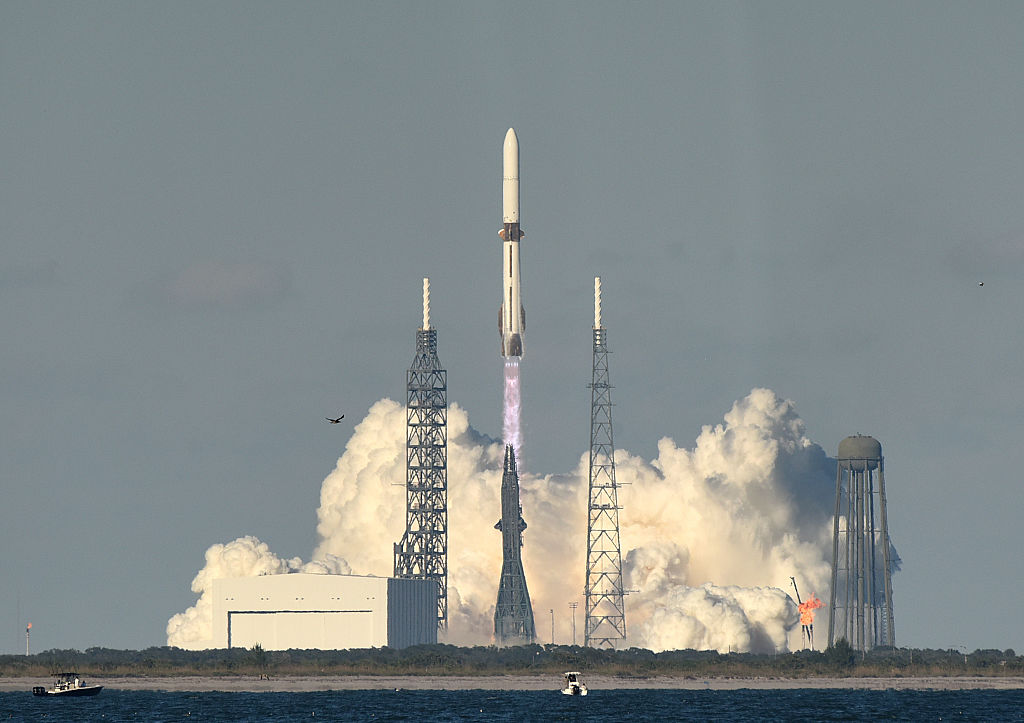
Blue Origin says the May 28 explosion that destroyed a New Glenn rocket on its Florida launchpad originated at the main oxygen valve on one of the booster’s seven BE-4 engines. The finding, announced August 5 by CEO Dave Limp, has led the company to begin producing modified valve hardware that it intends to retrofit to engines already built.

The update substantially narrows the investigation, but it is not a completed return-to-flight determination. Blue Origin has not publicly detailed how the valve malfunctioned, and Limp said the remaining fault-tree analysis was still underway. New Glenn therefore has an identified area of origin and a proposed engineering response not a public demonstration that every contributing condition has been resolved.
Recovered hardware points investigators toward one component
The rocket exploded during a static-fire test at Cape Canaveral days before its planned fourth flight. According to Limp, hardware recovery and subsequent inspections confirmed that the anomaly began at the main oxygen valve. Blue Origin also conducted component-level work and engine hot-fire testing to better understand the failure mode and develop mitigations.
That combination matters because physical evidence and repeatable ground testing can do different jobs in an investigation. Recovered hardware can help localize where an event began, while component and engine tests can assess whether a suspected condition can be reproduced and whether a modification changes the result. Blue Origin has disclosed the location and corrective-action path, but not the detailed test results or precise valve failure mechanism.
Limp characterized the required changes as small and suitable for rapid retrofit. Updated hardware was expected to be ready by the end of August. A retrofit-friendly change could limit the need to discard completed engines or substantially redesign the propulsion system, but installation is only part of the return-to-flight work. The modified hardware still has to fit into the broader investigation, verification and launch-processing sequence.
The BE-4 connection extends beyond New Glenn
The finding also reaches United Launch Alliance because each Vulcan rocket uses two Blue Origin-built BE-4 engines. ULA said it is collaborating with Blue Origin, and Blue Origin is expected to modify Vulcan engines at ULA’s manufacturing plant in Decatur, Alabama, and at Cape Canaveral.
The two applications are related but not identical. New Glenn’s first stage uses seven BE-4 engines and includes features supporting relight, landing and reuse, while Vulcan uses a pair on its expendable first stage. That shared engine base makes the valve modification relevant to both fleets, but it does not establish that the complete vehicle configurations have identical risk or that either rocket has been cleared to launch.
Vulcan was already grounded by an unrelated issue involving one of its solid rocket motors. Its return therefore depends on a separate corrective-action track in addition to any BE-4 work. For U.S. launch capacity, concurrent investigations on two major rockets are more consequential than either component issue viewed alone: available launch dates depend on completed vehicles, qualified hardware, functioning pads and regulatory authorization lining up at the same time.
Pad damage may be the harder schedule constraint
New Glenn’s engine retrofit is only one part of Blue Origin’s year-end return target. The explosion damaged infrastructure at the company’s sole orbital launch site, including a large rocket transporter tower. Rather than replacing that tower directly, Blue Origin plans to change how payloads are integrated onto New Glenn.
That is a significant operational change because ground systems determine how a rocket, payload and launch crew move through final processing. Even when the flight hardware fix is compact, altered integration procedures and rebuilt facilities must support safe, repeatable operations. The public update does not establish that this ground work, the investigation and the modified engines have completed their respective verification steps.
The schedule carries customer consequences. Amazon has booked both New Glenn and Vulcan to deploy satellites for its low-Earth-orbit broadband network. Blue Origin also plans to launch a Blue Moon lunar-lander test associated with NASA’s Artemis program as soon as next year. New Glenn’s pad explosion followed a mission failure on its third flight, adding another recovery task during an already constrained period for U.S. launch availability.
Blue Origin now has a specific valve to modify and recovered hardware supporting where it says the anomaly began. The unresolved test is broader: whether the company can close the remaining analysis, retrofit the shared engine inventory, restore a changed launch operation and secure the necessary authorization in time to fly New Glenn again before 2026 ends.
By David Whitaker — Associate editor for AMI’s aerospace and drone systems desk, translating flight systems, aircraft programs, spaceflight, and UAV developments into accessible technical stories.