SpaceX, Tesla Confirm $16.8 Billion Texas Chip Plant Spanning 100 Million Square Feet
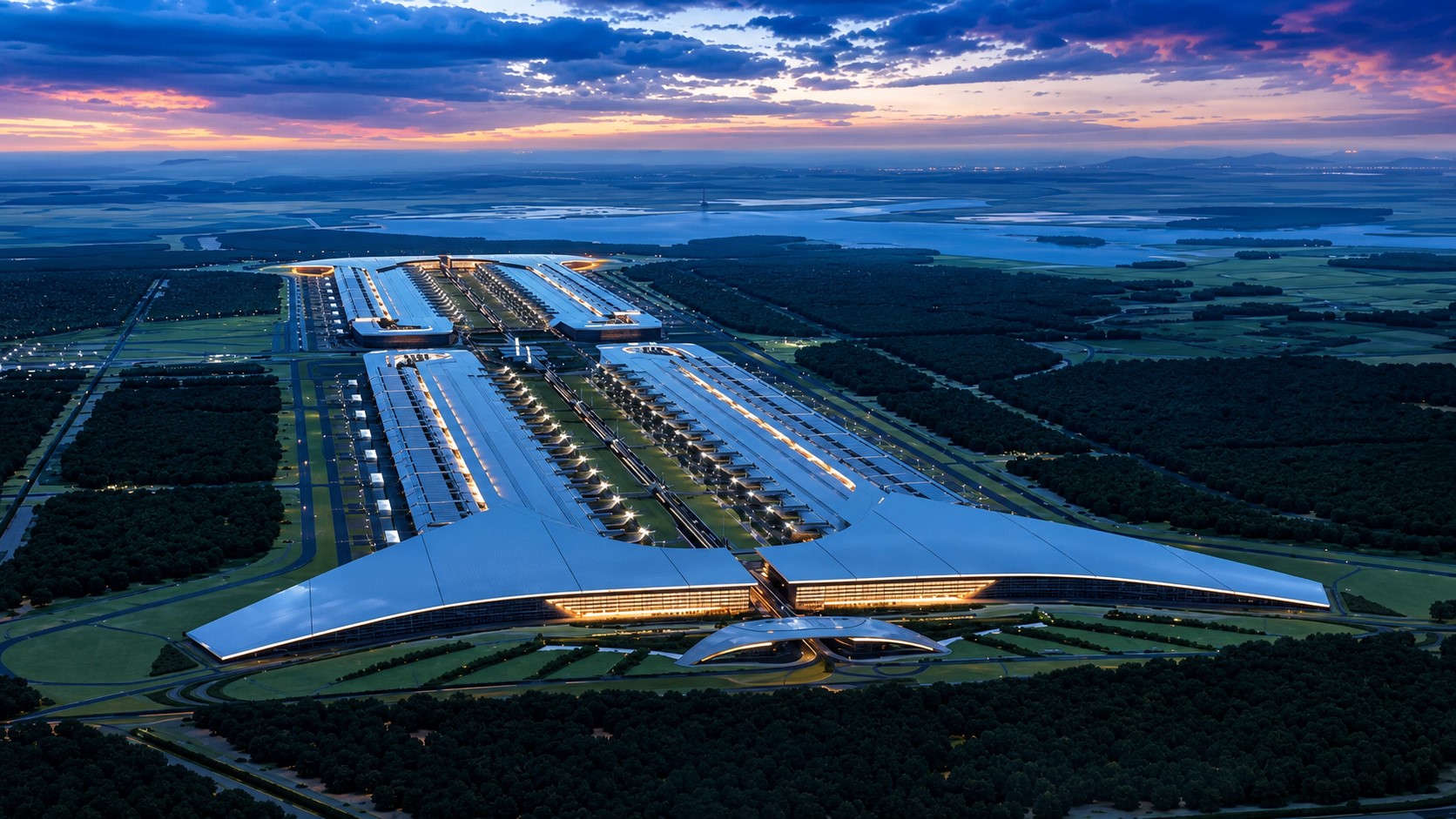
SpaceX and Tesla have paired one of the largest proposed semiconductor developments in the United States with public support whose full local value and long-term consequences remain unresolved. The companies confirmed plans for a $16.8 billion initial phase of Terafab, an expected 100-million-square-foot chip facility in rural Grimes County, Texas. The state has extended a $30 million grant, while the county and two school districts have approved property-tax incentives.
The Texas announcement says the first phase will create 3,000 jobs. That is a substantial industrial commitment, but it does not yet answer the questions that matter for evaluating the public bargain: the total value and duration of all local incentives, the final construction sequence, the project’s quantified utility demands or the infrastructure obligations that could fall outside the factory boundary.
A different semiconductor production model
Terafab is intended to manufacture advanced logic and memory devices and then package and test them at the same campus. Those operations are traditionally divided among separate facilities and, frequently, different companies. Bringing them together could reduce transfers between suppliers and shorten the feedback loop between chip fabrication, packaging, testing and design changes.
That integration is important for Tesla and SpaceX because the planned products serve tightly coupled hardware systems: processors for self-driving vehicles and humanoid robots, along with high-power chips for proposed space-based data centers. Packaging is not merely a final enclosure step in such systems. It affects electrical connections, heat removal and how logic and memory are combined. Locating fabrication, packaging and testing together could make it easier to identify yield or performance problems and return those findings to process and design teams.
The tradeoff is concentration. A conventional supply chain can distribute production stages among specialist operators and locations. Terafab would place more of that chain within one enormous industrial system, increasing the importance of coordinated power, cooling, process-water, wastewater, contamination control and materials handling. SpaceX has said the plant would use water from Gibbons Creek Reservoir rather than local groundwater and would include onsite wastewater treatment, reuse and conservation measures. However, projected water volumes and treatment capacity have not been disclosed.
The expected 100 million square feet also should not be read as 100 million square feet of semiconductor cleanroom space. The published figure covers manufacturing space across a planned campus that would require extensive support equipment and utilities. No detailed building allocation or phasing plan has been released, so the relationship between the $16.8 billion initial investment and the ultimate 100-million-square-foot footprint remains unclear.
Public support changes the accountability standard
Texas describes its $30 million Enterprise Fund award as a performance-based grant. Terafab also qualifies under the state’s Jobs, Energy, Technology and Innovation program, while Anderson-Shiro and Iola school districts approved tax agreements and Grimes County approved a property-tax waiver arrangement. These actions make job delivery, capital deployment and transparent reporting public concerns rather than solely corporate milestones.
The announced employment level at least 3,000 jobs offers a concrete benchmark. Yet job count alone does not establish whether the incentive package distributes costs and benefits fairly. School districts, county residents and other taxpayers are affected differently by abatements, company payments, population growth and demand for roads or public services. The available project disclosures do not quantify all those effects or state the combined value of the state and local support.
Community concerns also require careful separation from established impacts. Some residents have raised questions about rural life, property values and environmental effects, but those outcomes have not been demonstrated. Grimes County Citizens for Responsible Development has gathered nearly 900 petition signatures seeking enforceable protections, transparency, independent oversight and public participation. Those requests are documented; the feared consequences remain prospective.
Similarly, SpaceX’s assertion that it and Tesla will require more computing capacity than current worldwide chip production can support is a company projection, not an independently verified capacity finding. The earlier $55 billion figure was a prior estimate and should not be treated as current initial spending; the confirmed figure for the first phase is $16.8 billion.
Terafab could give Tesla and SpaceX tighter control over chips central to vehicles, robots and space-computing systems while adding domestic semiconductor capacity. Whether its integrated model delivers that advantage at an acceptable public and local cost will depend on details not yet published particularly construction phasing, utility loads, environmental review, incentive valuation and measurable performance obligations.
By Thomas Caldwell — AMI’s senior editor for mechanical and mobility engineering, covering vehicle electronics, systems integration, electrification, chassis systems, propulsion, and safety policy.