US-Ukraine Deal Opens Military Drones to Pentagon Testing and Billion-Dollar Competition
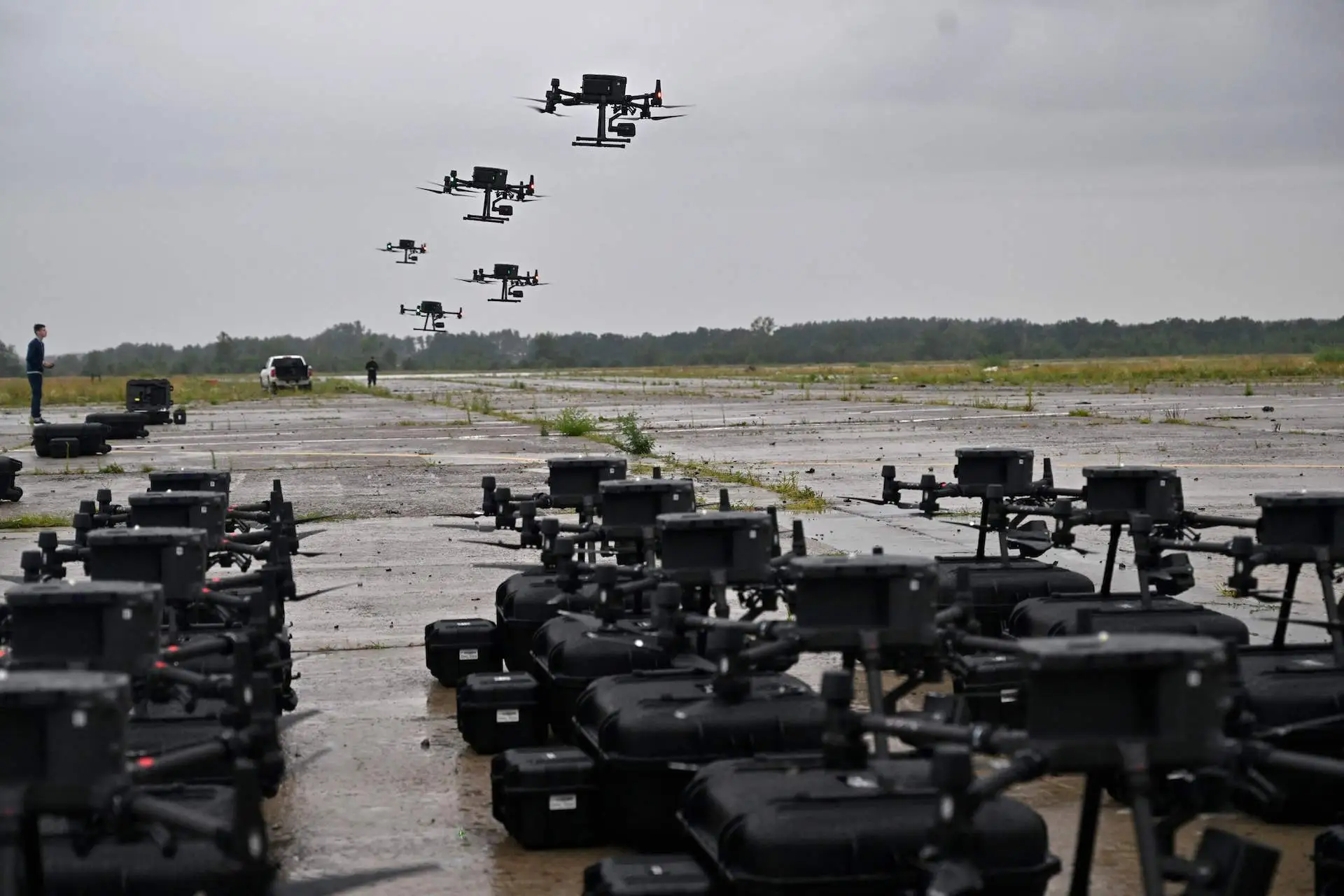
The United States and Ukraine have signed a statement of intent that could bring Ukrainian military drones into Pentagon testing and open a formal route toward its billion-dollar Drone Dominance competition. The framework is a consequential entry point for Ukrainian manufacturers, but it is not a production contract, procurement decision or approval to field their aircraft with U.S. forces.

The bilateral document creates a pathway for Ukrainian air, land and maritime drones to be exported to the United States for military evaluation, according to Radio Free Europe/Radio Liberty, which cited two people familiar with the agreement. The U.S. military could request particular platforms for assessment rather than operational deployment, potentially using test results to inform later requirements.
That distinction matters because testing access and procurement are separate gates. An aircraft first has to demonstrate that it can perform its assigned mission, work reliably in the hands of military users and fit the Defense Department’s safety and support expectations. A manufacturer must then show it can supply enough systems on schedule, maintain quality as production rises and comply with applicable sourcing and security rules.
A route into an existing Pentagon competition
The agreement could connect Ukrainian manufacturers more directly with Drone Dominance, a Defense Department program structured around competitive evaluations under simulated battlefield conditions. The broader program is valued at approximately $1.1 billion and is intended to procure more than 200,000 small drones by 2028, according to published program coverage.
Its first Gauntlet involved more than two dozen manufacturers and produced 11 winners eligible for delivery orders. The initial round assessed more than aircraft performance alone: production readiness and feedback from military operators also contributed to the rankings. Pentagon officials cautioned that the leaderboard represented performance against specific mission scenarios, not a universal ranking of the industry’s best drones.
Ukrainian technology already has a visible foothold in that process. A drone produced through a partnership between British company Skycutter and Ukrainian company Skyfall led the first-round leaderboard with 99.3 points. Ukrainian Defense Drones also placed among the companies selected for delivery orders. Those results show that Ukrainian-linked products can compete in the Pentagon’s evaluation structure, while the new bilateral framework could make access more systematic for additional manufacturers and vehicle categories.
The competition’s format also illustrates why wartime operating experience does not automatically translate into a U.S. acquisition. Drone Dominance evaluates systems for defined use cases rather than seeking one aircraft that performs every task. Usability, training burden and field practicality can weigh against raw performance if a design is difficult for new operators to handle. Industrial capacity is another filter: a successful prototype or small production run does not by itself prove that a company can deliver thousands of consistent units.
Production and integration remain unanswered
The framework follows months of negotiations as the Pentagon pursued access to Ukrainian drone development informed by more than four years of full-scale war with Russia. That experience can give U.S. evaluators a larger and faster-changing pool of designs to examine, but formal testing will determine how well individual systems transfer into American requirements, supply chains and operating practices.
Ukraine’s production scale is potentially important but remains difficult to define from the available figures. President Volodymyr Zelensky has said the country is producing 10 million drones annually and expects that figure to reach 20 million. No timeline, mix of aircraft categories or verification method accompanied those numbers, so they should not be treated as a direct measure of capacity available to U.S. programs.
Manufacturing in the United States is also a possible later step, not a confirmed element of a Pentagon order. The statement could eventually support joint production of Ukrainian-designed systems on U.S. soil, while a separate partnership between Ukrainian autonomous-systems developer UFORCE and Oregon-based shipbuilder ReconCraft is intended to bring production of MAGURA maritime drones to the United States. That company-level arrangement demonstrates one potential industrial model, but it does not establish what the Defense Department will buy under the bilateral framework.
The next meaningful evidence will be specific Pentagon test requests, named participants and results tied to defined evaluation criteria. Until those appear, the signed agreement should be read as expanded access to the U.S. testing pipeline an important opportunity for Ukrainian manufacturers, but still several decisions short of regular Pentagon procurement or fielding.
By Stephen Wallace — Editor for AMI’s aerospace integration and unmanned mobility coverage, focused on drone manufacturing, VTOL systems, autonomous networks, and air-ground mobility links.