FAA Orders Boeing 737 Max Seat Checks Over Turbulence Lock Risk
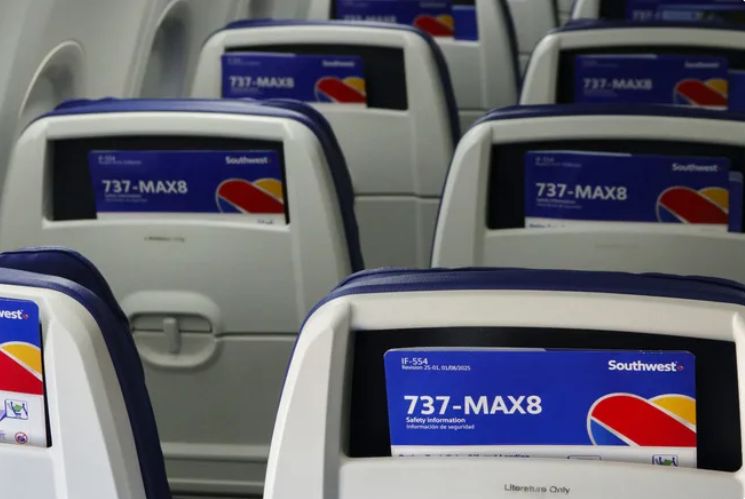
About 31,000 seats on Boeing 737 Max aircraft are now at the center of a new FAA safety action: U.S. operators of affected jets must inspect seat attachments that may not stay properly locked during turbulence. The issue affects Boeing 737-8, 737-9, and 737-8200 aircraft, turning what began as a manufacturer-disclosed installation concern into a defined regulatory maintenance campaign.
In the FAA’s airworthiness directive proposal, the agency said it received a report that certain track-mounted passenger seat assemblies were not correctly installed in the seat tracks. Specifically, the aft fitting shear plungers were not correctly lowered and engaged. The FAA said an incorrectly installed seat assembly could disengage from the seat tracks under increased load, turbulence, or an emergency landing, creating an injury risk and potentially blocking an aisle during evacuation.
The scale is what makes this more than a routine cabin-interior fix. The FAA estimates the proposal would affect 453 U.S.-registered aircraft. Up to 69 seats per airplane could require reassembly, and the agency’s cost table puts inspection labor at about $85 per seat assembly. Across 1,028 aircraft referenced in broader fleet estimates, the inspection campaign is expected to cost at least about $2.6 million before any additional corrective work. The FAA also notes that some costs may be covered under warranty, which could reduce the hit to operators.
For passengers, the practical point is straightforward: a seat is not just a comfort item. In certification terms, seat attachments are part of the cabin safety system. They have to remain secured when the aircraft sees sudden vertical loads, whether from unexpected turbulence or a harder-than-normal landing. If a seat does not remain locked into its track, the hazard is not limited to the occupant in that row. A displaced seat can alter restraint performance, create secondary impact risks, and, as the FAA noted, obstruct the aisle when evacuation speed matters most.
That is why this action is best understood as a containment measure inside the continued-airworthiness system, not as a sign of a broad new flight-safety failure. The FAA did not say the affected aircraft are unsafe to fly in normal service today, and the proposal does not amount to a grounding order. Instead, it follows the standard regulatory pattern for manufacturing or assembly nonconformities: identify the affected type design, define an inspection method, require on-condition corrective action, and set compliance times through the directive process.
There is also an important boundary on causality. The confirmed issue is incorrect installation of certain track-mounted passenger seat assemblies. The FAA’s concern is the potential consequence if those seats experience higher loads. That is enough to justify mandatory inspection, but it is not evidence of a wider structural failure, and it should not be conflated with unrelated 737 Max accident history. On the facts available here, the seat-track campaign is its own cabin-safety and quality-control matter.
Operationally, the burden will fall most heavily on airlines with large Max fleets. United Airlines has about 284 of the affected models, and Southwest operates more than 260. That does not mean every one of those airplanes will need major rework, but it does mean maintenance planners may have to absorb a large volume of seat-by-seat inspections into existing schedules. Because the estimated labor is one work-hour per seat assembly, the direct unit cost looks modest; the real systems consequence is fleet coordination, aircraft downtime planning, records control, and making sure any reassembly is completed to the required configuration standard.
Boeing’s response matters here as well. The company has already issued guidance to operators and is now double-checking seat installation on aircraft before they leave the factory. That is a useful distinction between in-service mitigation and production containment. In other words, the FAA action addresses the delivered fleet, while Boeing’s added checks are intended to prevent the same installation problem from leaving the factory again. In manufacturing-quality terms, that is the difference between corrective action in the field and process control at the source.
The broader regulatory context is continued oversight rather than a one-off paperwork exercise. Airworthiness directives exist because certification does not end at delivery; regulators, manufacturers, and operators keep feeding service data and inspection findings back into the system. When the FAA concludes an unsafe condition is likely to exist or develop on other aircraft of the same type design, it can turn service guidance into a mandatory requirement. That is what gives this seat issue its significance: the agency is signaling that a basic cabin retention feature warrants formal compliance, not just operator discretion.
The next milestone is procedural but meaningful. The FAA proposal is open for comment, with comments due by September 10, 2026, before a final directive is issued. Unless the underlying finding changes, the most important engineering consequence is already clear: on a widely used Boeing 737 Max fleet, something as ordinary as a passenger seat has become a tracked safety item that airlines now have to inspect, document, and, where needed, reinstall correctly before the risk can be closed out.
By Thomas Caldwell — AMI’s senior editor for mechanical and mobility engineering, covering vehicle electronics, systems integration, electrification, chassis systems, propulsion, and safety policy.