T-Mobile CEO Says Starlink Cannot Yet Replace Cellular Networks in Cities
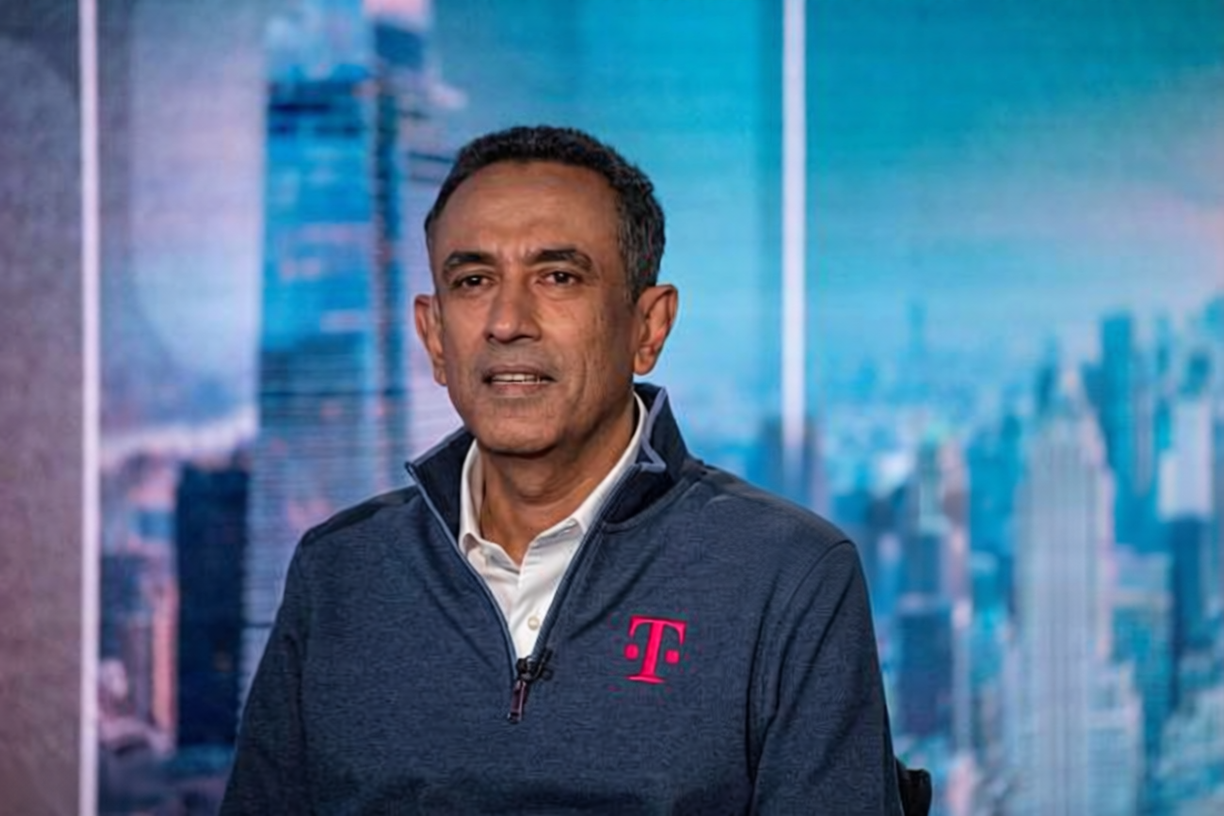
Starlink can reach a phone beyond the last cellular tower, but that does not mean it can carry a city’s mobile traffic. T-Mobile CEO Srini Gopalan says SpaceX’s satellite network currently complements terrestrial service in rural dead zones rather than replacing the dense ground networks serving cities and suburbs.

That distinction challenges SpaceX’s plan to compete more directly with T-Mobile, AT&T and Verizon. Gopalan told the Financial Times that Starlink lacks the broad network needed to persuade many cellular customers to switch. T-Mobile already uses Starlink for its T-Satellite service, which extends connectivity into rural areas and national parks outside the carrier’s tower coverage, but Gopalan said usage has been lower than the company initially expected.
Coverage and capacity solve different problems
A direct-to-phone satellite can illuminate a large geographic footprint. That is useful when the primary requirement is getting a signal into an area with few or no towers. The engineering penalty is that users across that footprint must share the satellite’s available bandwidth and spectrum.
Urban cellular networks divide the same basic problem into much smaller pieces. Towers and small cells reuse spectrum across compact coverage areas, allowing the network to distribute thousands of simultaneous connections among many ground radios. Adding local cells can increase capacity where demand is concentrated; a wide satellite beam cannot divide urban traffic as finely without substantially more space and ground infrastructure.
This is why eliminating a coverage hole is not equivalent to replacing a carrier plan. Satellite connectivity can provide an important service where terrestrial construction is impractical, but dense cities create a capacity problem rather than a simple coverage problem. Buildings, device density and sharply varying demand also make the location of ground infrastructure consequential.
Spectrum reinforces that gap. SpaceX acquired approximately 65 MHz of EchoStar spectrum for about $19.6 billion. Analyst David Barden contrasted that allocation with incumbent networks assembled over roughly three decades and using about 1,000 MHz. Those figures are not a direct measure of customer speeds, because network architecture, spectrum bands and reuse all matter, but they indicate the scale of the terrestrial resource base SpaceX is trying to challenge.
SpaceX’s answer is a hybrid network
SpaceX is not proposing to solve the problem with satellites alone. Its described Starlink Mobile plan combines next-generation direct-to-device satellites, EchoStar spectrum with terrestrial operating rights and small cellular base stations. Some of those small cells could be mounted with existing Starlink dishes on homes and businesses.
That architecture acknowledges the same limitation Gopalan identified. Satellites would extend geographic coverage, while ground radios would add capacity and spectrum reuse in places with more users. Reusing Starlink installation sites could reduce some deployment work, but a useful mobile cell still needs power, a suitable location and coverage aligned with cellular demand. Existing dish locations will not necessarily coincide with the places where a mobile network needs the most capacity.
SpaceX says it plans to begin launching the next-generation direct-to-device satellites in 2027 and start full service by the end of that year. Chief operating officer Gwynne Shotwell said the combination of new spacecraft and EchoStar spectrum would make the service “100 times better” than today’s direct-to-device offering.
That remains a forward-looking company claim, not a demonstrated network result. SpaceX had not publicly detailed pricing, coverage maps or compatible devices for the planned full mobile service. Those details will determine whether Starlink Mobile becomes a broad consumer alternative, a premium dead-zone service or a hybrid offering aimed at selected regions and connected machines.
The 2027 launches therefore represent more than a coverage expansion. They will begin testing whether SpaceX can translate its satellite reach into enough local capacity to compete where terrestrial carriers are strongest. Until the new satellites, spectrum and small-cell layer are operating together, Starlink’s clearest mobile advantage remains the territory beyond the towers—not the crowded streets already surrounded by them.
By David Whitaker — Associate editor for AMI’s aerospace and drone systems desk, translating flight systems, aircraft programs, spaceflight, and UAV developments into accessible technical stories.