Germany’s Military Chief Says Drone Incidents Are Testing NATO Air Defenses
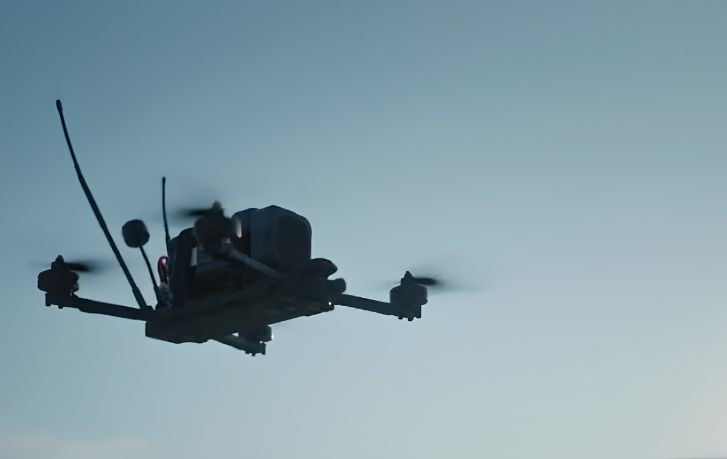
A small drone entering restricted airspace creates a problem larger than the aircraft itself. Surveillance systems must first detect a small, low-flying object against clutter, operators must determine what it is, and authorities must decide whether the event is accidental, criminal or connected to a broader security campaign. Any response must protect aircraft and people without escalating on the basis of incomplete information.

Germany’s top military officer says recurring incidents are putting that entire chain under pressure. Gen. Carsten Breuer, the 17th Inspector General of the Bundeswehr and the German government’s senior military adviser, said on August 12 that drones and other hybrid activity are testing how NATO members detect events and coordinate their responses. He attributed the broader campaign to Russia, although public information does not establish Russian responsibility for every reported drone incident.
Hybrid attacks are taking place every day in NATO countries, Breuer told The Wall Street Journal, pointing particularly to states along NATO’s eastern flank. Russia is testing us and looking at how we respond, he said. His comments are an assessment of intent, not confirmation that a wider war is imminent.
Why small drones create a large surveillance problem
Detection is the first technical hurdle. Small drones present limited visual and sensor signatures, especially at low altitude and against buildings, vegetation or other background clutter. Recent research on vision-based detection identifies small target size, distracting backgrounds, rapid motion, poor lighting and adverse weather as continuing sources of missed detections and false alarms.
No single detection method automatically resolves identity or intent. A surveillance system may establish that an object is present while leaving open whether it is an authorized aircraft, a hobby drone, a malfunctioning vehicle or a deliberate intrusion. That gap between detection and confident identification matters because airports, police, military commands and air-navigation authorities have different responsibilities and legal powers.
European regulators have treated this as both an aviation-safety and coordination issue for years. The European Union Aviation Safety Agency’s guidance for managing drone incidents at airports notes that unauthorized flights can result from ignorance of rules, deliberate disruption or more serious criminal intent. Its recommendations cover more than 500 aerodromes in the European aviation system and are designed to help operators preserve safety while limiting unnecessary disruption.
That framework illustrates the central tension in Breuer’s warning. Authorities need procedures fast enough to respond to a genuine threat, but disciplined enough to avoid treating every uncertain track as an attack. Counter-drone equipment is only one part of the answer. Sensor coverage, identification standards, trained operators, communications links, legal authority and a defined command chain must work together.
A multinational response adds another layer
An incident affecting NATO does not remain solely a sensor problem. Information may need to move among civilian aviation agencies, police, national armed forces and alliance commands. Each organization must understand what has been observed, how confident that assessment is and who has authority to act. Inconsistent reporting or incompatible procedures can slow a response even when individual sensors perform as designed.
That coordination challenge directly affects the United States because American forces and logistics are embedded in NATO planning. Germany’s broader strategic work addresses the potential movement, protection and supply of at least 800,000 German, U.S. and other allied troops through European ports, waterways, railways and roads during a Russian attack. Berlin released a declassified summary of the 1,200-page planning document in April 2026.
Germany’s 2026 military strategy connects deterrence, hybrid-threat mitigation, personnel growth and modernization to a phased readiness program. An analysis of the strategy describes planned readiness improvements through 2029, broader capability growth toward 2035 and a longer modernization horizon extending to 2039. Execution including procurement speed and personnel availability remains the defining constraint.
A recent case at Leipzig/Halle Airport shows why attribution must remain separate from concern. German police disarmed an explosive-laden drone discovered near a Ukrainian cargo aircraft, and Germany’s interior minister described the incident as a new level of danger. Authorities were still investigating its origin, however, and no operator has been established publicly.
Breuer argues that Germany must assume a stronger European role as Washington gives China greater strategic priority and Berlin remains focused geographically on Russia. For Germany, the immediate test is not simply buying more counter-drone hardware. It is building a reliable system in which detection, identification, civil aviation safety and multinational command decisions remain connected under uncertainty before the next ambiguous drone track appears.
By Stephen Wallace — Editor for AMI’s aerospace integration and unmanned mobility coverage, focused on drone manufacturing, VTOL systems, autonomous networks, and air-ground mobility links.