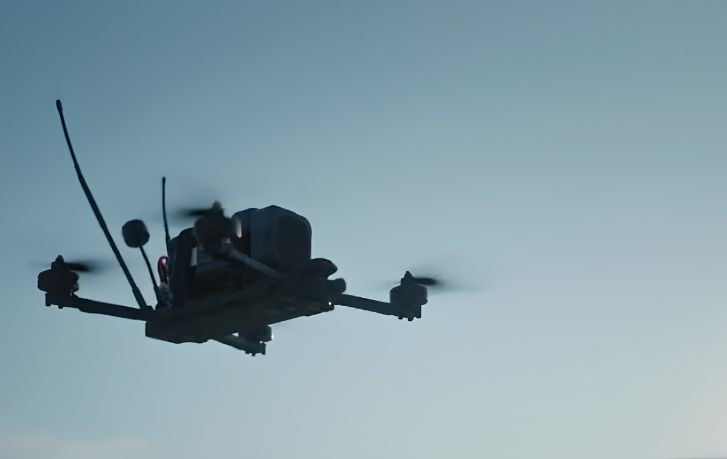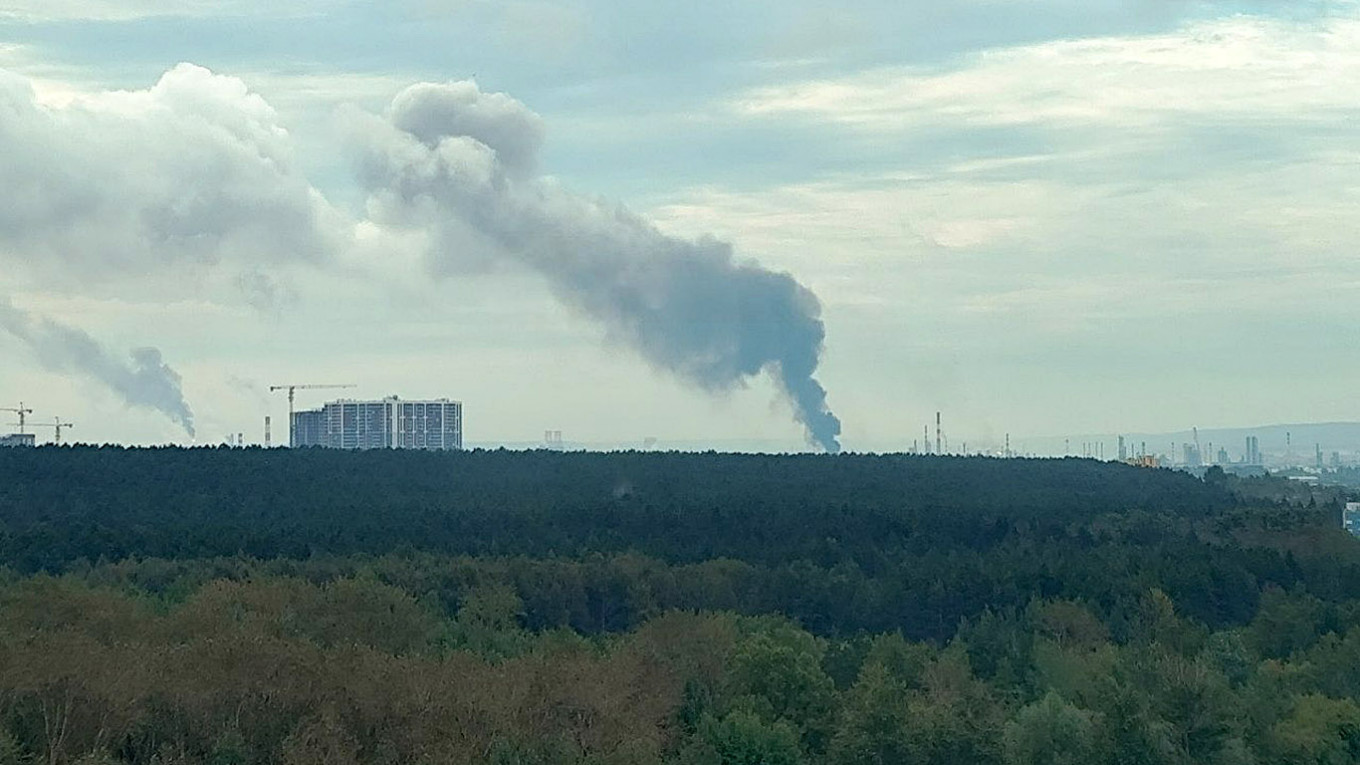
Ukrainian Drone Strikes Reportedly Leave 74% of Lukoil’s Perm Refininery Capacity Offline
Seventy-four percent is the combined share of stated refining capacity represented by two primary crude-processing units reportedly offline at Lukoil-Permnefteorgsintez in Perm Oblast. Reuters, citing two people familiar with the matter, reported that Ukrainian drone strikes preceded both shutdowns. The figure points to a substantial industrial disruption at one of Russia’s largest refineries, more than 1,600 kilometers from Ukraine’s border, but it is not proof that the plant has lost 74% of its actual fuel output.
The latest reported shutdown involves crude-distillation unit CDU-4, which can process 14,000 metric tons of crude per day and accounts for nearly 40% of the refinery’s capacity. Reuters’ sources said the unit stopped operating after an Aug. 21 strike and gave a preliminary repair estimate of one to two weeks. They also said CDU-5, representing another 34% of capacity, had remained offline since a July 29 attack. Lukoil did not respond to Reuters’ request for comment, leaving the shutdowns, their causes and the repair estimate unconfirmed by the operator.
Why two units can create an outsized constraint
The concentration of capacity is what makes the reported disruption consequential. CDU-4 and CDU-5 are described as primary-processing units, and together they account for almost three-quarters of the refinery’s stated crude-processing capacity. Taking both out of service would therefore remove much more capability than losing two similarly sized units in a plant whose capacity was spread evenly across many processing lines.
The facility has two other crude-distillation units, CDU-1 and CDU-2, each representing 14% of capacity. Their operating status has not been reported. Even if both are available, their combined stated share is only 28%, illustrating the scale difference between the remaining units and the two reportedly unavailable ones. It does not establish what operating rate the smaller units could sustain, whether other refinery equipment is constrained or how the operator might adjust production.
This distinction matters because capacity percentages describe the nominal capability assigned to equipment, not verified barrels or metric tons of finished fuel lost. A refinery’s actual output also depends on current utilization, the crude entering the plant, the availability of downstream processing equipment, maintenance conditions and inventories. None of those operating details has been established for Perm following the reported attacks.
The plant produces gasoline, diesel, jet fuel and lubricants, according to Lukoil’s description of its refining operations. That product range explains the wider supply concern, but the available information does not quantify reductions in any individual fuel. It would be premature to translate the 74% equipment share directly into a 74% decline in gasoline, diesel or jet-fuel production.
Distance expands the industrial-protection burden
Perm’s location more than 1,600 kilometers from Ukraine’s border gives the event significance beyond one refinery. At a high level, reported attacks at that distance place pressure on industrial protection and air-defense readiness across a much larger geographic area. Energy facilities are fixed, capital-intensive systems, while protective resources must also cover cities, transport infrastructure and other industrial sites.
That does not establish how the drones reached the refinery, what defensive systems were present or why any interception effort may not have prevented disruption. Those operational details remain outside the confirmed record. The defensible conclusion is narrower: distance alone did not keep the reported disruption away from a major processing facility, increasing the number and geographic spread of assets that Russian authorities may need to protect.
The Perm reports also arrive against a strained refining backdrop. Data cited by Bloomberg put Russian refinery processing at an estimated 3.6 million barrels per day in July, roughly one-third below the seasonal norm and the lowest level since May 2002. Separately, the Centre for Research on Energy and Clean Air reported that Russian oil-product export loadings fell 23% in July to 4.7 million metric tons, their lowest level on record. Those national figures provide context, but they do not isolate Perm’s contribution or prove that the reported unit outages caused any particular supply change.
The next meaningful evidence will be operational rather than numerical shorthand: confirmation from Lukoil, the actual status of all four crude-distillation units, measured refinery throughput, downstream-unit availability and whether the preliminary one-to-two-week repair window is met. Until then, 74% accurately describes the stated capacity share of two reportedly unavailable units not a confirmed loss of 74% of Perm’s finished-fuel production.
| More aerospace and engineering stories, right in your MSN feed. Follow AMI on MSN |
By Stephen Wallace — Editor for AMI’s aerospace integration and unmanned mobility coverage, focused on drone manufacturing, VTOL systems, autonomous networks, and air-ground mobility links.