Chinese Turbojets Reportedly Make Shahed Drones Three Times Faster, Straining Ukraine’s Defenses
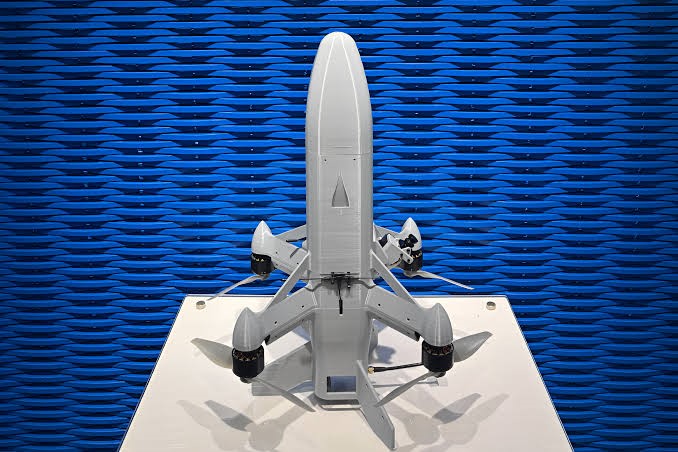
The defining difference between older Shahed-type attack drones and reported newer variants is no longer a modest electronics update. Ukrainian examinations indicate that Chinese-made microturbine engines are helping some Russian models reach about 300 mph, or 483 km/h roughly three times the speed of earlier propeller-driven versions.

That propulsion change alters the economics of interception. Ukrainian officials say some lower-cost interceptor drones used against older Shaheds cannot catch the turbojet-powered models. Defenders may therefore have to rely more heavily on fighter aircraft or scarce air-defense missiles, applying more expensive and limited resources to a weapon designed for mass production.
Speed changes the defensive equation
Propeller-driven Shaheds have been dangerous partly because they combine long-range flight with relatively low production cost and the ability to be launched in quantity. Ukraine has previously said it could intercept more than 90% of older Shahed-type drones, although that figure does not establish an equivalent rate against newer versions.
Turbojet propulsion changes one critical variable: the closing-speed requirement for the interceptor. An interceptor does not merely need a competitive published maximum speed. Its complete system must detect the target, establish a track, launch in time, close from a useful position and maintain guidance. A target traveling at nearly three times the earlier speed compresses that entire sequence.
This does not make a turbojet-powered drone impossible to stop. It does mean that slower, cheaper interceptors may no longer cover the same portion of the threat set. Faster defensive drones are emerging, but speed generally brings tradeoffs involving propulsion cost, endurance, thermal management, production capacity and integration with sensors and command networks.
Japan’s response to the broader low-cost drone problem illustrates how interception has become a manufacturing and systems-integration issue. Terra Drone said on August 25 that its Terra B1 interceptor passed a Japanese demonstration test and advanced toward mass production. The evaluation covered not only flight performance but also simultaneous control, integration, safety, delivery, maintenance, replenishment and training. Those requirements show why a capable airframe alone is not a scalable defense.
Chinese components extend beyond the engine
Ukrainian officials attributed engines recovered from some Russian drones to Shenzhen-based Telefly Telecommunications Equipment. After that identification became public, the turbojet section reportedly disappeared from Telefly’s English-language website, although corresponding products remained accessible through Chinese-language pages and other vendors. Telefly did not respond to a comment request cited in the reporting, so the component attribution remains based on Ukrainian examinations rather than confirmation from the manufacturer.
The reported component flow also includes servomotors, gyroscopes and electronics. Researchers examining captured drones said newer examples carried additional antennas, modems and SIM cards capable of using local networks for flight-path correction. Those findings suggest that the upgrade is broader than replacing a piston engine and propeller with a turbine: propulsion, control hardware and connectivity are evolving together.
Western-made components have also appeared in drone teardowns, including Texas Instruments microcontrollers and STMicroelectronics linear regulators. Both manufacturers said they oppose illicit diversion or military use outside their products’ intended applications. Investigations reportedly traced some diversions through intermediaries in China and Hong Kong, while Chinese-made substitutes have become more common as local manufacturing capability improved.
The wider industrial channel is not limited to one reported engine supplier. In an August 20 sanctions action, the U.S. Treasury identified Chinese entities involved in developing and producing Russia’s separate Garpiya drone series. Treasury said Xiamen Limbach Aircraft Engine produced the L550E engine for that program and that another Chinese supplier shipped electronic and mechanical components with drone applications. That action does not independently verify the Telefly or turbojet claims, but it documents a broader China-linked production and procurement network supporting Russian one-way attack drones.
China’s foreign ministry says the country strictly regulates exports of dual-use goods and rejects unilateral U.S. sanctions. Russian and Iranian officials, Telefly and Xiamen Limbach did not respond to the cited requests for comment.
The immediate engineering contest is now faster Shaheds against interceptors originally optimized for slower propeller-driven targets. If the reported 300 mph performance becomes common rather than exceptional, Ukraine’s challenge will be not simply fielding a faster defensive drone, but producing enough complete interception systems airframes, sensors, controls and support infrastructure to preserve the lower-cost layer of its air defense.
| More aerospace and engineering stories, right in your MSN feed. Follow AMI on MSN |
By Stephen Wallace — Editor for AMI’s aerospace integration and unmanned mobility coverage, focused on drone manufacturing, VTOL systems, autonomous networks, and air-ground mobility links.