China Claims Newest Stealth Fighter Jet Can Target Ships with High Precision
The shifting military balance across the Western Pacific has increasingly centered on fifth-generation combat aviation and long-range anti-access and area-denial architectures. For years, Western naval commanders operated under the premise that carrier strike groups and allied flotillas could project sea control beyond the reach of adversary land-based tactical stealth aircraft. However, the rapid expansion of modern stealth fighter squadrons has challenged long-held doctrines, forcing defense planners to reexamine maritime theater defenses.
In contested maritime environments like the South China Sea and the Taiwan Strait, surface warships rely heavily on layered radar networks and long-range interceptors to neutralize incoming air threats before weapons release. Hitting dynamic naval combatants requires real-time targeting telemetry, electronic attack measures, and platforms capable of penetrating high-threat airspace without being detected. While standard air superiority designs focus on sweeping adversary interceptors from contested skies, expanding that envelope to hunting moving naval targets represents an entirely different operational challenge.
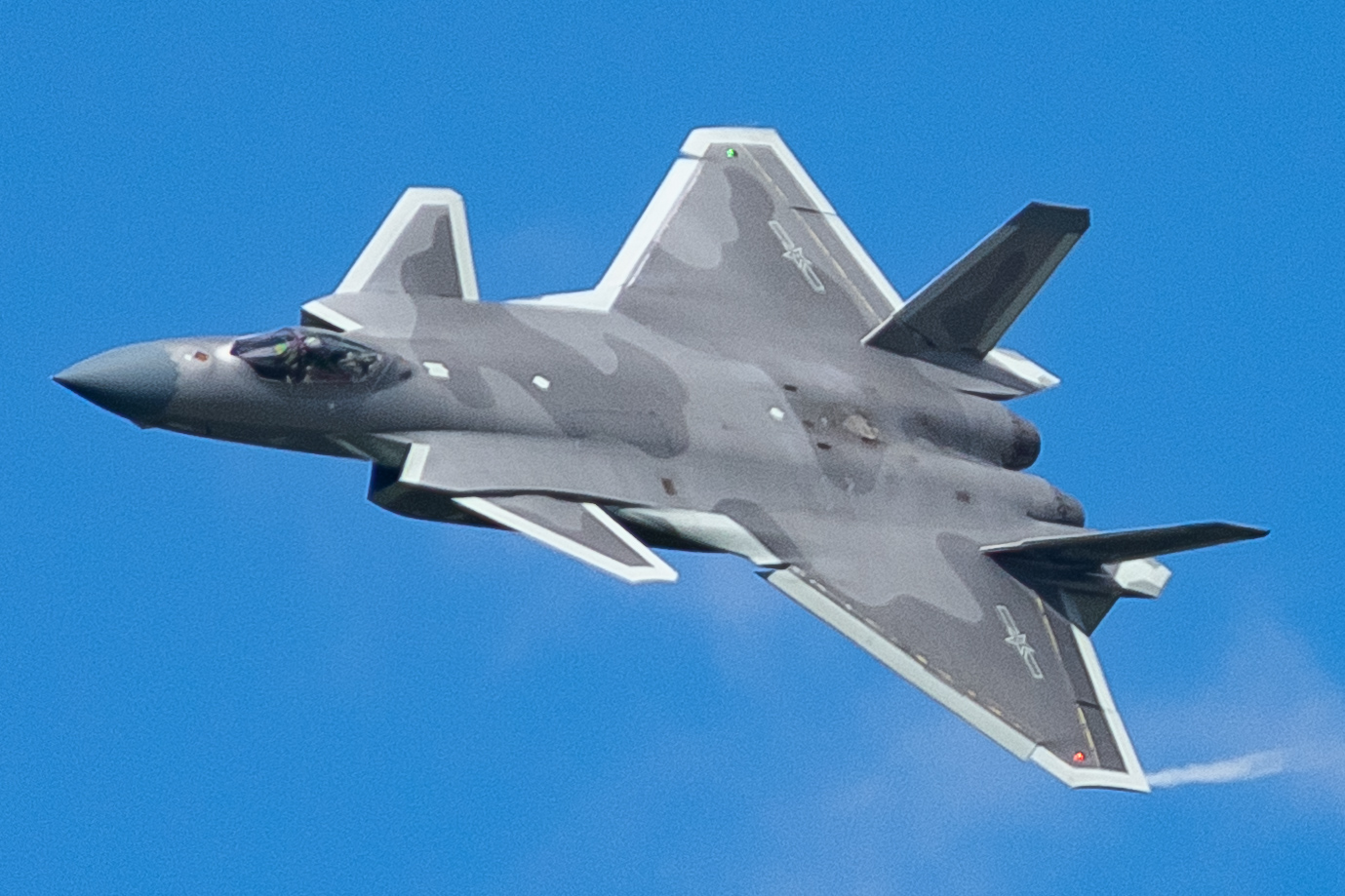
Beijing has officially confirmed that the newest variant of the Chengdu ‘J-20’ Mighty Dragon, the twin-seat ‘J-20S’, is capable of conducting precision strikes against maritime and ground targets. In an official capability disclosure broadcast by state media, defense officials stated that the ‘J-20S’ “boasts exceptional medium-and long-range air superiority capabilities, precision strike capabilities against ground and maritime targets, as well as prominent situational awareness, electronic jamming and tactical command and control capabilities.” The public confirmation, as reported by SlashGear, marks a deliberate evolution of the premier low-observable platform from a dedicated air-to-air interceptor into a multi-role maritime strike asset.
The addition of a tandem cockpit represents a notable departure from Western fifth-generation design conventions, which have almost exclusively relied on single-seat cockpits for aircraft like the ‘F-22 Raptor’ and ‘F-35 Lightning II’. By dividing the cockpit workload between two aviators, the front pilot can concentrate entirely on flight dynamics and high-speed maneuvers while the rear crew member oversees weapon deployment, complex sensor management, and directed electronic warfare. This split becomes particularly advantageous when hunting mobile warships across vast ocean sectors, where surface clutter and dynamic electronic counter-countermeasures require intensive operator attention.
State media announcements also highlighted that the ‘J-20S’ is specifically optimized for manned-unmanned teaming operations with collaborative combat drones. Operating as an airborne command-and-control node, the stealth jet can fly forward into contested airspace and direct attritable unmanned systems to scout enemy positions or saturate shipborne air defense radars. By networking with these unmanned platforms, the ‘J-20S’ can execute long-range targeting solutions while remaining passive, firing either its own internal ordnance or cueing standoff missile batteries based hundreds of miles away.
Carrying dedicated anti-ship missiles inside internal weapons bays poses serious spatial constraints, though Chinese aerospace engineers have actively developed compact, precision-guided munitions to fit within the lower fuselage. Even without oversized anti-ship cruise missiles, the stealth profile allows the jet to close the distance against naval task groups to launch guided strikes or designate targets for land-based ballistic missile batteries. Ben Lewis, founder of defense monitoring organization PLATracker, told USNI News that “a stealth aircraft equipped for maritime strike operations could significantly increase the risk to allied forces operating in or near the first island chain”.
The operational fielding of the ‘J-20S’ comes as the total inventory of ‘J-20’ airframes expands rapidly across multiple People’s Liberation Army Air Force brigades. With serial production outpacing earlier Western projections, fielding a two-seat stealth strike platform adds a formidable layer to Beijing’s regional maritime deterrence strategy. As the Pentagon accelerates its own collaborative combat aircraft programs and naval distributed lethality initiatives, the militarization of the Indo-Pacific airspace is transitioning into a clash of networked stealth platforms designed to hunt warships far from shore.