Army Awards Neros $500 Million Drone Ceiling, Not Guaranteed Spending
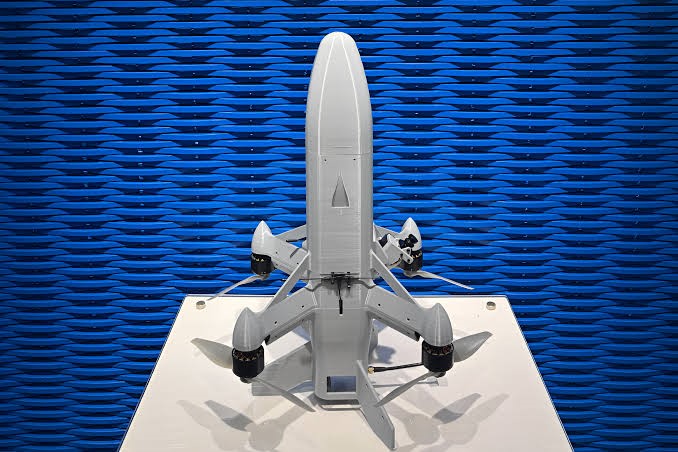
A three-year-old Southern California startup now holds a U.S. Army contract framework with a ceiling of $500 million for Archer first-person-view drones. That is a consequential opening for Neros Technologies, but it is not a $500 million purchase: the Army can issue orders under the award and ultimately spend substantially less if the aircraft, production system or pricing does not meet its requirements.
The distinction matters to taxpayers and to the domestic drone industry. A contract ceiling establishes the maximum ordering value, not a guaranteed production run. Neros still must convert that contracting access into accepted deliveries while expanding output, controlling quality and substantiating its claim that Archer contains no Chinese components, including chips.
The production target is about 16 times current output
Neros reports making approximately 1,200 Archers per week. Sustained for a full year, that rate would equal about 62,400 aircraft. The company’s roadmap calls for annual capacity of one million drones by 2028 roughly 16 times the stated current rate.
That gap is the central manufacturing test. Reaching a million-unit annual rate is not simply a matter of installing more assembly stations. The company would need a corresponding increase in motors, electronic speed controllers, batteries, radio hardware, chips, airframes and other parts, with consistent configuration control across incoming materials and finished aircraft. Labor training, production tooling, test equipment and supplier capacity would also have to grow without allowing defect rates or rework to erase the economics of a low-cost platform.
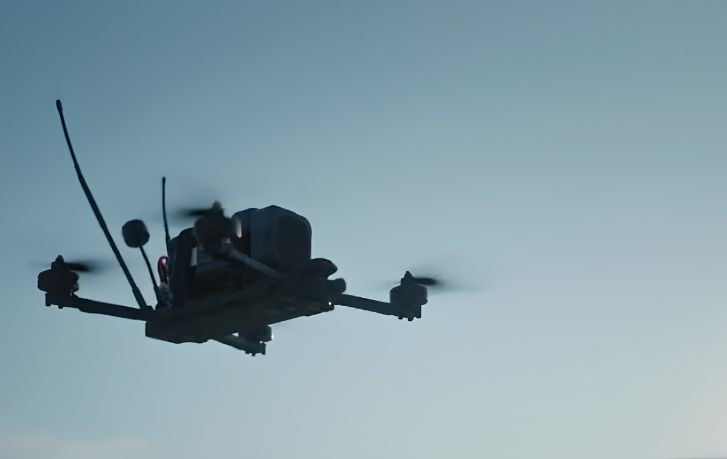
Neros describes Archer as a quadcopter costing about $2,000 for the drone alone and approximately $5,000 as a fully equipped system. At that price class, inspection and acceptance processes must be efficient enough to preserve affordability while still demonstrating repeatable performance. Large-volume production makes even a small defect percentage consequential because it can translate into thousands of rejected or reworked units.
Component origin becomes a verification problem
The company’s assertion that Archer uses no Chinese components is commercially important, but it remains a company claim requiring independent or official verification. At scale, domestic supply-chain independence depends on more than final assembly location. Manufacturers must be able to document the origin of parts and subcomponents, manage substitutions when suppliers change, and prevent an approved configuration from drifting as production accelerates.
That challenge extends well beyond Neros. An August 2026 federal review found that many U.S.-built drones still depend on overseas sources for critical items such as motors, electronic speed controllers and lithium-ion batteries. The resulting U.S. drone-import action imposed duties on specified aircraft and components while creating an incentive program for companies that commit to new domestic production facilities.
Those policies may encourage U.S. capacity, but they can also raise near-term input costs or narrow the available supplier pool before domestic component output catches up. A manufacturer pursuing rapid growth therefore faces a three-way tradeoff: maintain approved component origins, preserve the aircraft’s low price and secure enough parts to keep a high-volume line moving.
Orders must follow testing and acceptance
The Archer award is associated with the Army’s Purpose-Built Attritable Systems effort and a broader ambition to increase annual drone purchases from roughly 50,000 to more than one million over the next several years. That service-wide goal does not mean Neros alone will receive an order for one million aircraft, nor does production capacity create an obligation for the Army to use it.
Army evaluations also matter because factory throughput is only one part of procurement readiness. Recent field experimentation involving Archer and other small drones has examined practical factors including reliability, operator workload, equipment weight, environmental performance and support needs. Findings from such evaluations can drive design revisions, training changes or different order quantities. They should not be treated as proof of a specific defect or as a final acceptance decision.
For the Army, a flexible framework preserves leverage: it can place substantial orders if Neros performs, while limiting expenditure if requirements, budgets or test results change. For Neros, that flexibility shifts expansion risk onto the manufacturer and its suppliers. The next meaningful proof will not be the $500 million ceiling or the million-per-year roadmap, but verified delivery orders matched by repeatable output, traceable components and aircraft that pass Army acceptance at scale.
| More aerospace and engineering stories, right in your MSN feed. Follow AMI on MSN |
By Stephen Wallace — Editor for AMI’s aerospace integration and unmanned mobility coverage, focused on drone manufacturing, VTOL systems, autonomous networks, and air-ground mobility links.