Ukraine Opens Avengers AI Labs to UK; 100,000-Feed Claim Remains Unaudited
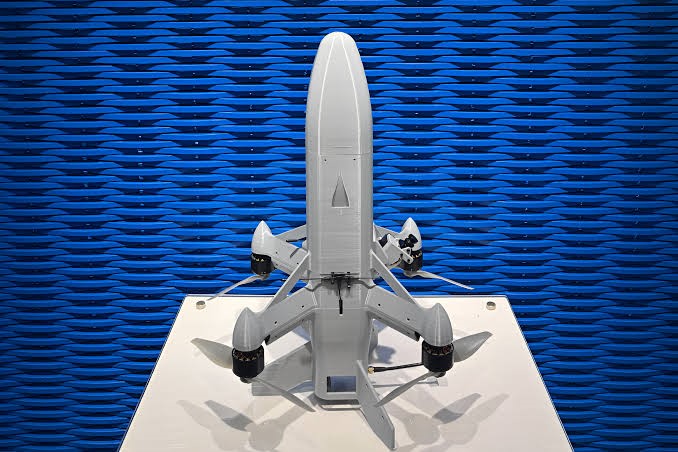
About 100,000 drone video feeds per month could become training and test material for British military artificial-intelligence projects under a new UK-Ukraine agreement. The figure is large enough to make the arrangement consequential for drone and counter-drone development, but it remains a Ukrainian Defense Ministry claim rather than an independently audited measure of the archive’s size, quality or performance.
Ukraine and the United Kingdom signed the agreement in Kyiv on August 24, giving approved British companies and researchers access to Avengers AI Labs. The UK government describes Britain as the first international partner admitted to the Ukrainian Defense Ministry’s military-AI training platform. Ukraine reports that the archive holds about five million battlefield images and video frames gathered through daylight cameras and infrared sensors.
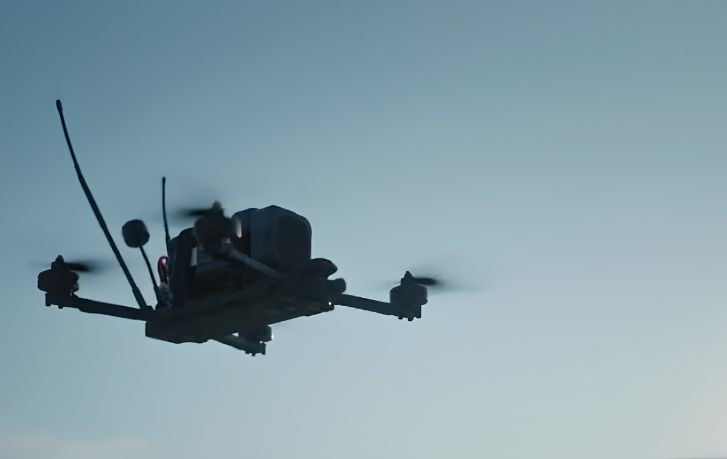
That volume could address one of the basic constraints facing machine-vision development: models need varied examples, not merely a large collection of similar images. Data gathered under changing light, weather, sensor and viewing conditions may help developers train systems to recognize and classify objects more consistently. It can also expose models to drones and other equipment as they appear through operational sensors rather than in carefully staged laboratory imagery.
Scale alone, however, does not establish that a dataset is representative or correctly labeled. A five-million-item archive can still contain duplicate frames, inconsistent annotations, sensor artifacts or an uneven concentration of particular environments and object types. Those characteristics can cause a model to perform well on material resembling its training set while degrading when cameras, terrain or operating conditions change.
The same distinction applies to Ukraine’s claim that models trained through Avengers can flag about 70 percent of enemy targets in real time. That result has not been independently benchmarked. Without a disclosed test design, the percentage does not reveal the balance between correct detections, missed objects and false alarms, or whether evaluation material was kept separate from training data.
For drone and counter-drone systems, those missing details directly affect reliability. A model that produces too many false alerts can burden operators and reduce confidence in the system. One that misses unfamiliar objects may appear capable during a controlled demonstration but provide inconsistent results in a new setting. Independent testing should therefore examine performance across different sensors and conditions rather than relying on a single aggregate percentage.
Human oversight remains another boundary. AI can help filter large sensor streams and present possible classifications, but the agreement does not itself define when a person must review an output or how automated findings will be used. Access to combat-derived data should not be treated as approval for autonomous targeting. The defensible engineering role is to develop and evaluate perception tools while retaining accountable human decision-making and clearly defined operating rules.
Data governance will matter as much as model design. The archive contains sensitive operational material, so access controls must determine which organizations can use it, what information they receive and how derived models or datasets may be retained and shared. The available announcement identifies access for approved British participants but does not provide a complete public account of auditing, retention or model-release controls.
Three British companies Bristol-based Sintela, Oxford-based Mind Foundry and London-based Skyral are expected to begin pilot projects with Ukrainian partners. One project would use buried fiber-optic cable as an AI-enabled sensor network for protecting military sites, with airports, prisons, railways and energy infrastructure identified as possible later applications. Another proposed line of work concerns low-power AI chips for drones, robotics and autonomous systems.
Those pilots also illustrate a transfer problem. Data collected from airborne cameras and infrared battlefield sensors will not automatically improve a buried fiber-optic sensing system, which detects physical disturbances through a different mechanism. Any benefit depends on whether relevant labels, event patterns or analytical methods can be transferred and then validated with data from the intended UK environment. The partnership creates access to material; it does not eliminate the need for application-specific testing.
Germany began a separate partnership involving information from Ukraine’s Delta battlefield system in April. A July US-Ukraine framework covers drone testing and potential joint production but does not open Ukraine’s data archives. Britain’s access to the full Avengers platform is therefore distinctive, although its practical advantage will depend on the terms of access and the quality of the resulting pilots.
The first meaningful milestones will not be another archive total or a higher claimed detection percentage. They will be independently structured test results, documented human-review requirements and security controls showing that five million items and another claimed 100,000 feeds each month can produce systems that remain dependable beyond the data on which they were trained.
| More aerospace and engineering stories, right in your MSN feed. Follow AMI on MSN |
By Stephen Wallace — Editor for AMI’s aerospace integration and unmanned mobility coverage, focused on drone manufacturing, VTOL systems, autonomous networks, and air-ground mobility links.