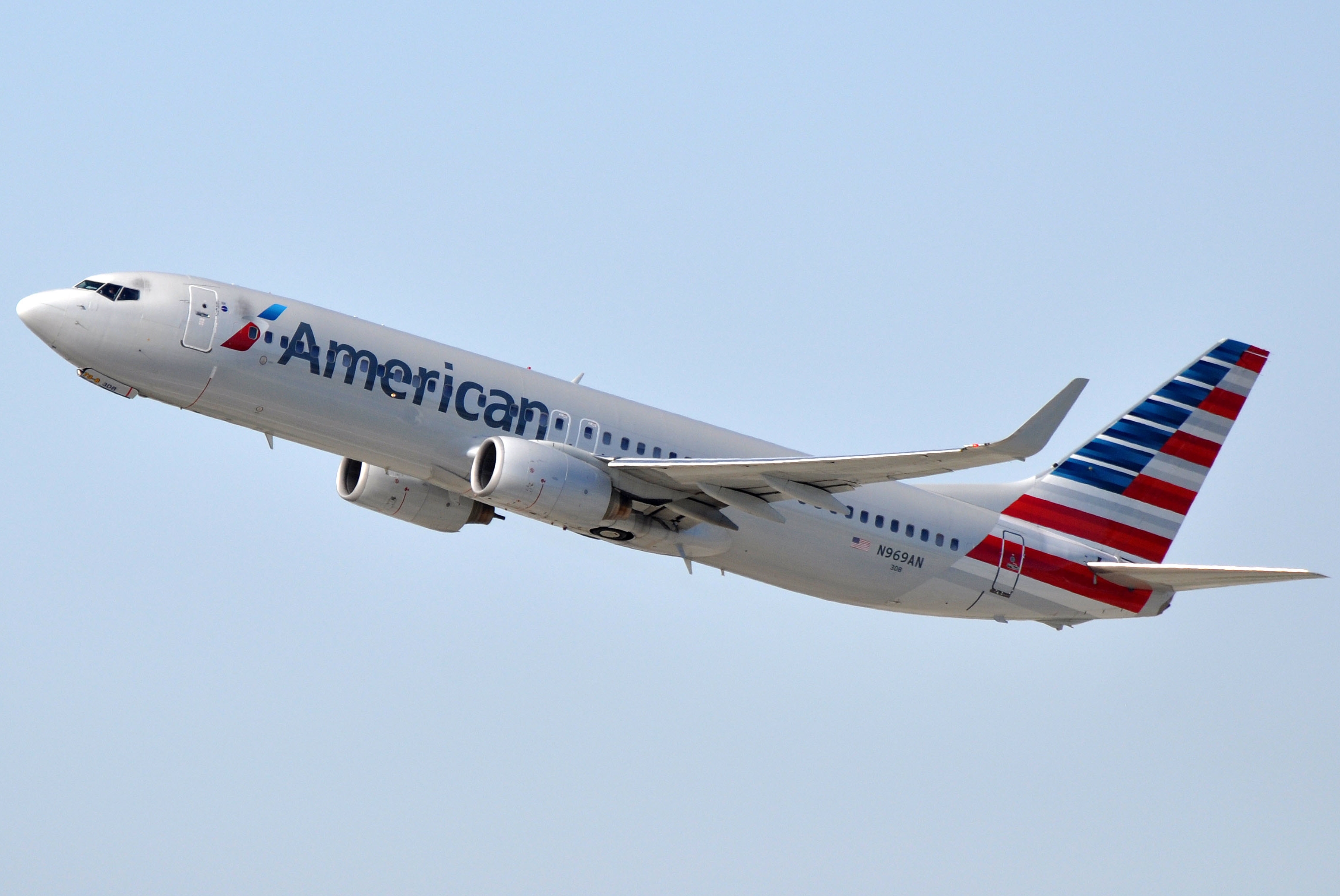
Aircraft Delays Cut American Airlines’ Potential 2027 Expansion From 13 Routes to Seven
Seven routes, rather than the 10 to 13 American Airlines had considered, will define the carrier’s summer 2027 long-haul expansion. American’s finalized international schedule, announced Aug. 27, reflects a basic fleet constraint: delayed Boeing and Airbus deliveries reduced the expected year-over-year increase in available long-haul aircraft from approximately 13 to five.

“We are absolutely constrained by the number of airplanes that we have,” Brian Znotins, American’s senior vice president of network planning, said. Unless the airline finds another available aircraft, he indicated that the seven routes will probably complete its summer 2027 long-haul expansion.
The difference between 13 additional aircraft and five is more consequential than a simple reduction in fleet growth. Long-haul schedules require an airplane for the planned flight, enough time for ground servicing and maintenance, and operational margin to protect the rest of the network. A jet arriving after the peak summer schedule begins cannot simply be inserted into a new transatlantic route without affecting aircraft rotations, crew planning and schedule reliability.
Seven routes across three aircraft families
The finalized additions are Philadelphia to Vienna, Porto and Reykjavik; New York-JFK to Amsterdam and Nice; Charlotte to Barcelona; and Chicago O’Hare to Tokyo Narita. American will also restore a fourth daily flight between New York-JFK and London Heathrow.
The Chicago-Tokyo flight is scheduled to begin March 19, 2027. New York-Amsterdam and Philadelphia-Porto follow on March 28, while New York-Nice and Philadelphia-Vienna begin May 6. Charlotte-Barcelona and Philadelphia-Reykjavik are scheduled for May 27.
Aircraft assignments show how American is allocating limited capability. A Boeing 787-9 will operate Chicago-Tokyo, while a Boeing 777-200ER will fly Charlotte-Barcelona. The additional London frequency will also use a 787-9. Four routes New York to Amsterdam and Nice, plus Philadelphia to Porto and Vienna will use the Airbus A321XLR, a single-aisle aircraft designed for longer sectors than a conventional A321neo.
Philadelphia-Reykjavik will instead use a standard A321neo. That assignment is an example of fleet optimization under scarcity: the shorter Iceland route can use the less capable aircraft, preserving the limited A321XLR fleet for longer missions that a standard A321neo is less suited to perform.
Range shapes the usable network
Availability is not the only constraint. Znotins said the A321XLR does not provide the range American expected when it ordered the aircraft, although he did not quantify the shortfall. That leaves no basis for assigning a precise performance penalty, but it confirms that American is selecting routes around the aircraft’s demonstrated capability rather than its original planning assumptions.
American used operational information from partner Iberia, which already operates the type across the Atlantic, to improve its performance assessment. That experience helped support the decision to schedule Philadelphia-Vienna, a route slightly longer than 4,300 miles and one of American’s longer planned A321XLR sectors.
Practical airline range is not merely a brochure figure. Payload, reserves, weather, winds, routing and an airline’s cabin configuration all influence whether an aircraft can serve a route consistently. For network planners, the important measure is therefore not the farthest flight an aircraft can complete under favorable conditions, but the markets it can operate with commercially useful payload and adequate operational margin.
The XLR still gives American a smaller-capacity option for transatlantic markets that may not require a Boeing 777 or 787. That matters because matching seat capacity to demand can make a thinner route viable without committing a larger widebody. The tradeoff is that any range limitation narrows the set of destinations where that capacity advantage can be used.
Late aircraft shift growth into later seasons
American initially directed its A321XLR deliveries toward replacing aging A321T aircraft on premium transcontinental services. As that work progresses, Znotins expects the XLR operation to shift from predominantly transcontinental flying to predominantly transatlantic service. The four XLR assignments in the 2027 schedule are an early indication of that transition.
Some jets previously expected during the first half of 2027 are now projected to arrive later in the year. Those aircraft could support opportunities in winter 2027, but late delivery is poorly timed for launching many European routes because the strongest seasonal demand generally occurs earlier in the summer. Summer 2028 is therefore the next broader expansion window.
For travelers and the cities that did not make the finalized schedule, the immediate consequence is a smaller international expansion. For American, the limiting factor is not an absence of contemplated routes but the mismatch between network plans and aircraft arrival dates. Five additional long-haul jets can support seven additions through careful allocation; they cannot reproduce the expansion American expected when approximately 13 aircraft appeared likely to be available.
| More aerospace and engineering stories, right in your MSN feed. Follow AMI on MSN |
By Thomas Caldwell — AMI’s senior editor for mechanical and mobility engineering, covering vehicle electronics, systems integration, electrification, chassis systems, propulsion, and safety policy.