NASA’s Artemis II Distance-Record Crew to Receive Rare Space Medal
252,756 miles. That is how far NASA’s Artemis II crew traveled from Earth at the outer edge of its April lunar flight, farther than any humans in history. NASA has now scheduled the four astronauts to receive the Congressional Space Medal of Honor on Aug. 28, recognizing a record-setting mission that also delivered the first crewed test of the Orion spacecraft around the moon.

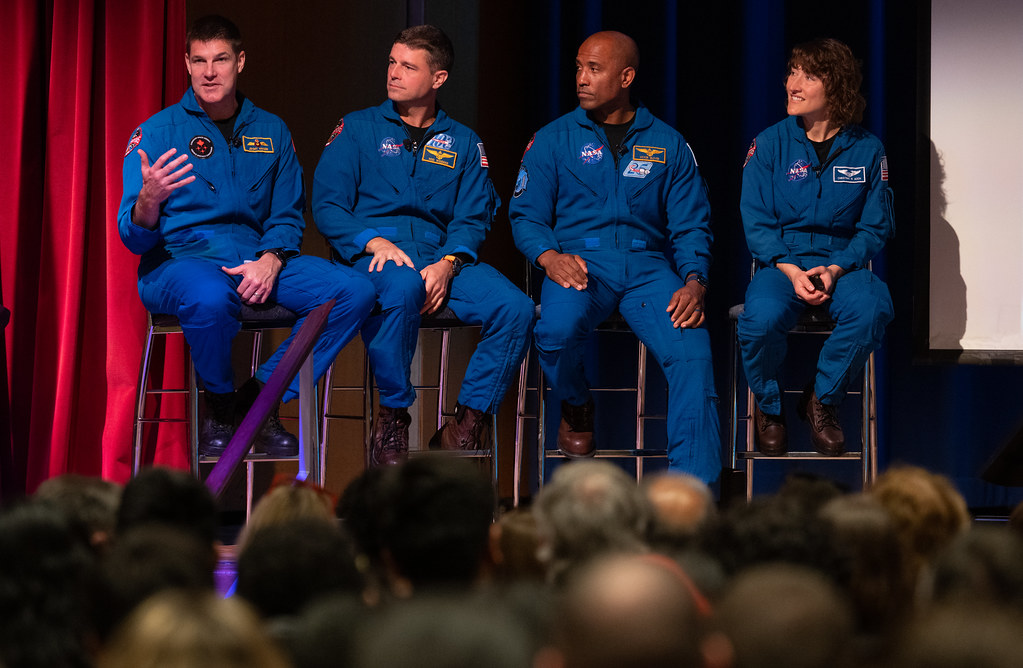
The scheduled recipients are NASA astronauts Reid Wiseman, Victor Glover and Christina Koch, along with Canadian Space Agency astronaut Jeremy Hansen. The ceremony is planned for Johnson Space Center in Houston. Adding all four astronauts would increase NASA’s official list of medal recipients from 30 to 34.
The distance is the mission’s most immediately understandable achievement. Artemis II surpassed the record established by Apollo 13 in 1970, giving the four-person crew the distinction of traveling farther from Earth than anyone before them. Over nearly 10 days, the astronauts covered 695,081 miles and captured more than 7,000 images.
But the engineering value lies in what happened inside Orion and during its return. Artemis II was the spacecraft’s first flight with people aboard, moving NASA from uncrewed qualification missions to direct astronaut evaluation of the cabin, controls and operating procedures. NASA said the crew tested Orion’s life-support systems, manually piloted the spacecraft and gathered data intended to shape later Artemis missions.
A crewed test across the full flight envelope
Artemis II launched from Kennedy Space Center on April 1 aboard NASA’s Space Launch System rocket, which produced 8.8 million pounds of thrust at liftoff. Orion then followed a trajectory around the moon, passing within 4,067 miles of the lunar surface on April 6 before beginning its trip home.
Manual piloting mattered because spacecraft performance is not defined only by automated guidance. A crewed test gives astronauts and flight controllers a chance to assess how the vehicle responds to human inputs, how usable its controls are in flight and how procedures work under deep-space operating conditions. The available mission results do not reduce those evaluations to a single pass-or-fail figure, but they provided operational data that an uncrewed spacecraft could not generate.
Life support carried a similarly direct consequence. Orion had flown before, but Artemis II placed four people inside the vehicle for nearly 10 days. That turned the cabin’s environmental systems into mission-critical hardware supporting actual occupants rather than instrumentation standing in for a crew. NASA Administrator Jared Isaacman described the astronauts as accepting “significant risk” while testing the spacecraft and systems intended for deeper-space missions.
The return was another major test point. Orion entered Earth’s atmosphere at roughly 25,000 mph on April 10 before splashing down in the Pacific Ocean off California. A lunar-return reentry places the spacecraft in a substantially different energy regime from a routine return out of low Earth orbit. Artemis II therefore exercised the crew capsule through launch, deep-space operation, lunar flyby and high-speed atmospheric return in one integrated mission.
The record does not put astronauts on the lunar surface yet
The medal itself is uncommon. Congress authorized the Congressional Space Medal of Honor in 1969 for exceptionally meritorious contributions by astronauts. NASA’s current list of 30 recipients includes Neil Armstrong, John Glenn, Alan Shepard and Jim Lovell, the Apollo 13 commander whose crew held the previous distance record.
Recognition of Artemis II also arrives with an important program boundary. The mission demonstrated crewed Orion operations around the moon, but it did not test a lunar landing. NASA currently plans to use Artemis III for a commercial lunar-lander operations test in low Earth orbit in 2027. The program’s first astronaut lunar landing is now targeted for Artemis IV in 2028.
That sequence separates three difficult jobs: transporting astronauts through deep space, developing and testing a commercial lander, and integrating the systems needed to reach the lunar surface. Artemis II supplied data for the first of those tasks at a historic distance. The next measure of progress will be whether the lander test and subsequent integration can convert that record-setting flight into a return to the moon’s surface in 2028.
| More aerospace and engineering stories, right in your MSN feed. Follow AMI on MSN |
By David Whitaker — Associate editor for AMI’s aerospace and drone systems desk, translating flight systems, aircraft programs, spaceflight, and UAV developments into accessible technical stories.