Korean Air Prepares Free Starlink Wi-Fi, Replacing $20.95 Long-Haul Fee
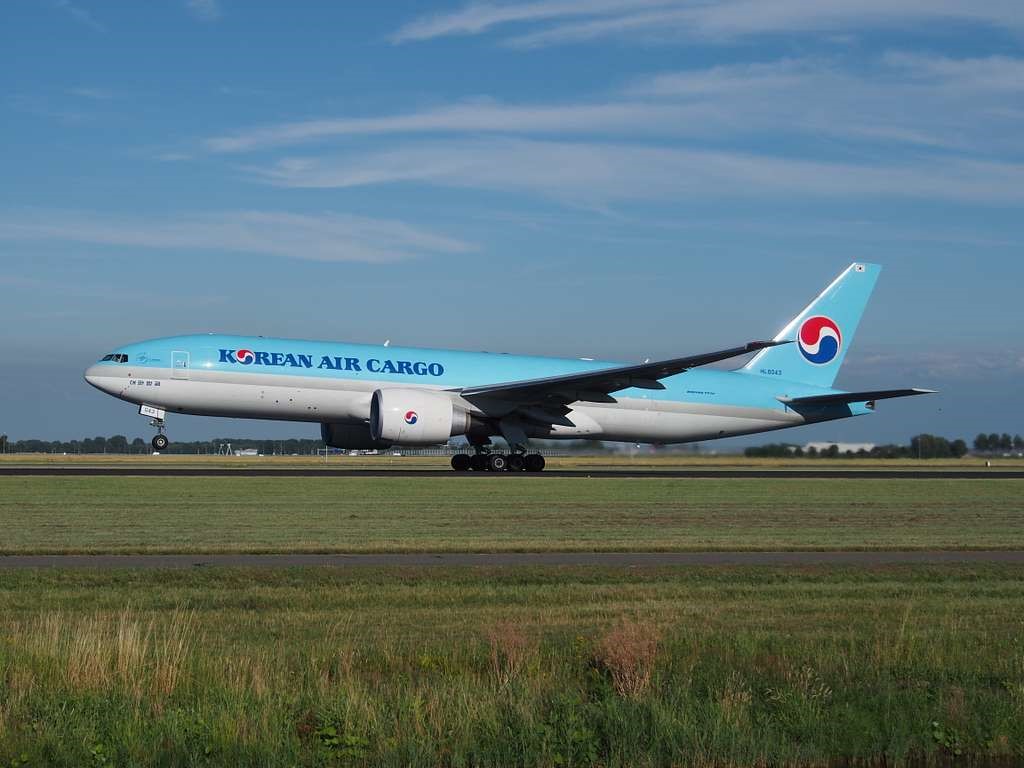
Korean Air is preparing to remove its $20.95 long-haul Wi-Fi charge and introduce free Starlink internet, initially on selected Boeing 777-300ER and Airbus A350-900 aircraft. The significant passenger benefit is clear, but the timing is not settled: the airline is reportedly conducting final checks, and a targeted September 1, 2026 launch has not yet been formally confirmed.

The planned change would make internet access available regardless of seating class and move Korean Air from a paid onboard service to complimentary, low-Earth-orbit satellite connectivity. The two initial aircraft types serve long-haul markets including the Americas, Europe and the Middle East, although Korean Air has not established how many individual jets will be equipped at launch.
Why the satellite orbit matters
Starlink satellites operate at an altitude of roughly 550 kilometers, much closer to Earth than conventional geostationary communications satellites. That shorter signal path can reduce latency the delay between sending data and receiving a response and support applications that are difficult to use over slower onboard connections.
The planned system is reported to support transmission and reception rates of up to 500 megabits per second per equipped aircraft. That figure is an aircraft-level ceiling, not a guaranteed speed for each passenger. Real-world performance will depend on factors including satellite coverage, network management and how available capacity is divided among connected devices on a full widebody jet.
This distinction is especially important on a 777-300ER or A350-900, where hundreds of passengers could attempt to stream, browse or work simultaneously. A high peak link rate gives the cabin network more capacity to manage that demand, but it does not establish what any individual traveler will receive throughout a flight.
Gate-to-gate access would be a meaningful change
Korean Air plans to offer the new connection from departure preparations through arrival at the destination gate. Passengers are expected to join through standard device Wi-Fi settings without installing a dedicated application.
That would extend availability beyond Korean Air’s current published Wi-Fi service, which begins after an aircraft reaches 10,000 feet. The airline’s existing page lists the $20.95 full-flight internet plan for long-haul travel and notes that service can be restricted in certain airspace or interrupted by reception problems and weather.
“Gate-to-gate” also describes intended service coverage, not an assurance of an uninterrupted connection in every location. Satellite-network authorization, local restrictions and technical conditions can still define where a system is usable. Korean Air has not yet published detailed terms for the planned Starlink offering.
A retrofit is more than a cabin router
Installing satellite internet on an airliner ordinarily requires an external antenna and aerodynamic covering, power and data connections, cabin access points, network-control equipment and separation between passenger connectivity and aircraft operational systems. The modification also requires the relevant engineering approval for each aircraft type because it affects the aircraft’s structure, electrical installation, aerodynamics and cybersecurity environment.
Korean Air has not disclosed the certification status of its 777-300ER and A350-900 installations. It also has not provided an installation count, retrofit schedule or information about how aircraft downtime will be managed. Those details will determine how quickly the passenger benefit moves beyond a limited number of flights.
The airline intends to expand Starlink across its fleet and later deploy it sequentially at Asiana Airlines, Jin Air, Air Busan and Air Seoul. An end-of-2027 fleet-completion target has been reported, but that date has not been independently substantiated by a detailed airline rollout plan and should not be treated as guaranteed.
For passengers, the immediate promise is compelling: no $20.95 long-haul charge, access in every cabin and a connection designed to be more useful across a greater portion of the trip. The decisive next milestone is not the proposed September 1 date alone, but Korean Air’s confirmation of which aircraft are approved, equipped and scheduled to deliver the service.
| More aerospace and engineering stories, right in your MSN feed. Follow AMI on MSN |
By Thomas Caldwell — AMI’s senior editor for mechanical and mobility engineering, covering vehicle electronics, systems integration, electrification, chassis systems, propulsion, and safety policy.