Japan Selects Terra B1, Company Claims Sole Pass and September Deliveries
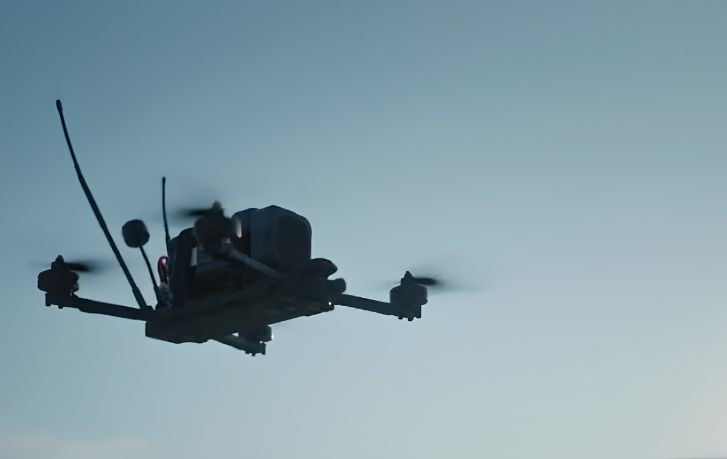
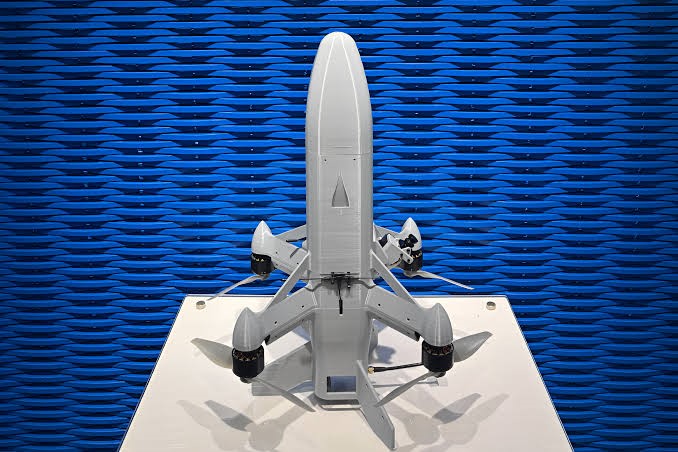
Japan is moving the Terra B1 interceptor drone toward production before disclosing how much it will cost, how many it will buy or how the aircraft performed in government demonstrations. Terra Drone announced on August 25 that Japan’s Acquisition, Technology & Logistics Agency selected the domestically produced system, which the company said was the only one of four drones to pass accelerated trials.
The demonstrations ran from July 15 through August 6 for the Japan Maritime Self-Defense Force. The broader competition reportedly attracted proposals from 38 companies, and the selected aircraft could begin arriving as early as September. That schedule would take the program from its June launch to initial deliveries in roughly three months.
A cheaper layer, but no public cost comparison
The procurement addresses a basic cost problem in drone defense. Long-range, one-way attack drones such as the Iranian-designed Shahed family can be substantially less expensive than conventional surface-to-air missiles used to stop them. An interceptor drone could provide another defensive layer around ships, radar installations, bases and other infrastructure, preserving more expensive missiles for threats that demand their speed, range or other capabilities.
That economic argument remains incomplete without Terra B1 pricing. Japan has not disclosed the contract value, purchase quantity or unit cost, so it is not yet possible to calculate the price advantage per interception or determine how many aircraft the Maritime Self-Defense Force can keep available. Procurement cost also extends beyond the air vehicle to production support, training, storage, maintenance and integration with the systems that detect and track an incoming drone.
The number purchased matters just as much as the nominal price. A low-cost interceptor becomes a meaningful answer to mass drone attacks only if it can be manufactured, maintained and replenished in sufficient quantities. Initial delivery in September would demonstrate procurement speed, but it would not by itself establish production depth or sustained operational capacity.
Passing a demonstration is not the full performance record
Terra Drone’s statement that the B1 alone passed the four-aircraft demonstrations is significant, but the result has an important boundary: Japan has not published the test criteria, detailed results or B1 performance specifications. The public therefore cannot compare its speed, range, endurance, reliability or operating limits with those of the other participants.
That distinction is especially important because specifications published for the related Terra A1 are sometimes used to describe the new aircraft. The A1 has a stated maximum speed of about 300 kilometers per hour, range of up to 32 kilometers and endurance of approximately 15 minutes. Those figures indicate the development direction of Terra Drone’s interceptor family, but they are not specifications for the Terra B1 and should not be treated as such.
Terra Drone previously worked with Ukraine’s Amazing Drones on the A1. The companies reported that an A1 intercepted a Shahed-type aircraft in Ukraine, but that remains a company-attributed result rather than an officially confirmed benchmark for the B1. Ukrainian company WinnyLab has also worked with Terra Drone on the longer-range, fixed-wing Terra A2.
Rapid acquisition shifts risk rather than eliminating it
Japan’s compressed selection process offers a clear readiness benefit: it reduces the interval between recognizing a threat and putting hardware into production. It also places more weight on what happens after selection. Reliability data, production consistency and support arrangements become particularly important when a program moves from demonstrations to deliveries in a matter of months.
For the public, the unresolved issue is whether accelerated procurement preserves enough transparency to show what capability is being purchased at what cost. The selection confirms that Terra B1 met the demonstration threshold applied by Japan. It does not yet show whether the aircraft will deliver a durable cost advantage over missiles, how large a defensive layer Japan intends to build or how quickly Terra Drone can replenish it.
The Maritime Self-Defense Force is expected to receive the first systems, while Terra Drone has said the technology could later be adapted for Japan’s air and ground forces. September deliveries would mark an unusually quick transition from competition to hardware, but the decisive measures will come afterward: disclosed cost, production quantity and verified B1 performance.
| More aerospace and engineering stories, right in your MSN feed. Follow AMI on MSN |
By Stephen Wallace — Editor for AMI’s aerospace integration and unmanned mobility coverage, focused on drone manufacturing, VTOL systems, autonomous networks, and air-ground mobility links.