


Rough Seas May Claim SpaceX Starship That Survived Indian Ocean Landing
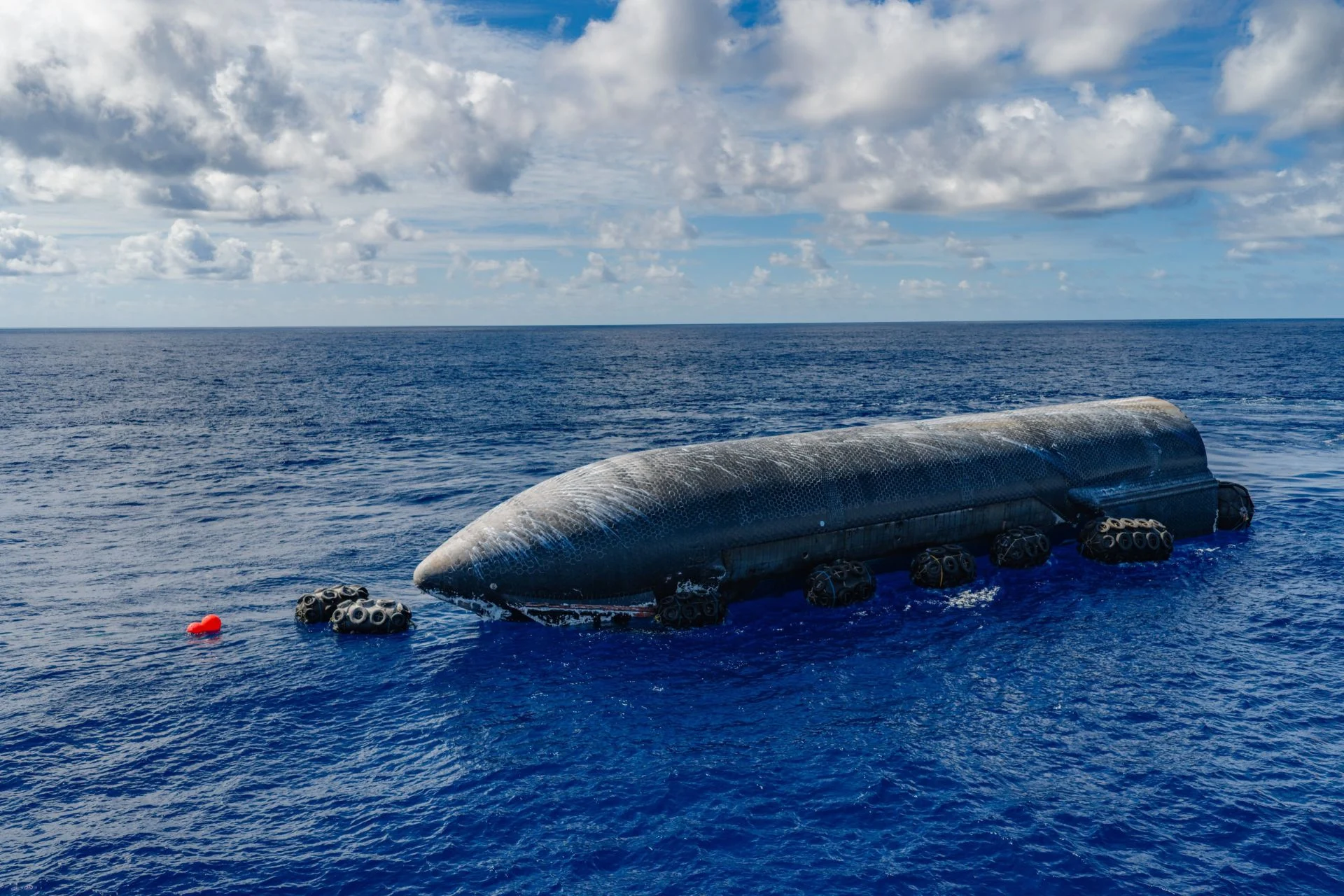
SpaceX’s Starship Ship 40 survived atmospheric reentry, completed a controlled landing and remained intact in the Indian Ocean. The more ordinary-sounding job of bringing the 171-foot spacecraft ashore may still defeat the recovery effort.
After recovery crews attached a line and began towing the vehicle toward Australia, SpaceX said on Aug. 7 that they faced “challenging conditions and increasingly rough seas.” Chief Executive Elon Musk subsequently said the recovery was “not looking good right now.” Losing the stage at sea would not erase the flight’s results, but it would limit engineers’ ability to inspect the hardware directly after its unusually gentle splashdown.
A landing success became an unexpected recovery test
Ship 40 launched July 24 from SpaceX’s Starbase in South Texas during the 13th overall integrated Starship flight test. The fully stacked vehicle stood 407 feet tall, with a 236-foot Super Heavy booster supplying the initial thrust before separation. The booster later made a water landing off the Texas Gulf Coast, while Ship 40 continued through suborbital space toward the Indian Ocean.
The upper stage completed the roughly hour-long flight with all six Raptor-class engines operating for its controlled landing. SpaceX called the result Starship’s “softest” splashdown to date. Instead of exploding or sinking as earlier prototypes had, Ship 40 tipped over and remained afloat.
SpaceX had not expected to recover this particular stage. Its survival created an opportunity to obtain something flight telemetry and remote imagery cannot fully replace: physical access to a large spacecraft after it has experienced launch loads, atmospheric heating, engine operations and a water landing.
That distinction matters for a vehicle intended to become reusable. Reentry survival establishes that the spacecraft can pass through the atmosphere and reach its landing area under control. Recoverability adds another set of requirements involving access, handling and environmental exposure after touchdown. A spacecraft can meet the first objective without becoming practical to retrieve, inspect or fly again.
Physical inspection offers evidence that images cannot
Musk said teams obtained close-up photographs of critical heat-shield and engine regions for future upgrades. Those images preserve useful evidence even if Ship 40 cannot be brought ashore, particularly because the thermal-protection system remains central to Starship’s reuse goals.
Starship uses roughly 18,000 ceramic heat-shield tiles, according to reporting on the system’s reuse challenge. The stainless-steel spacecraft can tolerate more heat than the aluminum structure of the Space Shuttle, but rapid reuse still depends on understanding how tiles, attachment points and the underlying vehicle respond during each return.
Close photography can document visible conditions in selected areas. Bringing the stage ashore would permit more extensive examination of components and surfaces, allowing engineers to compare physical findings with flight data. That does not mean Ship 40 would have flown again: prolonged saltwater exposure likely made another mission impractical. Its engineering value was in post-flight analysis rather than immediate reuse.
The episode also shows why an ocean splashdown is a useful test method but not the final operating model for a rapidly reusable upper stage. Water provides separation from populated areas while a design is still being developed, but it introduces an uncontrolled marine environment after landing. Sea state can change during a recovery campaign, while saltwater exposure continues for as long as the vehicle remains afloat.
Starship’s larger goal demands more than survival
SpaceX is developing Starship around reuse of both the Super Heavy booster and upper stage. The July flight demonstrated a major part of that chain: Ship 40 remained controlled through reentry and landed gently enough to float intact. The uncertain tow demonstrates that landing, recovery, inspection and refurbishment are separate engineering gates, not one combined achievement.
That separation has consequences beyond a single test article. NASA has contracted SpaceX to develop a Starship Human Landing System for Artemis lunar missions. Ship 40 was not that lunar lander, but the broader program depends on Starship maturing from a successful experimental vehicle into a system whose condition can be assessed reliably after demanding operations.
Even if rough seas ultimately prevent Ship 40 from reaching shore, SpaceX retained flight data and close-up photographs from its softest Starship splashdown. What may remain beyond reach is the physical record inside the vehicle the evidence needed to turn an intact landing into a detailed understanding of what endured the trip home.
By David Whitaker — Associate editor for AMI’s aerospace and drone systems desk, translating flight systems, aircraft programs, spaceflight, and UAV developments into accessible technical stories.


