Ukraine Claims Russia Stockpiled 6,200 Geran Drones Despite Production Limits
A reserve of 6,200 attack drones sounds like evidence of uninterrupted industrial output. Ukraine’s military intelligence agency offers a more complicated assessment: Russia had accumulated approximately 6,200 Geran drones of various models by August 2026, but reportedly still cannot manufacture them fast enough to sustain its largest barrages continuously.

The inventory figure has not been independently verified, and no corresponding Russian production data is available. If the Ukrainian estimate is broadly accurate, however, it describes a readiness model built around alternating phases manufacturing and storing aircraft, conducting a large barrage, then rebuilding the reserve.
A large stockpile is not the same as a continuous launch rate
Ukraine’s intelligence agency says Russia’s largest drone attacks can involve 600 to 1,000 aircraft. During reserve-rebuilding periods, the reported total typically falls to about 150 to 200, although some attacks reach roughly 300. Militarnyi separately reported monthly launch totals of 6,000 to 6,500 drones during 2026.
Those figures should not be treated as a complete production ledger. Launch totals can include different drone families and decoys, while the 6,200-aircraft inventory covers multiple Geran models. The numbers also do not reveal how many completed drones are immediately available, awaiting inspection or otherwise moving through storage and distribution.
What the estimates do illustrate is the difference between peak output and sustainable operations. A factory network can deliver thousands of aircraft per month while still falling behind during periods when launch volumes temporarily exceed replacement rates. Accumulated inventory bridges that gap, allowing a short burst of activity above the industrial system’s steady production level.
Production is also shifting between Geran variants
Ukraine’s Defence Intelligence told Militarnyi that Russian industry produces about 3,000 Geran-4 and Geran-5 drones per month. That attributed estimate applies only to those two models, so it cannot be directly compared with broader totals covering other one-way attack drones and decoys.
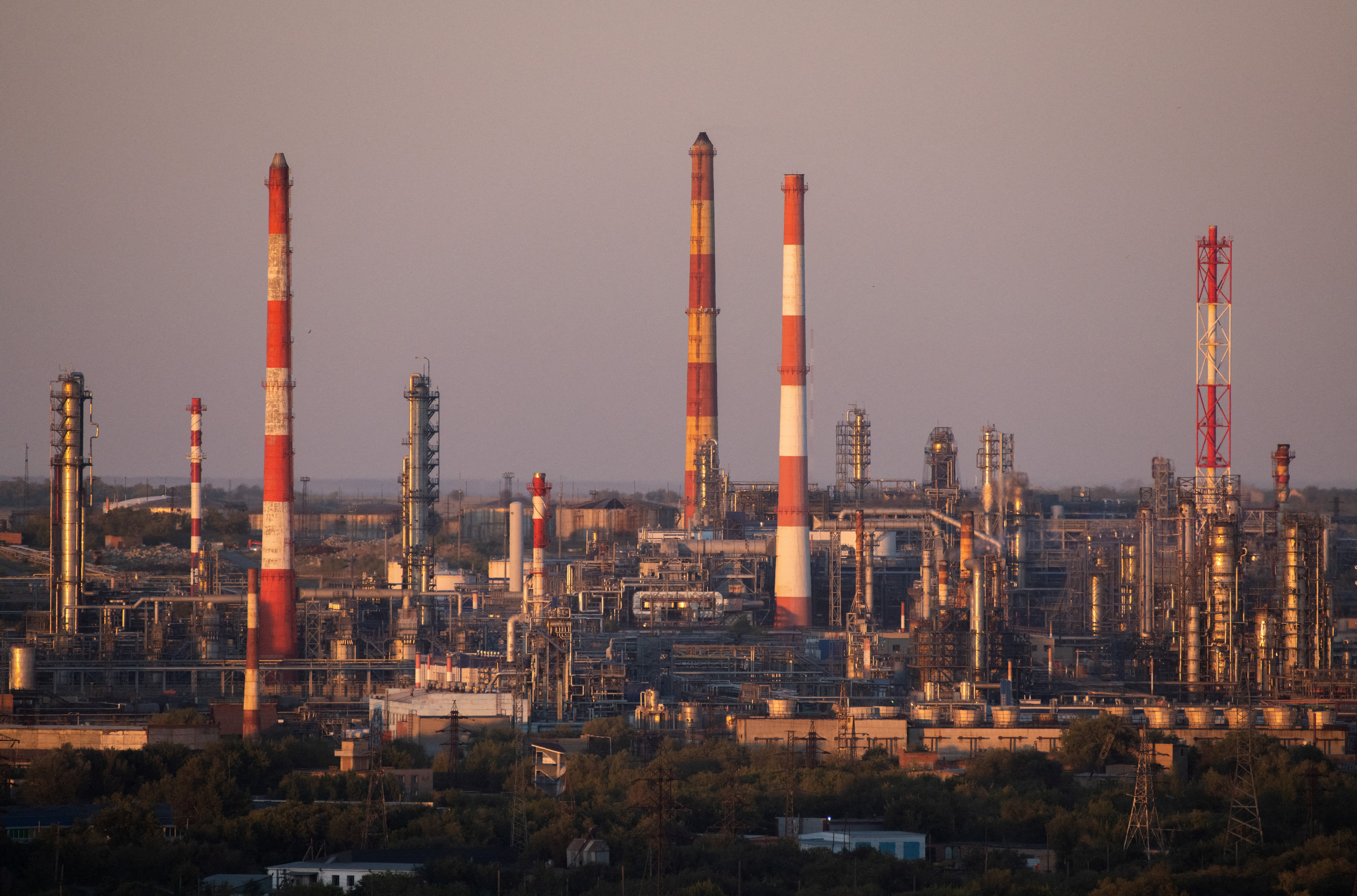
The same reporting says serial Geran-4 and Geran-5 production has been established at a plant in Yelabuga, with other enterprises supplying components. Construction observed at the industrial complex indicates preparations for additional capacity, although the exact purpose of the new buildings remains unknown.
This distributed manufacturing structure matters because aircraft output depends on more than final assembly. Engines, airframes, control electronics and other components must arrive in compatible quantities and pass through production without one constrained supplier holding back the entire line. A headline monthly rate therefore does not prove that every model can be produced at that rate indefinitely.
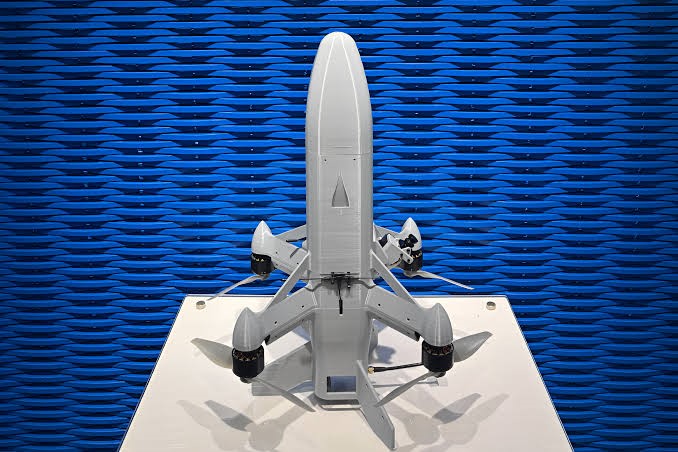
Russia is also reportedly shifting production toward newer jet-powered Geran-4 and Geran-5 aircraft. Rebalancing a production line can impose its own constraints as factories change tooling, supplier allocations and inspection processes. Ukraine’s intelligence agency reported that the Geran-5 was first used in January 2026. The aircraft is described as approximately six meters long with a wingspan of up to 5.5 meters.
The burden extends beyond the number launched
For Ukraine, an inventory numbering in the thousands creates recurring pressure even when the largest barrages are separated by rebuilding periods. Air-defense organizations must preserve coverage, maintain sensors and interceptors, rotate personnel and keep civil-protection systems prepared without knowing precisely when stored aircraft will be used.
Affordability and equipment life are part of that burden. Reporting on Ukraine’s evolving defenses notes that frequent fighter missions against one-way attack drones consume finite flying hours and airframe fatigue life. That encourages greater reliance on layered, lower-cost defenses where suitable, reserving scarce aircraft and higher-end interceptors for threats that cheaper systems cannot reliably handle.
The central unknown remains the quality of the underlying inventory and production estimates. Public confirmation of Russian factory output, completed-aircraft stocks and model-by-model launch totals would be needed to test the claimed 6,200-drone figure fully. Until then, it is best understood as an attributed readiness assessment: a large reported reserve that can support recurring barrages, but not proof that Russia can maintain its highest launch rate without pauses to rebuild.
By Stephen Wallace — Editor for AMI’s aerospace integration and unmanned mobility coverage, focused on drone manufacturing, VTOL systems, autonomous networks, and air-ground mobility links.