Navy F/A-XX Funding Jumps From $74 Million to Over $971 Million
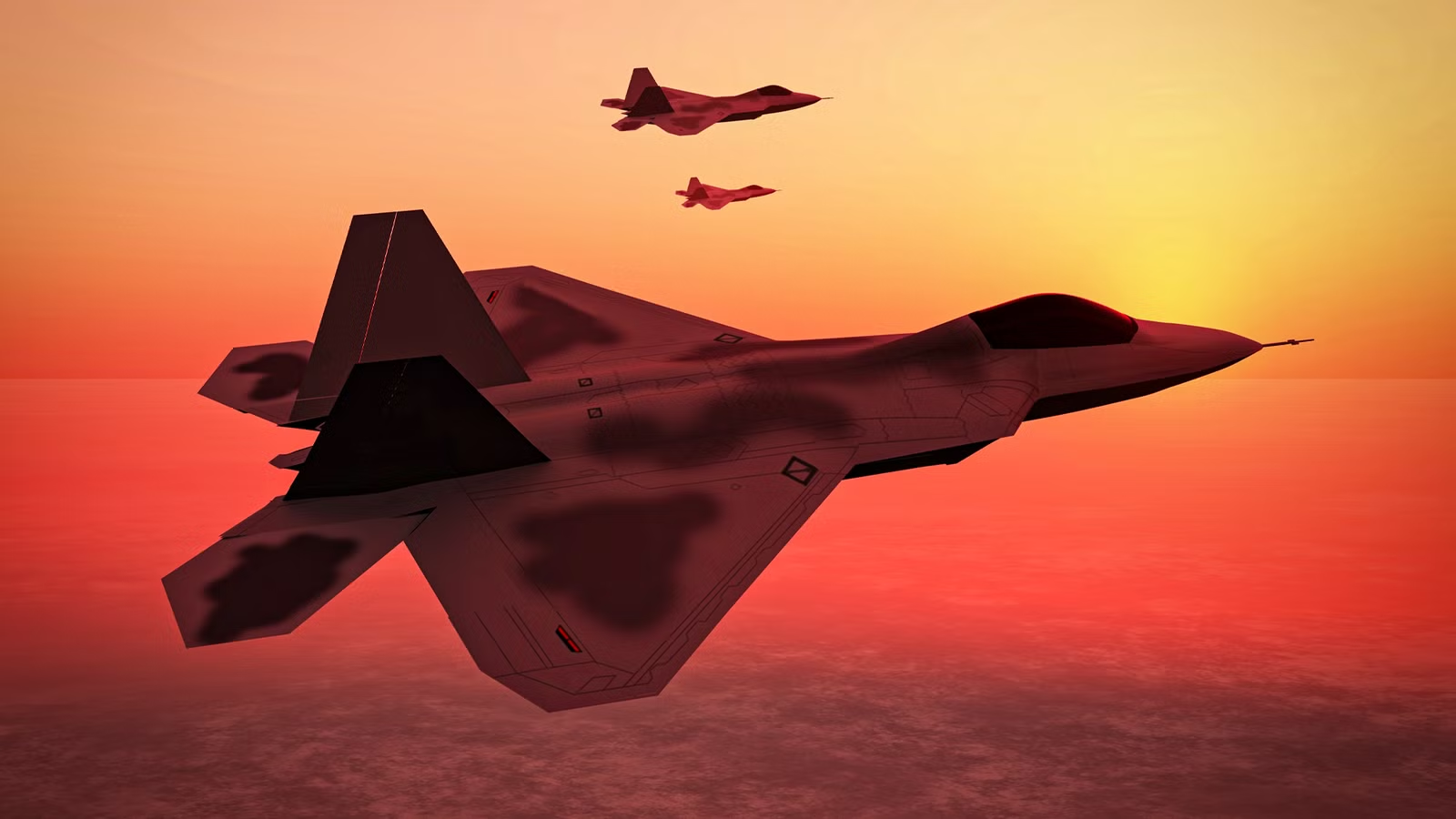
Funding for the U.S. Navy’s F/A-XX future carrier fighter has risen from $74 million to just over $971 million after Congress added $897 million to the service’s original request. The roughly 13-fold increase gives the program substantially more room to accelerate development, but it does not buy its way around unresolved propulsion, carrier-integration and contractor-selection risks.

The scale of the increase is especially notable because the Navy’s initial request represented an 84% funding reduction for F/A-XX. Instead of maintaining a limited development effort, the revised allocation commits nearly $900 million more in public money to a fighter that is not projected to enter initial operational use until the mid-to-late 2030s.
More money can preserve momentum and competition
The immediate effect is development capacity. A larger allocation can support more engineering work, prototype preparation and risk reduction than the original $74 million request. It may also help prevent teams and specialized suppliers from dispersing while the Navy determines which aircraft design will advance.
The funding terms require the Navy to choose one prime contractor. Boeing and Northrop Grumman remain in the competition after Lockheed Martin’s earlier elimination, and Chief of Naval Operations Adm. Daryl Caudle said the selection will occur in August.
That down-select is more than a procurement milestone. Until one prime is selected, the program cannot fully consolidate responsibility for aircraft design, supplier management, carrier suitability and integration. Preserving competition can encourage technical discipline and cost control, but sustaining multiple teams also consumes funding that could otherwise be concentrated on the winning design. The August decision should therefore determine how quickly the new money can be converted into focused aircraft-development work.
Carrier engineering remains the defining constraint
F/A-XX is intended to replace the F/A-18E/F Super Hornet with a stealthy, longer-range aircraft able to coordinate with collaborative uncrewed aircraft. Those ambitions must fit within the unusually restrictive carrier environment, where aircraft design is shaped by launch and recovery loads, limited deck and hangar space, saltwater exposure and demanding support conditions.
Those requirements create tradeoffs among structural strength, weight, fuel capacity, low-observable shaping and maintainability. A design optimized only for range or stealth would not automatically be suitable for repeated carrier operations. Money can fund testing and redesign, but it cannot remove the physical compromises inherent in producing a survivable aircraft that can operate reliably at sea.
Range illustrates that tension. Rear Adm. Michael “Buzz” Donnelly has said F/A-XX would provide “over 125 percent of the range” of current strike fighters, meaning somewhat more than a 25% increase before aerial refueling. That would be a meaningful improvement, but it is not evidence of unlimited reach. The eventual result will depend on the selected design, propulsion performance, fuel fraction and how the aircraft works with the Navy’s carrier-based refueling capability.
Propulsion maturity may govern the schedule
Variable-cycle propulsion has been discussed as an expected F/A-XX attribute, but it remains an expectation rather than a demonstrated program capability. Such engine technology is intended to balance efficient cruising with higher-performance operating conditions, potentially improving range while supporting greater electrical and thermal demands.
The broader U.S. next-generation engine effort shows why propulsion cannot be treated as a solved subsystem. The Air Force expects competing adaptive-engine prototypes to become ready for potential aircraft-integration work around 2030 after delays attributed to constrained budgets. That program is separate from F/A-XX, and no supplied information establishes which engine the Navy fighter will use, but the timeline demonstrates the maturity gap between promising propulsion technology and an engine ready for aircraft integration.
That distinction matters because late engine changes can affect inlet geometry, internal volume, cooling, weight distribution and flight testing. If the selected aircraft and its intended powerplant mature on different schedules, additional funding may accelerate airframe work without eliminating the integration bottleneck.
The source of the added money remains unresolved
The revised allocation establishes what F/A-XX received, not which other Navy accounts ultimately absorbed the tradeoff. Reduced submarine-yard automation funding and savings associated with retiring older ships or aircraft have been raised as possible explanations, but they are not confirmed transfers.
That uncertainty is significant for taxpayers because acceleration in one program may be paired with delayed work elsewhere. Until the underlying account movements are documented, it would be premature to claim that F/A-XX’s increase directly caused a specific cut or that its full public cost is limited to the added $897 million.
The Navy hopes to fly a prototype in the early 2030s, reach initial operational capability in the mid-to-late 2030s and move toward full production around 2040. The next decisive step is the August contractor selection: only then will the Navy have one prime design against which it can measure whether the 13-fold funding increase is actually reducing technical and schedule risk.
By David Whitaker — Associate editor for AMI’s aerospace and drone systems desk, translating flight systems, aircraft programs, spaceflight, and UAV developments into accessible technical stories.