NASA Keeps Voyager Probes Working Despite Two-Day Command Cycles
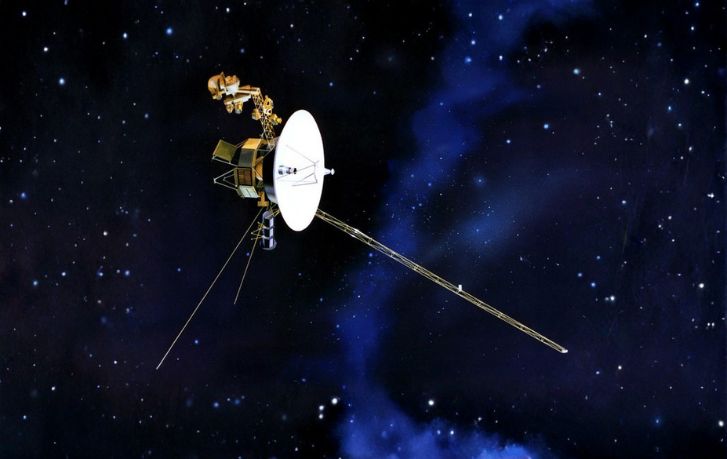
NASA can still command Voyager 1 and Voyager 2 nearly five decades after their 1977 launches. What it cannot do is get a quick answer. A command-and-response exchange takes a couple of days, forcing engineers at the Jet Propulsion Laboratory in California to evaluate aging hardware without the rapid feedback available on spacecraft closer to Earth.

The distances explain the pace. Voyager 1 is almost 16 billion miles from Earth, while Voyager 2 is about 13.3 billion miles away. Even the closer spacecraft is more than four times as distant as Pluto. Radio signals travel at the speed of light, but across those distances, transmitting a command and receiving the resulting data becomes a multiday process.
That delay changes troubleshooting into a deliberately staged engineering exercise. The team must prepare a command, send it and wait before it can confirm how the spacecraft responded. If the result calls for another adjustment, the cycle starts again. A sequence that might be checked quickly on nearby hardware can therefore consume days as engineers separate what they know from what they still need the probes to report.
Nshan Kazaryan, the 25-year-old NASA engineer responsible for communicating with both Voyagers, is younger than the spacecraft he operates. “Every time I talk about Voyager, I kind of treat it like my parents,” Kazaryan said. “As a human gets older, they have all these problems. A spacecraft is similar. The older it gets, the more problems.”
The comparison is informal, but the underlying maintenance problem is concrete. The Voyagers are operating decades beyond their original planetary encounters, and engineers have to manage their changing condition remotely. There is no possibility of physical inspection, component replacement or hands-on testing. Every diagnosis depends on telemetry, existing spacecraft functions and carefully considered commands sent across billions of miles.
Voyager 2 gains more operating time
NASA recently demonstrated how that patient process can still produce measurable mission gains. In an Aug. 4 mission update, the agency said JPL engineers had freed power on Voyager 2, allowing its three operating science instruments to continue working for at least an additional year.
The effort involved turning off certain powered devices simultaneously and substituting lower-power alternatives while ensuring the spacecraft remained warm enough to operate. That balance matters because electrical conservation cannot be treated as a simple exercise in switching off loads: onboard equipment also contributes heat, making power and thermal management closely linked.
Both probes use radioisotope thermoelectric generators, which convert heat from decaying plutonium into electricity. NASA says each spacecraft loses about four watts of available power annually. Since 2024, the shrinking margin has required the mission to turn off two science instruments on each Voyager. Other instruments had already been retired because they were intended for the earlier planetary phase of the mission.
Without the latest Voyager 2 power-saving work, another instrument would have needed to be shut down before the end of 2026, according to NASA. The change did not restore the spacecraft to a previous condition or eliminate its long-term power constraint. It instead purchased more science time by reducing demand within an increasingly narrow energy budget.
Distance makes every follow-up slower
The operating delay is especially important when a change involves more than one spacecraft state. Engineers cannot treat a transmitted instruction as proof of success. They must wait for telemetry to return, assess whether actual behavior matches predictions and only then decide whether to proceed. That constraint rewards conservative sequencing and extensive preparation on Earth, because an improvised follow-up also carries another long wait.
The two Voyagers were built to the same basic design, but mission personnel have observed differences between them after nearly 49 years in space. That limits how confidently a result from one probe can be transferred to the other. Voyager 2 can provide useful test experience, but Voyager 1 still requires its own evaluation and confirmation.
NASA plans to perform the same type of power-saving swap on Voyager 1 in the coming months. The spacecraft’s greater distance makes its communication cycle longer still, underscoring the central constraint of the mission’s life-extension work: engineers can devise new ways to conserve scarce power, but they must verify each result at the pace imposed by interstellar distance.
The probes that returned defining views of Jupiter’s Great Red Spot and Saturn’s rings remain reachable. Now, however, their engineering rhythm is set not by a planetary flyby but by a radio exchange measured in days and Voyager 1 is still moving farther away.
By David Whitaker — Associate editor for AMI’s aerospace and drone systems desk, translating flight systems, aircraft programs, spaceflight, and UAV developments into accessible technical stories.