SpaceX Recovers Intact Starship After 24 Days for First Flight Inspection
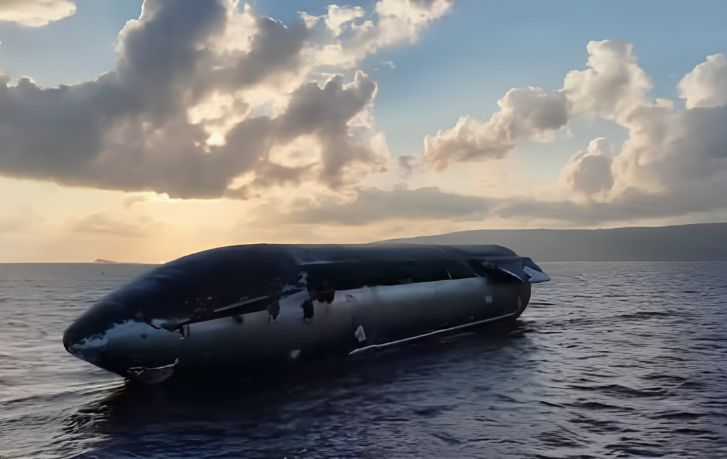
SpaceX has guided Starship upper stage Ship 40 into calmer waters off Christmas Island after approximately 24 days at sea, preserving the first flight-tested Starship upper stage to complete an ocean splashdown intact. The recovery gives engineers an unprecedented physical test article, although Ship 40’s condition after splashdown and its extended ocean exposure has not been reported.
The spacecraft reached waters off the Australian territory by Aug. 18. SpaceX said engineers were traveling to conduct additional analysis before any attempt to return the vehicle to Starbase in South Texas. That distinction matters: the recovery team has brought Ship 40 to a more manageable inspection location, but SpaceX has not confirmed that the 171-foot vehicle can be transported all the way back to Texas.
From splashdown to a difficult tow
Ship 40 launched from Starbase on Flight 13 and splashed down in the Indian Ocean on July 24. It was the first Starship upper stage to complete that maneuver and remain in one piece, turning what had been an end-of-flight test into a prolonged marine-recovery operation.
SpaceX described the recovery conditions as “challenging” with “increasingly rough seas.” Those conditions raised doubts that the spacecraft could be moved safely toward shore. Nevertheless, the recovery team kept control of the vehicle long enough to guide it to the calmer waters near Christmas Island.
The result marks a substantial change from Flight 12, the first mission using SpaceX’s Version 3 Starship design. During that flight, Ship 39 performed its landing burn over the Indian Ocean but exploded after toppling into the water. Flight 12’s Super Heavy booster also crashed into the Gulf of Mexico following engine issues after stage separation. Ship 40, flown on the second Version 3 mission, now offers evidence that could not be collected from its predecessor.
A returned spacecraft can reveal what telemetry cannot
Flight instrumentation can show temperatures, pressures, loads and system behavior at selected measurement points. A recovered vehicle adds direct physical evidence: engineers can examine where heat-shield tiles remained attached, identify visible deformation or localized damage, and compare the hardware with the data recorded during flight.
The potential inspection areas identified for Ship 40 include its aerodynamics, hydraulic systems, heat-tile efficiency and overall design. SpaceX has not released findings in any of those areas, so the intact appearance alone does not establish how well individual systems performed. External survival and internal serviceability are separate engineering questions.
The long ocean recovery also complicates interpretation. Ship 40 was exposed not only to launch, spaceflight, atmospheric reentry and splashdown, but also to salt water and wave motion for roughly three weeks. Engineers will therefore need to distinguish flight-related effects from damage or degradation that may have occurred after landing.
That is not a trivial boundary. NASA’s Corrosion Engineering Laboratory at Kennedy Space Center lists pitting, crevice corrosion, stress-corrosion cracking and corrosion fatigue among the material concerns associated with marine environments. There is no confirmation that Ship 40 experienced any of those effects, but its exposure history will be important when SpaceX evaluates materials, coatings, joints and internal hardware.
The value depends on what remains measurable
Ship 40 does not need to be reusable after this recovery to produce useful data. Even damaged components can show how loads traveled through the structure, how thermal protection aged during reentry and which hardware remained accessible after a real mission. Those observations can inform later design iterations and help engineers decide where inspection access, sealing, protection or structural margins may need adjustment.
The recovered stage also has relevance beyond SpaceX’s internal development campaign. NASA has contracted the company to develop a Starship variant intended to land astronauts on the moon for Artemis IV. Starship still has additional NASA qualification milestones to complete before it can carry astronauts, and one intact upper stage cannot satisfy those requirements by itself. It can, however, provide a rare physical check against assumptions built from simulations, ground tests and telemetry.
The next meaningful milestone is therefore not Ship 40’s arrival near Christmas Island, but the inspection findings and whether the stage is stable enough for the attempted return to Starbase. Until SpaceX reports those results, the program has secured an unusually valuable spacecraft without yet knowing how much of its flight history remains readable.
By David Whitaker — Associate editor for AMI’s aerospace and drone systems desk, translating flight systems, aircraft programs, spaceflight, and UAV developments into accessible technical stories.